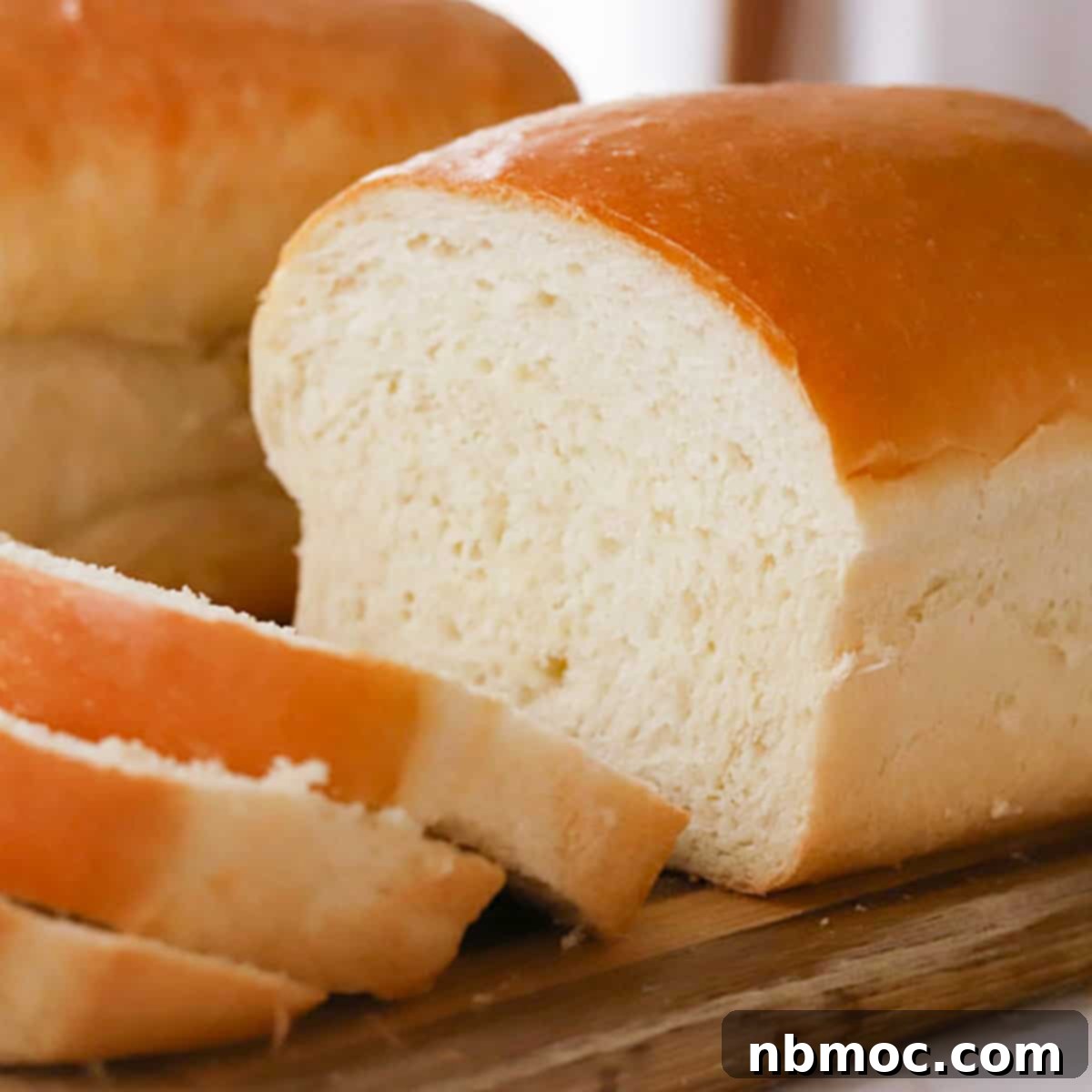
Welcome to the ultimate guide for baking the most incredibly soft, utterly delicious, and remarkably easy Homemade White Bread! This recipe isn’t just about making bread; it’s about transforming your kitchen into a haven of warmth and tantalizing aromas. Forget bland, store-bought loaves; once you taste the buttery crust and fluffy interior of this homemade masterpiece, you’ll never look back. Perfect for hearty sandwiches, glorious breakfast toast, or simply torn and enjoyed with a smear of butter, this versatile loaf will quickly become a cherished family favorite.
Baking bread from scratch might seem daunting, but we’re here to guide you through every step with clear, simple instructions. Whether you’re a seasoned baker or a complete novice, you’ll discover the immense satisfaction of pulling a perfectly golden loaf from your oven. And if you’re eager to explore more delightful bread creations, be sure to check out our Homemade French Bread, aromatic Herb Focaccia Bread, wholesome Whole Wheat Bread, or our rich Cheddar Cheese Loaf.
Unlock the Secret to Perfect Soft Homemade White Bread
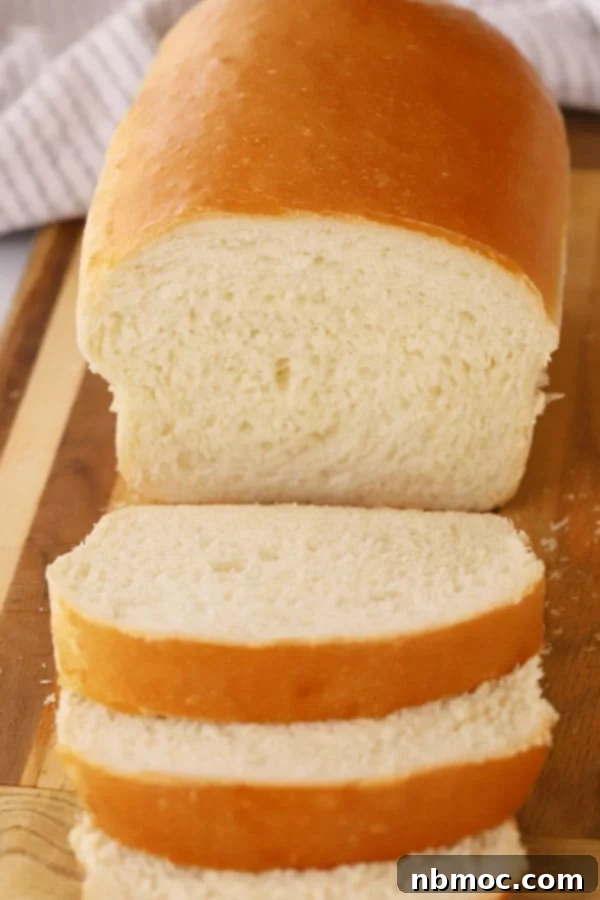
There’s truly nothing quite like the smell of fresh bread baking. It’s a comforting aroma that instantly makes any house feel more like a home. Our Soft Homemade White Bread recipe promises not just an incredible fragrance, but also loaves that are exceptionally fluffy, bake up tall and proud, and boast a tender crumb. This isn’t just a recipe; it’s an experience that will redefine your perception of delicious bread.
We’ve meticulously crafted these step-by-step instructions to ensure your success, regardless of whether you have the convenience of a stand mixer or prefer the satisfaction of kneading by hand. With just a handful of basic ingredients and a little bit of patience, you’ll soon be savoring warm slices of buttery, freshly baked bread any time the craving strikes. Imagine serving this alongside your favorite meal, or simply enjoying a thick slice spread with homemade jam and honey butter. It’s the simple pleasures that truly make life delightful.
Speaking of spreads, elevate your homemade bread experience even further with our Homemade Strawberry Freezer Jam, luscious Whipped Honey Butter, or savory Garlic Butter. These perfect pairings will turn a simple slice of bread into an unforgettable treat.
Homemade White Bread Video Tutorial: Visual Guidance for Success
For those who learn best visually, we’ve included a comprehensive video tutorial that walks you through each stage of the bread-making process. From activating your yeast to shaping the perfect loaf and achieving that coveted golden crust, this video complements our written instructions, providing invaluable insights and tips. Watch it once, and you’ll feel confident tackling this recipe!
Essential Ingredients for Your Basic White Bread Recipe
Crafting exceptional white bread starts with quality ingredients. Here’s a breakdown of what you’ll need and why each component is crucial for achieving that perfect loaf:
- Water: The temperature of your water is paramount. Aim for a warm range (between 95-105 degrees F, or 35-40 degrees C). This gentle warmth is essential for “waking up” and activating your active dry yeast, allowing it to bloom and start its work. Water that is too cold will inhibit yeast activity, while water that is too hot can kill it.
- Sugar: More than just for sweetness, sugar acts as food for the yeast, helping it to activate and multiply, which contributes to a good rise. It also enhances the flavor profile of the bread and helps create that desirable golden-brown crust during baking. While granulated sugar is traditional, you can substitute honey for a slightly different flavor and a touch of moisture.
- Active Dry Yeast: This recipe specifically calls for active dry yeast, which needs to be proofed (activated) in warm water with a little sugar. Using active dry ensures optimal rising and texture. If you were to use instant yeast, your mixing, rising, and baking times might need slight adjustments as it typically doesn’t require proofing and acts faster.
- Oil: We recommend avocado oil for its neutral flavor and healthy fats. However, any light-flavored oil like vegetable or canola oil can work. Room temperature butter is also an excellent substitute, adding a rich, tender quality and enhancing the bread’s flavor. Fat contributes to a softer crumb and helps keep the bread fresh longer.
- Eggs: Large eggs are incorporated to add richness, improve the texture, and contribute to a beautiful golden color in the final loaf. Eggs also provide some protein, which can help strengthen the dough’s structure.
- Salt: Never underestimate the power of salt in bread making! It’s not just for flavor; salt also controls the yeast’s activity, preventing it from rising too quickly. More importantly, it strengthens the gluten structure in the dough, leading to a better texture and a more even rise. Don’t skimp on the salt!
- All-Purpose Flour: For a soft and tender white bread, all-purpose flour is your go-to. It has a moderate protein content that develops enough gluten for a good structure without making the bread overly chewy. While bread flour can be used for a slightly chewier loaf, you’ll likely need to adjust the total amount of flour added to achieve the desired dough consistency – keep an eye on your dough and add gradually until it’s smooth and slightly shiny.
- Egg Wash: A simple mixture of whole eggs and water, brushed over the loaves before their final rise and baking. This creates a beautifully shiny, golden crust that is appealing and adds a subtle richness.
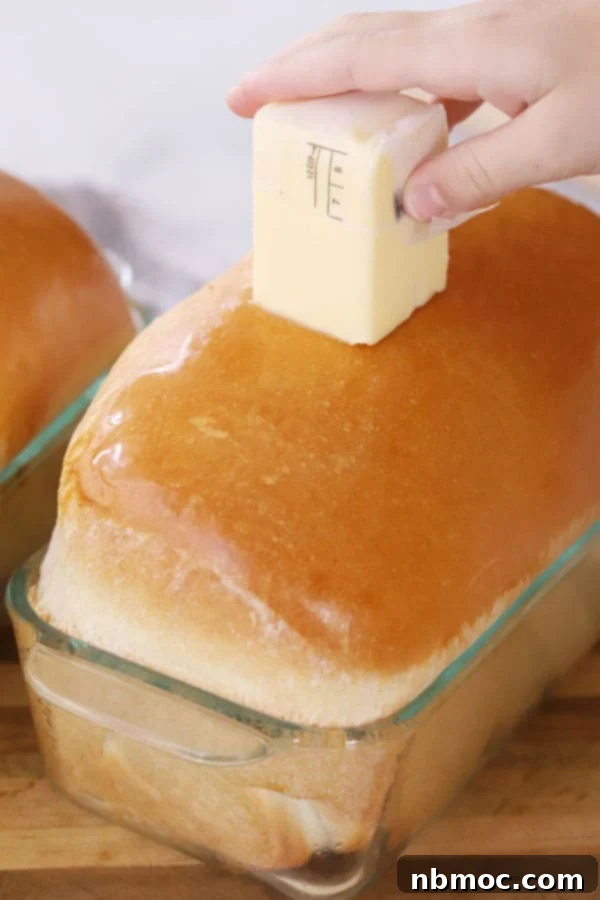
- Butter: Brushed onto the loaves immediately after they come out of the oven, melted butter adds an irresistible gloss to the crust and infuses the bread with a wonderful buttery flavor and extra tenderness. It’s the perfect finishing touch!
Mastering the Art: How to Form a Perfect Loaf of Sandwich Bread
Shaping your dough correctly is key to achieving those beautiful, uniform loaves perfect for slicing. Before you begin shaping, ensure your loaf pans are ready. Grab them now and butter them thoroughly, if you haven’t already. This prevents sticking and ensures your bread slides out easily after baking.
- Divide and Prepare.
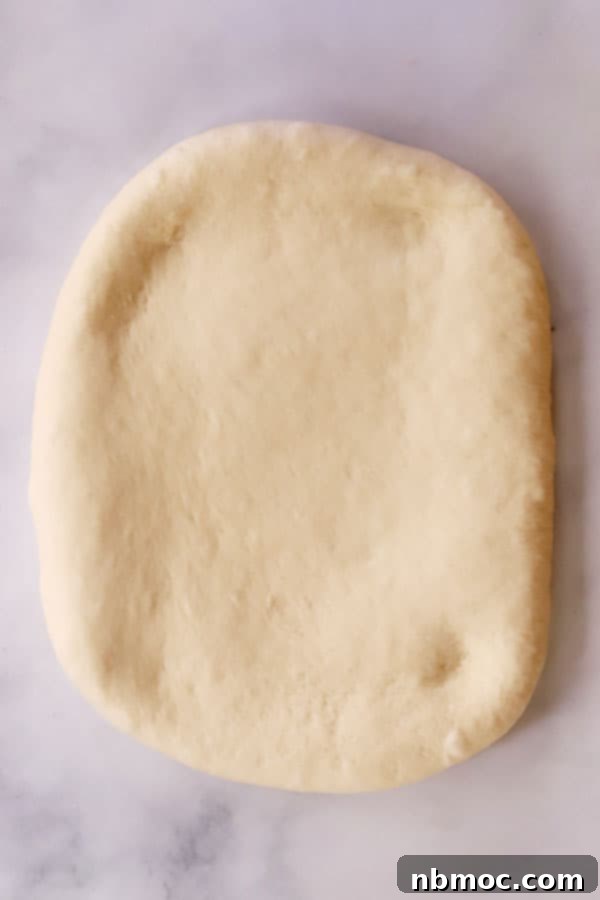
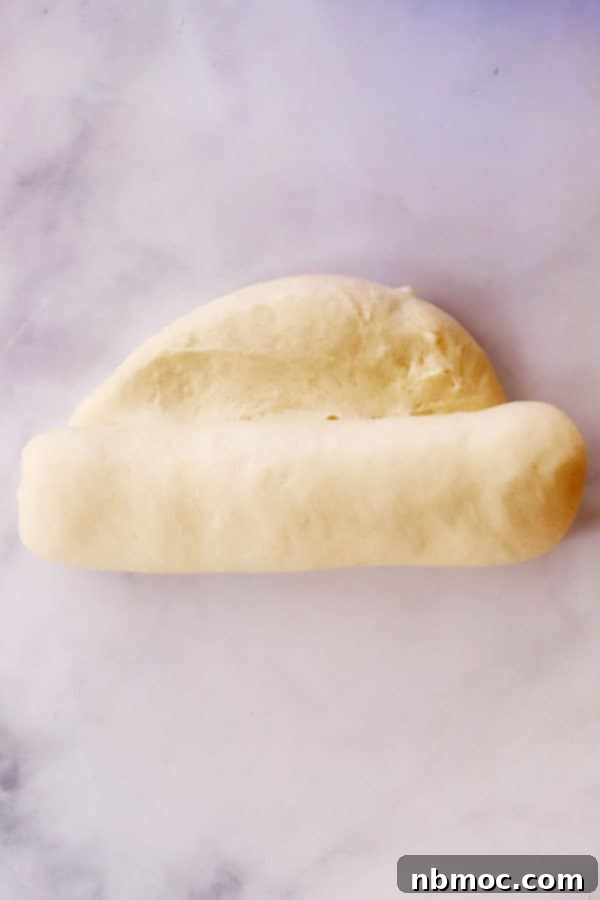
Carefully divide your risen dough into three equal pieces. This ensures you’ll have three consistently sized loaves. Take each piece one at a time and, on a lightly floured surface, gently roll it into a rectangle. Aim for the shorter side of the rectangle to be roughly the length of your baking pan, and the longer side to be approximately 12 inches. This dimension is crucial for the perfect roll.
- Shape the Loaf.
Once you have your rectangles, begin rolling them up tightly from one of the shorter ends. The tighter you roll, the fewer air pockets your final loaf will have, resulting in a more uniform crumb. After rolling, firmly pinch the end seam closed to prevent the loaf from unraveling during its final rise and baking. A good seal ensures a beautiful, smooth exterior.
- Place into Loaf Pans.
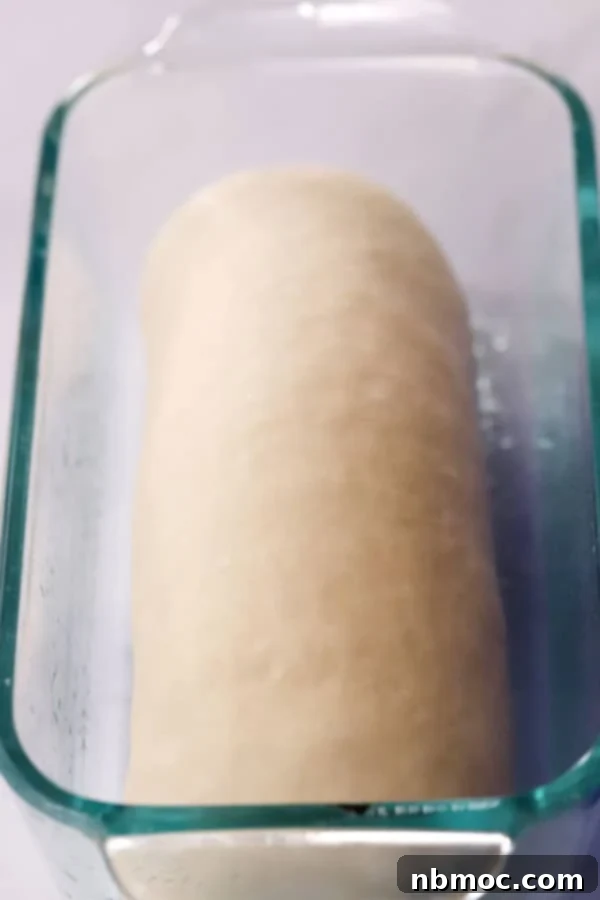
Carefully tuck each end of the shaped loaf underneath itself to create a neat, rounded shape. Then, place the loaf seam-side down into your greased baking pans. This ensures the seam is hidden and the top of your loaf rises smoothly and evenly. Give the dough a gentle press to ensure it fills the pan slightly.
Frequently Asked Questions About Homemade White Bread
Absolutely! Don’t let the absence of a stand mixer deter you from making this incredible Homemade White Bread recipe. Hand-kneading is a time-honored tradition and can be incredibly therapeutic. To begin, place about 7-8 cups of your flour in a circular mound directly on a clean countertop or in a very large bowl. Create a deep well in the center of the flour. Carefully pour your wet ingredients (the proofed yeast mixture, oil, salt, and eggs) into this well. Using your fingers or a spoon, gradually start to incorporate the flour from the edges into the wet ingredients in the center. The key is to do this slowly, preventing the “flour dam” from breaking and spilling liquid. Continue to mix until all the ingredients are roughly combined into a shaggy dough. From there, transfer the dough to a clean, lightly floured countertop and begin kneading. Add more flour, about ½ cup at a time, only if the dough is too sticky to handle. Knead for about 8-10 minutes, or until the dough transforms into a smooth, elastic, and non-sticky ball. It should bounce back slowly when gently poked. Once kneaded, proceed with the rest of the recipe instructions.
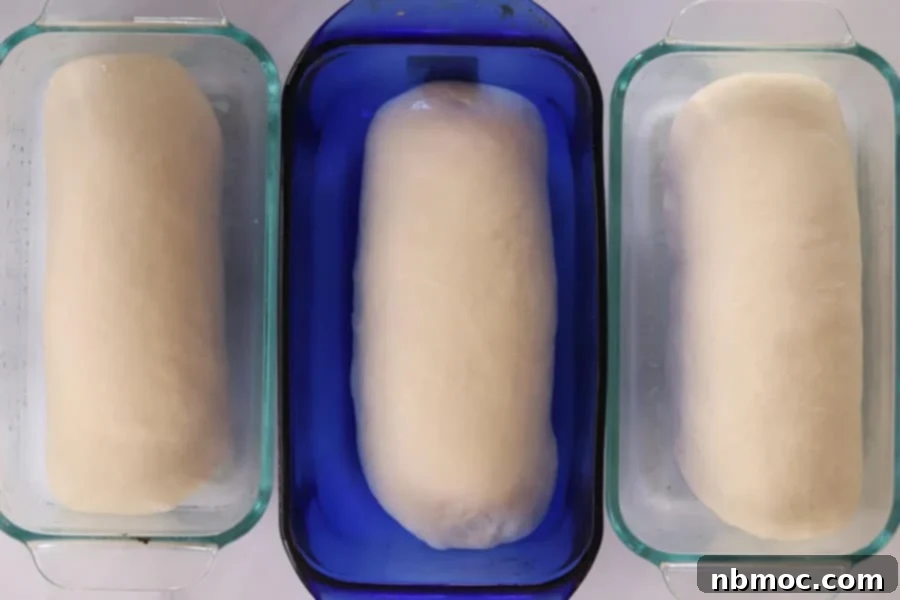
The size of your loaf pan is more critical than its material for achieving a well-proportioned loaf. The two primary sizes are 9″ x 5″ and 8.5″ x 4.5.” A helpful guideline to remember is:
– For bread recipes calling for approximately 3 cups of flour per loaf, an 8.5″ x 4.5″ pan is ideal.
– If your recipe requires at least 3.75 cups of flour per loaf, opt for the larger 9″ x 5″ pan.
– For flour amounts in between, use your best judgment, leaning towards the smaller pan for a taller rise.
In this specific recipe, we utilized Pyrex 1.5-quart glass loaf pans, which closely align with the 8.5″ x 4.5″ size. Since our recipe uses about 3 cups of flour per loaf, this size is perfect for achieving a lovely tall rise. If you only have larger pans, the recipe will still work, but your bread may not rise as high and might spread out more. As for materials, metal, non-stick, ceramic, and even silicone pans all work well. Each has slight differences in heat conduction, but all will produce great bread. The most important factor remains choosing the correct size to complement your recipe’s dough volume.
For a genuinely soft and tender loaf like this Homemade White Bread, all-purpose flour is your top choice. It contains a moderate protein content that develops sufficient gluten for structure, yet keeps the crumb delicate and yielding. This type of bread doesn’t require the robust, chewy structure that high-protein bread flour provides.
If all-purpose flour isn’t available, bread flour can be used as a secondary option. Bread flour has a higher protein content, which results in more gluten development, typically yielding a chewier, denser texture, making it more suitable for artisan-style breads. However, in a pinch, it will still produce a decent white loaf, though it might be less soft. You may need to adjust the liquid slightly to achieve the desired dough consistency.
It’s best to avoid using pastry or cake flour for this recipe. These flours have a very low protein content, meaning they won’t develop enough gluten to provide the necessary structure for a well-risen, shapely loaf of bread. The result would likely be a dense, crumbly, and unsatisfactory texture.
The two most common types of dry yeast you’ll find in grocery stores are instant yeast (often labeled as “rapid rise” or “quick rise”) and active dry yeast. The primary distinction lies in how they are processed and, consequently, how they are used. Instant yeast is milled into finer particles and is designed to be added directly to your dry ingredients without prior proofing. It’s often preferred for recipes where you want a quicker rise. Active dry yeast, on the other hand, consists of larger granules and is less active. It needs to be “woken up” or “proofed” by dissolving it in warm liquid (usually water) with a pinch of sugar before being combined with other ingredients. This process not only activates the yeast but also allows you to confirm its viability before committing to the full recipe. For this Homemade White Bread recipe, we use active dry yeast, emphasizing the proofing step to ensure optimal results.
Several factors can contribute to a lack of rise in your bread. The most common culprits include water temperature that is too hot (killing the yeast) or too cold (slowing or preventing activation). Ensure your water is within the 95-105°F range. Old or expired yeast is another frequent issue, which is why proofing active dry yeast is so important—it’s a quality check! Too much salt or sugar can also inhibit yeast activity; salt slows it down, and excessive sugar can dehydrate it. Finally, under-kneading the dough can prevent adequate gluten development, which is crucial for trapping the gas produced by the yeast, leading to a poor rise. Ensure your dough is smooth and elastic before the first rise.
A beautiful golden crust adds to the appeal and flavor of your homemade white bread. Our recipe includes an egg wash (one large egg whisked with a tablespoon of water) that you brush over the loaves before their final rise. The protein and fats in the egg, along with the sugar on the surface, caramelize in the heat of the oven, yielding that attractive golden hue and a subtle sheen. Baking at the correct temperature (350°F or 175°C) and for the recommended duration (28-30 minutes) also ensures proper browning without burning. Some bakers also place a pan of hot water in the bottom of the oven during baking to create steam, which can enhance crust development and create a crispier exterior initially, though this recipe focuses on a softer crust.
Expert Tips for Baking Your Best Homemade White Bread
Achieving bakery-quality bread at home is incredibly rewarding. Here are some invaluable tips to ensure your homemade white bread turns out perfectly every time:
- Always Proof Your Active Dry Yeast: This step is non-negotiable for active dry yeast. Combining it with warm water and sugar (95-105°F / 35-40°C) allows you to confirm that your yeast is alive and active. If it doesn’t become frothy and bubbly after 5-10 minutes, your yeast might be old or the water temperature was off. It’s better to discover this early than to waste all your ingredients on dough that won’t rise.
- Utilize a Stand Mixer for Efficiency: While hand-kneading is entirely possible, a standing mixer equipped with a dough hook can significantly simplify the kneading process. It ensures consistent, thorough kneading, which is essential for developing strong gluten, and it keeps your countertop much cleaner!
- Mind Your Loaf Pan Size: As discussed in the FAQs, the size of your bread pan directly impacts the shape and height of your finished loaf. Use 8.5″ x 4.5″ pans for this recipe’s dough volume to ensure a beautifully tall and well-structured loaf. Adjust the number of loaves or pan size if necessary.
- Confirm Doneness with Internal Temperature: The best way to guarantee your bread is fully baked through is to check its internal temperature. Insert an instant-read thermometer into the center of a loaf; it should register 195 degrees F (90 degrees C). This ensures the crumb is cooked and not gummy.
- Resist the Urge to Slice Immediately: We know it’s incredibly difficult to wait, especially with that amazing aroma filling your kitchen! However, letting your bread cool completely on a wire rack is crucial. This allows the internal starches to set, preventing a gummy texture and making it much easier to slice neatly. Cooling also allows the flavors to fully develop.
- Create a Warm Environment for Rising: Yeast thrives in warmth. If your kitchen is cool, find a warm spot for your dough to rise. This could be a slightly warmed oven (turned off!), near a sunny window, or next to a pilot light. A consistent warm temperature promotes a steady and healthy rise.
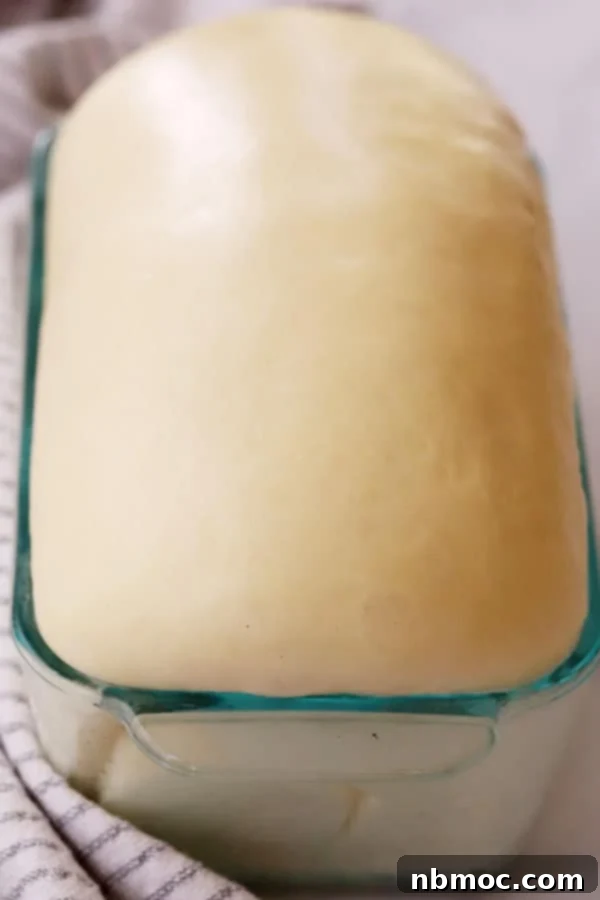
- Don’t Over-Proof: While a good rise is important, over-proofing can lead to a dense, fallen loaf with a yeasty flavor. The dough should double in size, and when gently poked with a floured finger, the indentation should slowly spring back. If it springs back too quickly, it needs more time. If it collapses, it might be over-proofed.
Storing and Freezing Instructions for Freshness
To enjoy your delicious homemade white bread for as long as possible, proper storage is essential:
- In a Plastic Bag: Once completely cooled, store your bread in an airtight plastic bag. This method helps to retain moisture, keeping your loaves soft and fresh for up to 3 days at room temperature. A plastic bag is generally more effective at preserving softness than a paper bag, which can allow the bread to dry out more quickly.
- In a Bread Box: For a classic approach, a bread box can also be an excellent storage solution. These handy containers, though less common now, provide an ideal environment—not too airtight, not too exposed—that can keep bread fresh for a few days. If you have one, this is a great way to store your loaves.
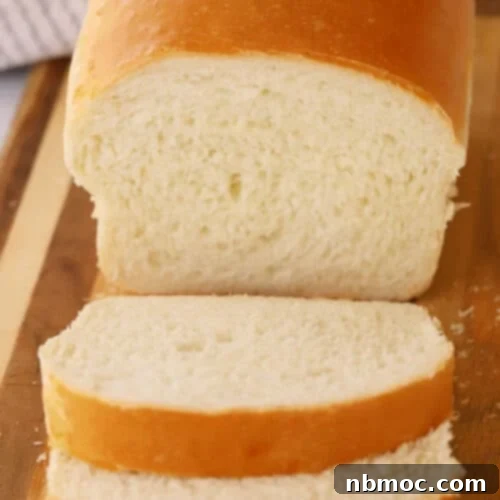
- In the Freezer: If you’ve baked multiple loaves or anticipate not finishing your bread within a few days, freezing is your best option for long-term freshness. Ensure the bread is completely cool. Wrap each loaf tightly in plastic wrap, then place them inside freezer bags. This double layer of protection helps prevent freezer burn. Stored this way, your bread will remain delicious for up to 3 months. To enjoy, simply pull a loaf out and let it thaw at room temperature. You can even warm it gently in the oven for a “just baked” experience.
Homemade White Bread Recipe
Pin
Rate
Video
Ingredients
- 3 cups water, warm (95-110 degrees F)
- 1/4 cup sugar
- 1½ tablespoons active dry yeast
- 1/4 cup avocado oil, or room temperature butter
- 1 tablespoon salt
- 2 large eggs
- 8½ cups all-purpose flour
Egg Wash
- 1 large egg
- 1 tablespoon water
- 2 tablespoons butter, melted
Instructions
- Prepare Pans: Thoroughly grease three 8.5″ x 4.5″ bread pans with butter. This prevents sticking and ensures your beautiful loaves release easily after baking. Set them aside while you prepare the dough.
- Activate Yeast: In the bowl of a stand mixer (or a large mixing bowl if kneading by hand), combine the warm water (95-105°F / 35-40°C), sugar, and active dry yeast. Stir gently to combine. Let this mixture sit undisturbed for 5-10 minutes. You’ll know your yeast is active and healthy when it becomes frothy and bubbly on the surface. If it doesn’t, your yeast might be expired, or the water temperature was incorrect.
- Combine Wet Ingredients & Initial Flour: Once the yeast is visibly proofed, add the oil, salt, eggs, and about half of the all-purpose flour (roughly 4-4.5 cups) to the yeast mixture. If using a stand mixer, attach the dough hook and mix on low speed until all the ingredients are just combined and no dry streaks of flour remain.
- Add Remaining Flour & Knead: Continue adding the remaining flour, one cup at a time, mixing on low speed after each addition. The dough will gradually come together. Keep adding flour until the dough pulls cleanly away from the sides of the bowl and looks smooth. You might need to adjust the total flour amount by up to ½ cup, depending on humidity and how your flour absorbs liquid. Once all the flour is incorporated and the dough is no longer excessively sticky, increase the mixer speed to medium and knead for approximately 3 minutes. The dough should become very smooth, elastic, and slightly shiny. If kneading by hand, this stage will take about 8-10 minutes of vigorous kneading on a lightly floured surface until the dough passes the windowpane test (a small piece of dough can be stretched thinly enough to see light through it without tearing).
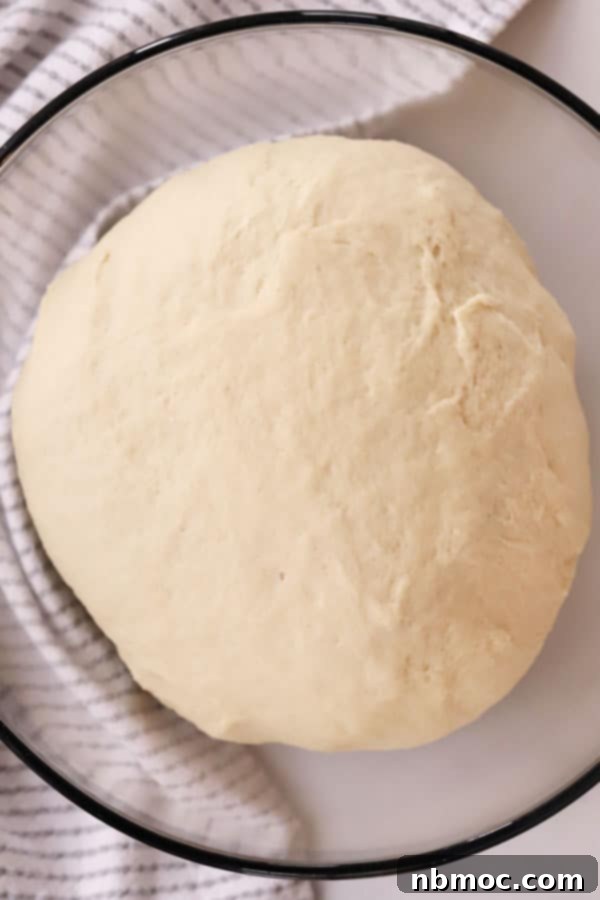
- First Rise (Bulk Fermentation): Form the dough into a ball and place it in a lightly greased bowl, turning once to coat. Cover the bowl tightly with plastic wrap or a clean kitchen towel. Let the dough rise in a warm, draft-free place until it has doubled in size. This typically takes about 30-45 minutes, but the exact time will vary based on your kitchen’s temperature and yeast activity.
- Divide and Shape Dough: Once your dough has beautifully doubled, gently punch it down to release the air. Turn the dough out onto a lightly floured countertop and divide it into 3 equal pieces. Take each piece and, using a rolling pin, very gently roll it into a rectangle measuring roughly 8 inches by 12 inches (the shorter side should correspond to the length of your baking pans). Avoid using too much flour during this step.
- Form Loaves: Starting from one of the shorter ends of each rectangle, tightly roll the dough up into a cylinder. Pinch the end seam firmly to seal it completely. Then, tuck each end of the loaf underneath itself to create a smooth, finished appearance. Place each shaped loaf, seam-side down, into your greased bread pans. This ensures an even rise and prevents the seam from splitting.
- Second Rise (Proofing) & Egg Wash: In a small bowl, whisk together the remaining large egg and 1 tablespoon of water to create an egg wash. Using a pastry brush, gently brush a thin, even layer of this egg wash over the tops of each loaf of dough. This will give your baked bread a beautiful golden, shiny crust. Now, let the loaves rise again in a warm, draft-free place until they have doubled in size, typically another 30-45 minutes. They should look puffy and light.
- Bake the Bread: While your loaves are undergoing their second rise, preheat your oven to 350 degrees F (175 degrees C). Once the loaves have doubled in size, carefully transfer all three pans to the preheated oven. Bake for 28-30 minutes, or until the tops are beautifully golden brown. To confirm doneness, an instant-read thermometer inserted into the center of a loaf should read 195 degrees F (90 degrees C).
- Cool & Serve: As soon as the bread is removed from the oven, brush the tops of each hot loaf with melted butter. This adds flavor and keeps the crust soft. Let the loaves cool in their pans for about 10-15 minutes. This allows them to firm up slightly before you attempt to remove them. After 10-15 minutes, carefully invert the pans to release the loaves and transfer them to a wire rack to cool completely. Resist the urge to slice them while hot, as this can make the interior gummy. Once fully cooled, slice and enjoy your incredible homemade white bread!
Video
Notes
Freezing: For longer storage, wrap cooled loaves tightly in plastic wrap, then place them in freezer bags. They can be stored in the freezer for up to 3 months. Thaw at room temperature before enjoying.
Nutrition
Disclaimer: Nutritional values were calculated using a third-party tool and are provided as an estimation only.
Sharing this recipe with a link is both encouraged and appreciated. Copying/pasting and/or screenshots of full recipes to any social media is strictly prohibited. Content and photographs are copyright protected.
Did you make this?
Don’t forget to leave a rating below and make sure to follow on Pinterest, Instagram and Tiktok for more!
Explore More Easy Homemade Bread Recipes
Once you’ve mastered this delightful homemade white bread, you’ll undoubtedly be inspired to explore the wonderful world of home baking even further. Here are some more easy and delicious bread recipes from our collection to expand your baking repertoire:
- Rustic Cheddar Bread: A savory loaf bursting with cheesy goodness.
- Honey Wheat Bread Recipe: A slightly sweet and hearty whole wheat option.
- Homemade Pretzels: Perfect for a fun snack or party appetizer.
- Pull Apart Garlic Bread: Irresistible individual portions infused with garlic and herbs.
- Einkorn White Bread: Explore an ancient grain for a unique flavor and texture.
- Classic French Bread Recipe: Achieve that perfect crispy crust and airy interior.
- Homemade Crescent Rolls: Flaky, buttery, and perfect for any meal.
- Soft Pretzel Bites: Miniature versions of soft pretzels, ideal for dipping.
- Italian Herb Focaccia Bread: A versatile flatbread packed with aromatic herbs.
- Garlic Herb Twist Bread: A visually appealing and flavorful bread for sharing.
- Sweet Cinnamon Twist Bread: A delightful treat, perfect for breakfast or dessert.
- Homemade Cheesy Breadsticks: A crowd-pleasing side dish that’s always a hit.
- Copycat Olive Garden Breadsticks: Recreate your favorite restaurant classic at home.
- More Amazing Bread Recipes: Discover our full collection of bread-making inspiration!
This simple Homemade White Bread recipe will truly transform your kitchen into a haven of comforting aromas and delicious flavors. It consistently yields the softest, fluffiest loaves that bake up wonderfully tall, making them ideal for everything from the best sandwich bread to morning toast or a delightful afternoon snack. We hope you enjoy the process as much as the product!