
Unlock the secrets to perfectly roasted acorn squash with this comprehensive, easy-to-follow guide. Whether you’re a seasoned chef or a kitchen novice, this method will help you create a delicious and healthy side dish that can also be incorporated into a myriad of recipes. Roasting brings out the natural sweetness and nutty flavor of acorn squash, transforming it into a tender, caramelized delight that’s perfect for fall gatherings, holiday feasts, or a simple weeknight meal. This versatile technique works wonderfully with various types of squash, making it a staple for anyone looking to embrace seasonal produce.
For those eager to explore more healthy and flavorful acorn squash creations, consider trying our Wild Rice Stuffed Squash, a hearty and satisfying main course. If you enjoy a touch of sweetness, our Roasted Squash with Cinnamon offers a comforting aroma and taste. Alternatively, integrate roasted acorn squash into this rustic Root Vegetable Mash for an earthy side dish that perfectly complements autumn and winter menus.

How to Roast Acorn Squash: A Simple Guide to Perfect Tenderness
Oven-roasted acorn squash is, without a doubt, my absolute favorite way to prepare and savor this delightful winter squash. The beauty of roasting lies in its simplicity and the minimal effort required. It’s a largely hands-off cooking method that yields incredible results, whether you need tender squash for a complex recipe or desire a flavorful side dish all on its own. The high heat of the oven coaxes out the squash’s inherent sugars, leading to a beautifully caramelized exterior and a soft, creamy interior that’s bursting with flavor.
The fundamental recipe calls for just a few pantry staples: a drizzle of quality olive oil, a pinch of salt, and a dash of black pepper. However, the true magic of roasted acorn squash lies in its adaptability to various flavor profiles. Feel free to experiment with an array of aromatic herbs and spices. Imagine the earthy notes of thyme, the pungent kick of garlic powder, a smoky hint of paprika, or a gentle warmth from red pepper flakes. For those with a sweeter palate, a sprinkle of brown sugar before roasting creates an irresistible candied finish. Continue reading for a detailed, step-by-step guide, along with invaluable tips and inspiring serving suggestions to elevate your acorn squash experience.
Why You’ll Love This Roasted Acorn Squash Recipe
- Effortless Preparation: This recipe is incredibly easy to follow, making it perfect for busy weeknights or when you need a simple yet impressive side dish.
- Minimal Ingredients: You only need acorn squash, oil, salt, and pepper to create a flavorful dish.
- Versatile Flavor Profile: Easily customize the seasoning to be savory, sweet, or spicy, adapting it to any meal or preference.
- Healthy & Nutritious: Acorn squash is packed with vitamins, minerals, and fiber, making this a wholesome addition to your diet.
- Deliciously Tender & Caramelized: Roasting brings out the squash’s natural sweetness and creates a wonderfully tender texture with slightly browned edges.
- Perfect for Meal Prep: Roasted squash stores well, making it ideal for preparing ahead of time for future meals or recipes.
Choosing the Perfect Acorn Squash
Selecting a good quality acorn squash is the first step to a delicious roasted dish. Look for squash that are:
- Heavy for their size: This indicates a good moisture content.
- Firm and hard: Avoid any squash with soft spots or blemishes.
- Dull skin: A shiny skin might mean it was picked too early.
- Dark green color: While some varieties can have orange patches, the dominant color should be dark green.
- Intact stem: A healthy stem helps the squash last longer.
Essential Ingredients for Roasted Acorn Squash
Crafting perfectly roasted acorn squash requires just a few simple ingredients. Each component plays a vital role in achieving that desirable tender texture and rich flavor.
- Acorn Squash: The star of our dish! Acorn squash offers a distinct nutty and slightly sweet flavor, and its compact size makes it ideal for roasting in halves. However, the beauty of this recipe is its adaptability. Feel free to substitute with other winter squashes like butternut squash (peeled and diced), delicata squash, or even spaghetti squash, adjusting roasting times as needed.
- Avocado Oil: This is my preferred choice for brushing over the squash before roasting due to its high smoke point and neutral flavor, which allows the squash’s natural taste to shine. Olive oil is an excellent alternative, offering a slightly fruitier note. Coconut oil can also be used, imparting a subtle tropical essence, or any other high-heat cooking oil you have on hand. The oil helps in achieving a lovely golden-brown caramelization and prevents sticking.
- Salt and Pepper: These fundamental seasonings are added to taste just before baking. They enhance the natural flavors of the squash. Don’t underestimate their power to bring out the best in the dish. Start with a moderate amount and adjust after cooking if necessary.
Step-by-Step Guide: How To Cook Squash in the Oven
Follow these simple steps to achieve perfectly tender and flavorful roasted acorn squash every time:
- Preheat Your Oven: Begin by preheating your oven to a steady 400°F (200°C). This ensures the squash roasts evenly and achieves that desirable caramelized finish from the moment it enters the oven.
- Prepare the Squash: Place the acorn squash on a sturdy cutting board. Using a sharp, chef’s knife, carefully cut the squash in half lengthwise. A good tip for stability is to slice off a tiny bit of the bottom (if needed) to create a flat base before cutting. Once halved, use a large spoon or an ice cream scoop to thoroughly scrape out the seeds and stringy pulp from the center of each half. Line a baking sheet with parchment paper for easy cleanup and to prevent sticking. Place the cleaned squash halves on the prepared baking sheet with the flesh side facing up.
- Season and Flip: Drizzle or brush each acorn squash half generously with avocado oil (or olive oil). Sprinkle evenly with salt and freshly ground black pepper. Next, flip the squash halves over so they are now flesh side down on the baking sheet. Roasting them face down initially helps to steam the flesh, locking in moisture and ensuring tenderness, while allowing the skin to crisp slightly.
- Bake to Perfection: Transfer the baking sheet to your preheated oven. Bake for approximately 40-60 minutes. The exact cooking time will vary depending on the size and thickness of your squash. You’ll know the squash is perfectly roasted when its flesh is incredibly tender. Test for doneness by easily sticking a fork or a long, thin toothpick into the thickest part of the flesh.
- Serve or Store: Once tender, carefully remove the baking sheet from the oven. Allow the roasted squash to cool slightly before serving immediately. At this point, you can scoop out the soft flesh, mash it, or simply serve the halves as is. If you’re not using it right away, let it cool completely before transferring it to an airtight container for later use in other recipes. Enjoy your perfectly roasted acorn squash!
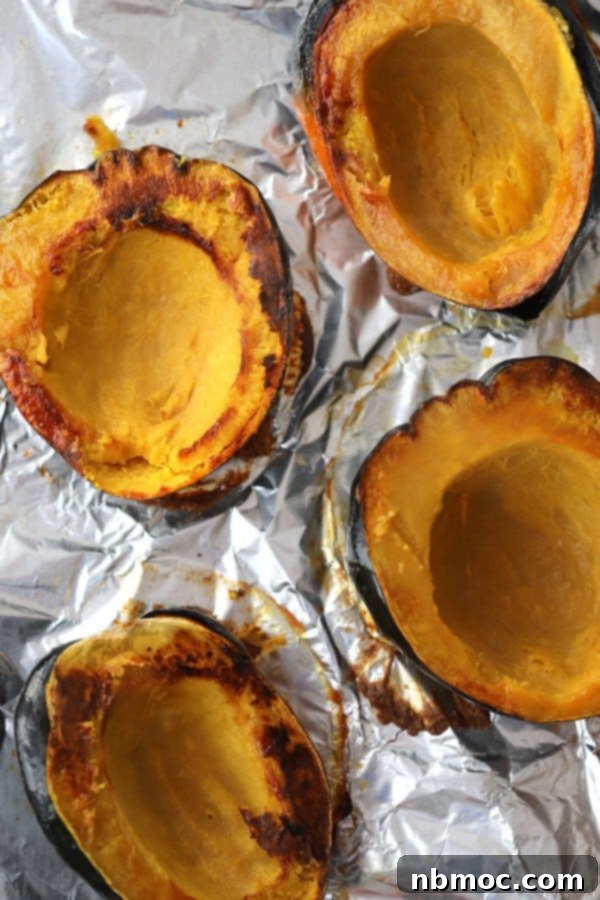
Creative Ways to Enjoy Roasted Acorn Squash
Once you’ve mastered the art of roasting acorn squash, a world of culinary possibilities opens up. Its naturally sweet and earthy flavor makes it incredibly versatile, perfect for integrating into various dishes beyond just a simple side. Here are some inspiring ideas:
- Pies: Elevate your classic pumpkin pie recipe by incorporating roasted acorn squash. Its unique flavor profile adds a delightful twist and depth that’s truly delicious. Simply puree the roasted flesh and use it as you would pumpkin puree.
- Soups: Roasted acorn squash forms the perfect, creamy base for a comforting and flavorful soup. Imagine a velvety bisque enriched with a touch of cream, fresh thyme, and roasted garlic – a truly “wowza” experience! For more specific ideas, try our Creamy Curry Squash Soup for an exotic touch or our comforting Acorn Squash Soup.
- Salads: Add a gourmet touch to your salads by incorporating diced roasted squash. Picture large chunks of warm, tender squash paired with grilled chicken, crisp spring mix lettuce, toasted pine nuts, crumbled feta cheese, and a tangy balsamic dressing. It transforms a simple salad into a terrific, satisfying meal.
- Casseroles: Roasted squash is an excellent addition to savory casseroles. Try it with a crunchy pecan crumble topping for a delightful textural contrast, or layer it into a vibrant vegetable lasagna for added depth and nutrition.
- Pizza: Dare to be different and try squash on your pizza! It may sound unconventional, but thinly sliced roasted squash can add a surprising sweetness and unique texture to your favorite pizza combinations. Doooo it!
- As Is with Cottage Cheese: For a quick, healthy, and satisfying snack or light meal, simply enjoy roasted acorn squash halves plain, perhaps with a dollop of cottage cheese. The contrasting textures and flavors are unexpectedly delightful.
- Stuffed Squash: For a hearty main dish, stuff roasted acorn squash halves with a mixture of grains (like quinoa or rice), vegetables, herbs, and perhaps some ground meat or plant-based protein.
- Mashed or Pureed: Scoop out the soft flesh and mash it with butter, maple syrup, or savory herbs. It’s a fantastic alternative to mashed potatoes.
- Pasta Dishes: Toss cubed roasted squash with pasta, brown butter, sage, and a sprinkle of Parmesan cheese for a comforting fall meal.
Tips for Perfect Oven-Roasted Acorn Squash
Achieving perfectly roasted acorn squash is simple, but a few expert tips can make all the difference, ensuring consistent tenderness and maximum flavor every time:
- Even Sizing for Uniform Cooking: If you’re working with a particularly large acorn squash, or if you prefer smaller portions, it’s beneficial to cut the squash into smaller pieces. Aim for approximately 5-inch squared or even irregularly shaped pieces. The key here is uniformity – ensure all your pieces of squash are roughly the same size. This consistency is crucial for even roasting, preventing some pieces from becoming overcooked while others remain undercooked. Smaller pieces will also roast quicker in the oven, saving you time.
- Strategic Seasoning: The way you season your squash can greatly impact its final taste, especially depending on its intended use. If you plan to eat the roasted squash plain, as a simple side dish, a generous dusting of salt and pepper is usually sufficient to enhance its natural flavors. However, if your roasted squash is destined for a sweet application, such as baking a pie, I recommend simply brushing it with olive oil to keep the flavor neutral, allowing the pie’s spices to dominate. For savory applications, consider adding garlic powder, thyme, rosemary, or paprika alongside your salt and pepper.
- Doneness Test: The best way to determine if your squash is perfectly roasted is by testing its tenderness. Insert a fork or a long toothpick into the thickest part of the squash flesh. It should slide in easily with minimal resistance. If it feels firm, give it another 5-10 minutes and test again.
- Parchment Paper is Your Friend: Lining your baking sheet with parchment paper is a game-changer. It not only ensures that the squash doesn’t stick to the pan, preventing burnt spots, but also makes cleanup incredibly easy. This is especially helpful if you’ve added any sweet glazes or sticky seasonings.
- Don’t Crowd the Pan: Give your squash pieces space on the baking sheet. Overcrowding the pan can lead to steaming instead of roasting, resulting in soft, rather than caramelized, squash. If necessary, use two baking sheets to ensure adequate space between the pieces.
- Flip for Even Browning: While the initial roast is often flesh-down, consider flipping the squash halves or pieces halfway through cooking to allow both sides to achieve a beautiful golden-brown color and tender texture.
Flavor Variations to Explore
While salt, pepper, and olive oil provide a delicious foundation, acorn squash readily adapts to a variety of flavor profiles. Experiment with these variations to suit your taste or meal:
- Sweet & Spicy: Combine brown sugar or maple syrup with a pinch of cayenne pepper or red pepper flakes for a sweet heat that’s incredibly addictive.
- Herby & Aromatic: Infuse your squash with fresh or dried herbs like rosemary, thyme, or sage. Minced garlic or garlic powder also adds a wonderful aromatic depth.
- Mediterranean Inspired: Drizzle with olive oil, sprinkle with dried oregano, and a squeeze of fresh lemon juice after roasting. Feta cheese can be added at the end.
- Maple Pecan Delight: Before roasting, brush with maple syrup and sprinkle with chopped pecans for a decadent and crunchy topping.
- Curry Infusion: Toss with a little curry powder, cumin, and a touch of garam masala for an exotic, warmly spiced side.
Storage and Reheating Instructions
Roasted acorn squash is fantastic for meal prep as it stores and reheats beautifully, allowing you to enjoy its goodness long after it’s cooked.
- Storing in the Refrigerator: Once your roasted squash has cooled completely, transfer it to an airtight container. It will keep well in the refrigerator for up to 4 days. This makes it perfect for adding to salads, soups, or as a quick side throughout the week.
- Freezing for Longer Storage: For extended storage, roasted acorn squash freezes exceptionally well. Allow it to cool entirely, then either cut it into individual portions or mash it into a puree. Place it in freezer-safe bags or containers, removing as much air as possible to prevent freezer burn. It can be stored in the freezer for up to 3 months. Thaw overnight in the refrigerator before reheating.
- Reheating: To reheat, you have a few options. For best results and to maintain a slightly crisp exterior, reheat in a preheated oven at 350°F (175°C) for about 10-15 minutes, or until warmed through. Alternatively, you can microwave it in short bursts until hot, though this method may result in a softer texture.
Frequently Asked Questions about Roasting Acorn Squash
Yes, the skin of acorn squash is perfectly edible, especially once roasted until tender. Many people enjoy the slightly chewy texture and earthy flavor it adds. So feel free to eat the skin if you would like!
Because of its unique ridges and firm texture, it’s almost impossible to peel acorn squash effectively before cooking it. It’s much easier to simply roast it with the skin on. If you prefer to remove the skin, it’s easiest to wait until after it’s cooked and softened. Or, as mentioned, you can go ahead and enjoy the roasted skin!
Cutting an acorn squash can be a bit challenging due to its hardness. First, remove the stem if it’s still attached. Then, lay the acorn squash on its side on a large, stable cutting board. Using a sharp chef’s knife, position the tip of the knife into the groove where the stem used to be, or simply along the center line. Using the palm of your hand, give the knife a couple of firm but controlled whacks to wedge it into the squash. Once your knife is firmly wedged inside, carefully lift the entire squash with the knife and gently pound it on the cutting board. This technique helps split the knife through the center. If the squash isn’t completely cut through at this point, use your hands to pull the acorn squash halves apart. Use a knife to clean up any rough edges if necessary. Always exercise caution when cutting hard vegetables.
For an average-sized acorn squash (roughly 5-6 inches at its widest point and about an inch thick when halved), it should take approximately 45-60 minutes to bake at 400°F (200°C). The primary indicator of doneness is when the flesh becomes completely fork-tender throughout. Larger squash will naturally require more cooking time, so always rely on the tenderness test rather than strictly adhering to a timer.

How to Roast Acorn Squash
Author: The Carefree Kitchen
This oven-roasted acorn squash recipe provides a step-by-step guide for baking acorn squash to tender perfection. Serve it as a delicious side dish or integrate it into a variety of recipes, from soups to baking and much more.
Prep Time: 10 mins
Cook Time: 45 mins
Total Time: 55 mins
Yields: 6 people
Ingredients
- 2 large acorn squash
- 2 tablespoons avocado oil (or olive oil)
- ½ teaspoon salt
- ⅛ teaspoon black pepper
Instructions
- Preheat your oven to 400°F (200°C).
- Using a sharp knife, carefully cut each acorn squash in half lengthwise and scrape out the seeds and stringy pulp with a large spoon. Line a baking sheet with parchment paper and place the squash halves flesh side up. Brush generously with avocado oil and sprinkle evenly with salt and pepper. Then, flip the squash so they are flesh side down on the baking sheet.
- Bake in your preheated oven for 40-60 minutes, or until the flesh is easily pierced with a fork or long toothpick and feels tender.
- Remove the roasted squash from the oven and let it cool slightly before serving immediately. Alternatively, allow it to cool completely before storing it for use in other recipes. Enjoy!
Notes
Storing instructions: Store roasted squash in an airtight container in the refrigerator for up to 4 days, or in the freezer for up to 3 months.
Nutrition
Calories: 41 kcal | Fat: 4g
Disclaimer: Nutritional values were calculated using a third-party tool and are provided as an estimation only.
Course: Side Dish
Cuisine: American
Sharing this recipe with a link is both encouraged and appreciated. Copying/pasting and/or screenshots of full recipes to any social media is strictly prohibited. Content and photographs are copyright protected.
More of the Best Fall Recipes
As the leaves change and the air grows crisp, nothing beats the comfort of a warm, home-cooked meal. Complement your perfectly roasted acorn squash with these other delightful recipes perfect for the autumn and winter seasons:
- Quick Dinner Rolls
- Classic Parker House Rolls
- Hearty Vegetable Soup
- Easy Taco Soup Recipe
- Loaded Potato Soup
- Effortless Lasagna Soup
- Delicious & Healthy Dinner Ideas
- Explore more comforting Fall Recipes
- Discover a variety of warming Winter Recipes
This detailed guide has provided you with all the knowledge to master roasting acorn squash. From selecting the best squash to exploring various flavor profiles and serving suggestions, you now have a versatile technique at your fingertips. Whether you choose to savor it on its own or integrate it into a new culinary creation, this oven-roasted method will consistently deliver tender, flavorful results. Happy cooking!