
Welcome to the ultimate guide for preparing a show-stopping Oven Roasted Thanksgiving Turkey! This recipe promises a truly memorable centerpiece for your holiday feast, featuring a succulent whole turkey generously coated in a homemade garlic and herb butter, then slow-roasted to absolute perfection. Designed with both beginners and seasoned cooks in mind, this comprehensive guide ensures a consistently juicy, flavorful, and beautifully golden bird every single time.
Forget dry, bland turkeys of holidays past. Our straightforward approach focuses on simple techniques and quality ingredients to maximize flavor and moisture. You’ll find everything you need to master your Thanksgiving turkey, from essential preparation steps to crafting the richest homemade gravy from pan drippings. Beyond this classic recipe, explore other delicious turkey options like our popular Smoked Turkey, easy Crock Pot Turkey Breast, or the equally delightful Oven Roasted Turkey Breast to suit any occasion or preference.
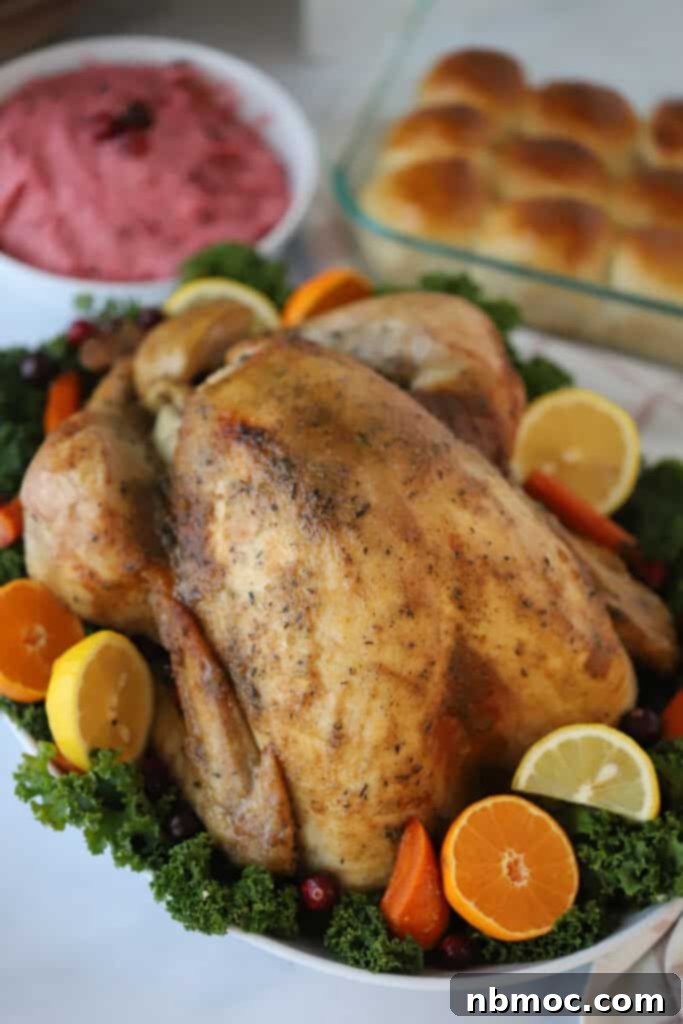
Crafting the Ultimate Oven Roasted Thanksgiving Turkey
Thanksgiving is a time for gathering, gratitude, and, of course, incredible food. The star of many holiday tables is undeniably the roasted turkey, a tradition that brings families together. While the idea of roasting a whole turkey can sometimes feel daunting, especially for those new to holiday cooking, this recipe is meticulously crafted to be super simple, foolproof, and bursting with flavor. Our method guarantees a turkey that is not only juicy from breast to thigh but also boasts a beautifully crisp, golden-brown skin that will impress all your guests.
This guide goes beyond just a recipe; it’s a complete toolkit designed to eliminate guesswork and provide confidence in the kitchen. We address common concerns and frequently asked questions about turkey preparation and cooking, consolidating all the essential information in one accessible place. No more scouring countless websites for tips on thawing, seasoning, or achieving that perfect internal temperature. We empower you with the knowledge and techniques to roast a turkey that truly shines, ensuring a stress-free and delicious holiday meal.
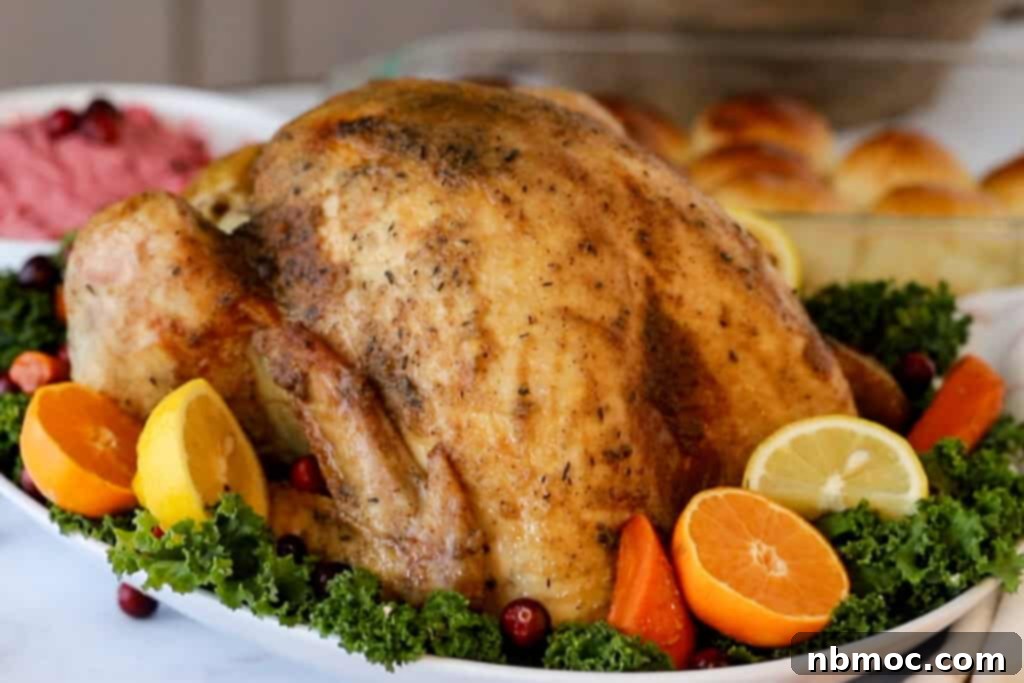
Planning a grand holiday feast? We’ve got you covered with an array of spectacular Thanksgiving recipes. Complement your perfect turkey with other exquisite main courses such as a succulent Prime Rib Roast, a delightful Spiral Ham, or a comforting Slow Cooker Pot Roast. Each dish is chosen to enhance your holiday menu and create an unforgettable dining experience for your loved ones.
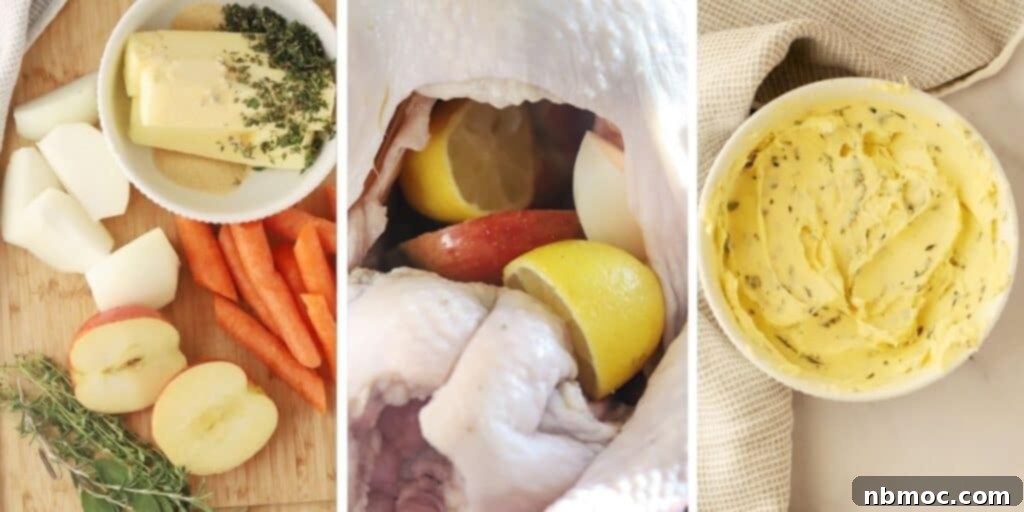
Key Ingredients for a Flavorful Turkey
Achieving a truly outstanding roasted turkey begins with selecting the right ingredients. Here’s a breakdown of what you’ll need and why each component is crucial to our recipe:
- Turkey – The star of your meal! You can opt for either a fresh or frozen whole turkey. If choosing frozen, be sure to account for adequate thawing time, which we detail in our thawing guide below. A 12-15 pound turkey is ideal for most family gatherings, serving approximately 15 people.
- Unsalted Butter – Room temperature butter is key for creating our homemade herb compound butter. Its softness allows it to blend easily with the herbs and seasoning, making it effortless to spread both under and over the turkey skin. This butter will not only infuse deep flavor but also help achieve that coveted crispy, golden-brown skin.
- Garlic Powder and Onion Powder – These foundational seasonings provide a wonderfully aromatic and subtly sweet depth of flavor that complements the turkey beautifully. They’re essential for building a robust taste profile.
- Fresh Herbs – While dried herbs can work in a pinch, fresh herbs offer an incomparably more vibrant and potent flavor. Our recommended trio includes fresh thyme, rosemary, and sage – classic poultry herbs that contribute distinct, earthy, and aromatic notes, synonymous with holiday cooking.
- Carrots – Large, bulk carrots are perfect for stuffing inside the turkey cavity and scattering around the roasting pan. They add moisture and a subtle sweetness to the pan drippings, which are vital for your gravy.
- Onions – Yellow onions are our preferred choice for their balanced sweetness and pungency, though white onions can be used as an alternative. Like carrots, they contribute aromatic depth to the turkey and drippings.
- Apple – A Granny Smith apple is excellent for its tartness, which balances the richness of the turkey, but any apple variety will add moisture and a lovely subtle fruitiness to the cavity, infusing the bird with extra flavor.
- Lemon – Halved lemons placed inside the cavity provide bright, zesty notes that cut through the richness and enhance the overall freshness of the turkey.
- Chicken Broth – You’ll need a few cups of chicken broth, either store-bought or homemade, to add to the bottom of the roasting pan. This liquid prevents the pan drippings from burning, keeps the oven moist, and forms the flavorful base for your gravy. Ensure you have a little extra on hand for adjusting gravy consistency.

Step-by-Step Guide to Roasting the Perfect Thanksgiving Turkey
Follow these detailed steps to achieve a perfectly roasted, incredibly juicy turkey with crispy skin:
- Preheat and Position: Begin by preheating your oven to 425°F (218°C). While the oven preheats, adjust your oven rack to the lowest position. This ensures the turkey has ample space and cooks evenly without the top browning too quickly.
- Prepare the Turkey: Remove your turkey from the refrigerator approximately one hour before you plan to roast it. This allows the bird to come closer to room temperature, promoting more even cooking. Unwrap the turkey and carefully remove any giblets or the neck from both the main body cavity and the neck cavity. Using paper towels, thoroughly pat the entire surface of the turkey dry. A dry skin is crucial for achieving that desirable crispy texture. Place the prepared turkey directly into a large roasting pan.
- Craft the Herb Butter: In a small bowl, combine your softened, room temperature butter with salt, garlic powder, fresh thyme (minced), fresh rosemary (minced), fresh sage (minced), onion powder, and black pepper. Use the back of a spoon to thoroughly mix all these ingredients until they form a smooth, aromatic compound butter. Now, gently use your hands to loosen the skin over the turkey breast and thighs, creating pockets. Carefully spread about half a cup of this flavorful herb butter directly under the skin. Apply the remaining butter generously all over the outside of the turkey. This butter layer will infuse the meat with flavor, keep it moist, and help the skin crisp beautifully.
- Stuff and Truss the Turkey: Stuff the turkey’s cavity with the prepared carrots, onions, apple halves, and lemon halves. These aromatics will impart incredible flavor to the turkey from the inside out. For even cooking and a picture-perfect presentation, tuck the wing tips underneath the turkey’s body to prevent them from burning. If desired, truss the turkey legs together with about 12 inches of kitchen twine to help the bird hold its shape and cook uniformly. Scatter any remaining vegetables around the roasting pan. Pour approximately 2 cups of chicken broth or turkey broth into the bottom of the roasting pan; this liquid will keep the turkey moist and provide the flavorful drippings needed for your gravy.
- Roast to Perfection: Insert a meat thermometer into the thickest part of the turkey breast, ensuring it doesn’t touch any bone. Cover the roasting pan tightly with aluminum foil. Place the turkey in the preheated oven, then immediately reduce the oven temperature to 350°F (175°C). Roast the turkey for approximately 13 minutes per pound. The turkey is nearing completion when your digital thermometer reads 160°F (71°C) in the thickest part of the breast. At this point, check the color of the skin. If it’s still pale, remove the aluminum foil to allow it to brown during the final 15-20 minutes of cooking. If the turkey is already golden, keep the foil on to prevent over-browning until it reaches the final internal temperature of 165°F (74°C). If specific parts are browning too quickly, you can shield them with small pieces of aluminum foil.
- Rest and Reserve Drippings: Once the turkey reaches an internal temperature of 165°F (74°C) in both the thickest part of the breast and thigh, remove it from the oven. Using a turkey baster, carefully remove all the flavorful drippings from the roasting pan (or pour the drippings through a strainer directly into a separate container). Reserve these drippings for making your gravy. Tent the whole turkey loosely with aluminum foil and let it rest for at least 30 minutes before carving. This crucial resting period allows the juices to redistribute throughout the meat, ensuring a wonderfully succulent and tender turkey. While the turkey rests, you can begin preparing your homemade gravy.

Crafting Rich Turkey Gravy from Drippings
No Thanksgiving turkey is complete without a rich, savory gravy made from the pan drippings. The best time to prepare your gravy is while the roasted turkey is resting, allowing you to maximize flavor and efficiency. You can only start once the turkey is fully cooked and out of the oven, as the drippings are your primary flavor base.
- Prepare Gravy Base: Begin by pouring all your reserved turkey drippings through a fine-mesh strainer into a measuring cup. This step removes any large chunks of vegetables or excess fat, ensuring a smooth gravy. Measure the strained drippings, then add enough chicken broth until you reach a total of 3 cups of liquid. This is your flavorful gravy base.
- Create the Roux and Season: In a large saucepan, melt 1/4 cup of butter over medium heat. Once melted, add 1/4 cup of all-purpose flour and whisk continuously for 1-2 minutes to create a smooth roux. This will serve as your thickening agent. Gradually whisk in about 1 cup of your drippings mixture until smooth. Bring this mixture to a boil for 1 minute to ensure the flour is fully cooked. Then, slowly whisk in the remaining drippings mixture. Taste the gravy and adjust the seasoning as needed with additional salt, black pepper, onion powder, and garlic powder to achieve your desired flavor profile.
- Thicken to Perfection: In a small separate bowl, combine 3 tablespoons of cornstarch with approximately 1/4 cup of cold water, stirring until it forms a smooth, lump-free slurry. Slowly whisk this cornstarch slurry into the simmering gravy while continuously stirring. Continue heating and whisking until the gravy visibly thickens and coats the back of a spoon. It’s important to let the gravy boil gently for at least 1 minute after adding the cornstarch to allow it to reach its full thickening potential. If the gravy becomes too thick, you can thin it out to your preferred consistency by whisking in a little more chicken broth, one tablespoon at a time.
- Serve Warm: Once your gravy has reached the perfect thickness and flavor, remove it from the heat. Serve it immediately, piping hot, alongside your beautifully roasted turkey. Enjoy the ultimate pairing!
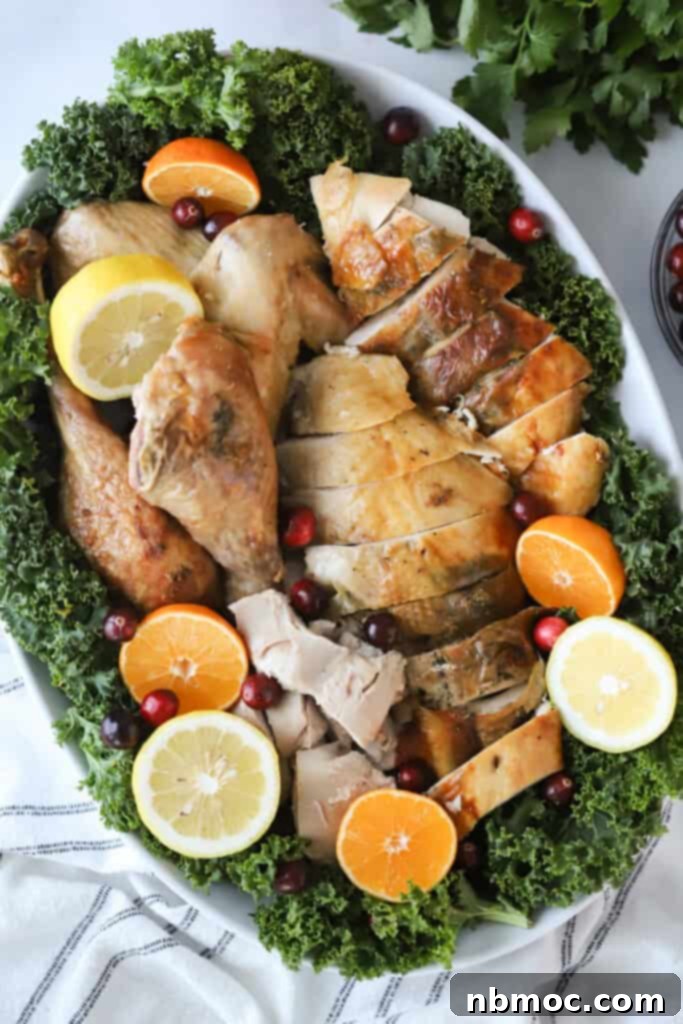
Expert Tips for a Flawless Roast Turkey
To ensure your oven-roasted turkey is nothing short of spectacular, keep these valuable tips in mind:
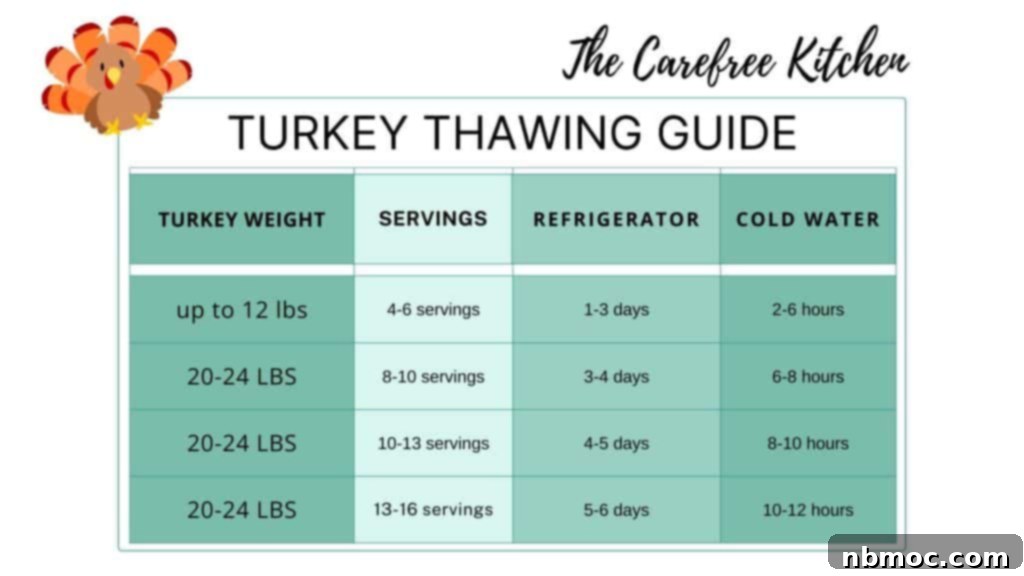
- Plan Ahead for Thawing: If your turkey is frozen, planning its thawing process is critical for both safety and convenience. The safest and most recommended method is refrigerator thawing, which requires approximately 24 hours for every 4-5 pounds of turkey. Always ensure your turkey is fully thawed a couple of days before you intend to cook it. It’s much better to have a thawed turkey waiting in your fridge than to frantically try to speed up the thawing process on cooking day. Refer to our detailed thawing guide above for specific timings based on turkey weight.
- The Importance of Preheating: Always allow your oven to fully preheat to the recommended temperature before placing the turkey inside. A properly preheated oven ensures that the turkey begins cooking evenly from the moment it enters, contributing to a consistently cooked bird and a wonderfully crispy skin.
- Generous Seasoning is Key: Don’t be shy with seasoning! Liberally season the turkey both inside and out with your herb butter blend. This ensures that every bite of meat is infused with delicious flavors and enticing aromas. The salt also helps tenderize the meat and draw out moisture to create a crispy skin.
- Consider Trussing (Optional but Recommended): Trussing involves tying the turkey’s legs together and securing its wings close to the body. This technique is optional but highly recommended as it promotes more even cooking by preventing thinner parts (like the wing tips and ends of the drumsticks) from overcooking and drying out before the breast and thighs are done. It also helps the turkey maintain an attractive, compact shape, which makes for a more beautiful presentation on your serving platter. Often, you can simply tuck the drumsticks into the skin fold or position the wings strategically without twine.
- No Need to Baste with Herb Butter: When using our herb compound butter mixture, you can skip the traditional basting. The butter melts under the skin, continuously basting the turkey from within, keeping the meat moist and promoting a beautifully crisp, golden skin without the need to open the oven door repeatedly.
- Crucial Resting Period: Once your turkey is cooked through and removed from the oven, it is paramount to let it rest. Tent it loosely with aluminum foil and allow it to rest for at least 20-30 minutes, or even up to an hour for larger birds. This resting time is vital because it allows the juices, which have been driven to the center of the bird during cooking, to redistribute back throughout the meat. The result is a significantly more succulent, tender, and flavorful turkey when you carve it.
- Invest in a Good Thermometer: A reliable meat thermometer is your best friend when roasting a turkey. It’s the only way to accurately determine doneness and prevent overcooking. Aim for 165°F (74°C) in the thickest parts of the breast and thigh, away from any bones.
- Create a Flavorful Roasting Bed: Don’t underestimate the power of aromatics in the roasting pan. The carrots, onions, and broth not only prevent drippings from burning but also create a steam bath that keeps the turkey moist and infuses the drippings with incredible flavor for your gravy.
Frequently Asked Questions About Roasting Turkey
The best and safest method for thawing a frozen turkey is in the refrigerator. Place the turkey, still in its original packaging, into a large pan or on a tray to catch any drips, and refrigerate until completely thawed. This slow, steady thawing prevents bacterial growth and ensures even thawing.
Thawing time varies significantly with the size of your turkey. A general guideline for refrigerator thawing is approximately 24 hours for every 4-5 pounds. It’s always wise to give yourself an extra day for thawing just in case. For example:
Up to 4 pounds: 1 day
5-8 pounds: 2 days
9-12 pounds: 3 days
13-16 pounds: 4 days
17-20 pounds: 5 days
21-24 pounds: 6 days
When planning for an in-bone, whole turkey, we recommend estimating about 1 ¼ to 1 ½ pounds of turkey per person. This accounts for appetite variations and typically leaves a good amount for leftovers, which are always a holiday bonus! For example, a 15-pound turkey can comfortably serve 10-12 people with some leftovers.
Your turkey is safely cooked and ready when it reaches an internal temperature of 165°F (74°C) in the thickest parts of both the breast and the thigh. Always use a reliable meat thermometer and be sure to avoid touching any bones, as bones conduct heat differently and can give an inaccurate reading.
As a general rule of thumb, you can estimate roughly 13 minutes of cooking time per pound for a thawed turkey roasted at 350°F (175°C). So, a 12-pound turkey would typically take around 2 ½ to 3 hours to cook. However, this is just an estimate. The actual cooking time can vary slightly depending on your specific oven, the turkey’s exact size and shape, whether it’s stuffed, and if you’re cooking other dishes simultaneously (which we generally advise against for optimal turkey cooking!). Always rely on a meat thermometer for precise doneness, not just the clock.
While brining can certainly add moisture and flavor, it’s not strictly necessary with this recipe. Our homemade herb butter, applied under and over the skin, provides exceptional moisture and flavor directly to the meat, resulting in a juicy turkey even without the extra brining step. If you prefer to brine, feel free, but rest assured you can achieve fantastic results without it!
No roasting rack? No problem! You can easily create a makeshift rack by forming a bed of chopped vegetables (like extra carrots, onions, celery) at the bottom of your roasting pan. This elevates the turkey, allowing air to circulate and the skin to crisp evenly, while also adding flavor to your pan drippings.
Storing Leftover Turkey
Proper storage is essential to enjoy your delicious turkey leftovers safely:
- Refrigerator: To store leftover turkey, first allow it to cool completely. Then, carve the meat off the bone and place it in an airtight, covered container. It will keep fresh in the refrigerator for 3-4 days.
- Freezer: For longer storage, freeze your turkey leftovers. Place carved turkey meat in a freezer-safe zipper bag or an airtight container, removing as much air as possible to prevent freezer burn. It can be stored in the freezer for up to one month. Thaw in the refrigerator overnight before reheating.
Oven Roasted Thanksgiving Turkey Recipe
The Carefree Kitchen
Pin Recipe
Rate This Recipe
Watch Video
30 mins
3 hrs
15 mins
30 mins
4 hrs
15 mins
15 people
Ingredients
- 12-15 pound whole turkey, thawed
- 1 cup butter, room temperature
- 2 teaspoons salt
- 2 tablespoons garlic powder
- 1 tablespoon thyme, fresh minced
- 2 tablespoons rosemary, fresh minced
- 1 teaspoon sage, fresh minced
- 1 tablespoon onion powder
- 1 teaspoon black pepper, ground
- 5 whole carrots, peeled and cut into 2″ pieces
- 2 medium yellow onions, peeled and quartered
- 1 large apple, cut in half
- 1 large lemon, cut in half
- 2 cups chicken broth, to add to the roasting pan before baking
Turkey Gravy
- 3 cups turkey drippings and chicken broth
- 1/2 teaspoon salt
- 1/4 teaspoon black pepper
- 1/4 teaspoon garlic powder
- 1/2 teaspoon onion powder
- 3 tablespoons cornstarch
- 4 tablespoons water, cold
Instructions
- Preheat the oven to 425°F (218°C) and adjust the oven rack to the bottom position.
- Remove the turkey from the refrigerator about an hour before roasting. Remove packaging and any giblets from inside the neck and body cavities. Pat the outside of the turkey thoroughly dry with paper towels and place it in a large roasting pan.
- In a small bowl, combine the room temperature butter, salt, garlic powder, thyme, rosemary, sage, onion powder, and pepper. Mix all ingredients until well combined. Gently loosen the turkey’s skin with your hands, then spread about 1/2 cup of the butter mixture under the skin. Spread the remaining butter all over the outside of the turkey.
- Stuff the carrots, onions, apple, and lemon inside the turkey’s cavity. Tuck the wings under the turkey. If desired, truss the drumsticks together or tuck them into the skin fold. Add any remaining vegetables around the roasting pan along with about 2 cups of chicken broth.
Roasting the Turkey
- Insert a meat thermometer into the thickest part of the turkey breast, avoiding bones. Cover the turkey and roasting pan tightly with aluminum foil. Place in the preheated oven and immediately reduce the temperature to 350°F (175°C). Roast for about 13 minutes per pound, or until the thermometer reads 165°F (74°C) in the thickest part of the breast and thigh.
- When the turkey reaches 160°F (71°C), check the skin. If it’s light in color, remove the aluminum foil for the final 15-20 minutes of cooking to allow it to brown. If the turkey is already golden brown, keep the foil on until it reaches 165°F (74°C).
- Once the turkey has reached 165°F (74°C) in its thickest parts, remove it from the oven. Use a turkey baster to remove the drippings from the pan. Reserve these drippings in a separate container for making the gravy.
- Tent the turkey loosely with aluminum foil and let it rest for 30 minutes. This is the perfect time to make your gravy.
Turkey Gravy
- Pour the reserved turkey drippings through a strainer, removing any large chunks of veggies or fat. Add enough chicken broth to reach a total of 3 cups of liquid (drippings and broth combined).
- In a large saucepan over medium heat, melt 1/4 cup butter. Add 1/4 cup flour and whisk until smooth, forming a roux. Bring to a boil for 1 minute, then add about 1 cup of the drippings mixture and whisk until smooth. Add the remaining drippings mixture, then taste and adjust seasoning with more salt, pepper, onion powder, and garlic powder as needed.
- In a small bowl, whisk 3 tablespoons of cornstarch into about 1/4 cup of cold water until smooth. Slowly whisk this cornstarch slurry into the simmering gravy while constantly stirring. Continue heating and whisking until the gravy thickens and coats the back of a spoon. Boil the gravy for 1 minute to ensure full thickening. If the gravy is too thick, thin it with a little more broth until desired consistency is reached.
- Remove from heat and serve warm with your roasted turkey. Enjoy!
Video
Notes
Nutrition
Carbohydrates: 7g |
Protein: 57g |
Fat: 27g |
Saturated Fat: 12g |
Polyunsaturated Fat: 4g |
Monounsaturated Fat: 8g |
Trans Fat: 1g |
Cholesterol: 219mg |
Sodium: 892mg |
Potassium: 661mg |
Fiber: 1g |
Sugar: 3g |
Vitamin A: 623IU |
Vitamin C: 7mg |
Calcium: 47mg |
Iron: 3mg
Disclaimer: Nutritional values were calculated using a third-party tool and are provided as an estimation only.
Main Course
American
Sharing this recipe with a link is both encouraged and appreciated. Copying/pasting and/or screenshots of full recipes to any social media is strictly prohibited. Content and photographs are copyright protected.
Did you make this?
Don’t forget to leave a rating below and make sure to follow on Pinterest, Instagram and Tiktok for more!
More Must-Try Thanksgiving Recipes for Your Feast
Once you’ve mastered this incredible oven-roasted turkey, why not expand your holiday menu with some of our other cherished Thanksgiving recipes? From appetizers to show-stopping side dishes and delightful desserts, these selections will round out your feast beautifully and leave your guests asking for more:
- Elegant Brie and Fig Puff Pastry: A simple yet sophisticated appetizer perfect for holiday entertaining.
- Comforting Crock Pot Cheesy Potatoes: An easy, cheesy, and crowd-pleasing side dish that frees up oven space.
- The Quintessential Best Pumpkin Pie: A classic holiday dessert, perfectly spiced and wonderfully creamy.
- Flavorful Cornbread Stuffing: A hearty and savory stuffing that’s a Thanksgiving staple.
- Explore More Best Thanksgiving Side Dishes: Discover a collection of delicious accompaniments to complete your meal.
- Simple Oven-Roasted Chicken and Potatoes: A versatile and easy dish, great for smaller gatherings or non-turkey days.
- Tangy Crockpot Turkey Breast with 3 Citrus Marinade: An excellent alternative for a smaller group or when you want an extra moist turkey breast.
- Sparkling Sugared Cranberries: A beautiful and festive garnish that adds a touch of sweetness and color.
- Decadent No-Bake Chocolate Cheesecake Dip: A quick and easy dessert that’s rich, creamy, and satisfying without needing oven time.
- Browse even More Thanksgiving Recipes for endless inspiration.
- Find comprehensive Holiday Menu Ideas to plan your entire celebratory spread with ease.
This herb-roasted Thanksgiving turkey recipe stands out for its simplicity, incredible flavor, and consistently juicy results—even without the need for brining. It’s an ideal choice for both novice cooks taking on their first holiday bird and experienced chefs looking for a reliably delicious method. Get ready to impress your family and friends with a truly spectacular centerpiece this holiday season!