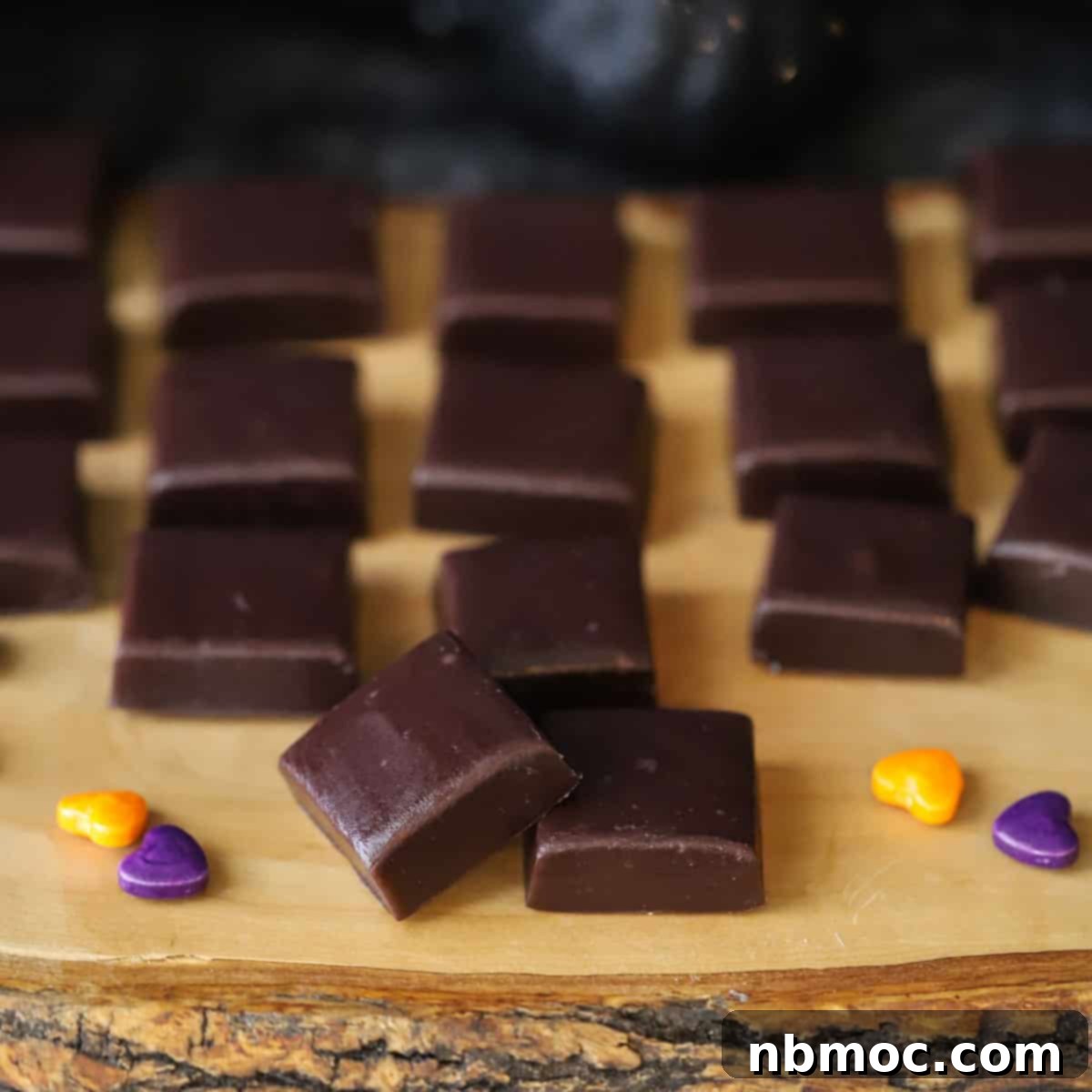
Irresistibly Buttery Black Licorice Caramels: A Homemade Delight
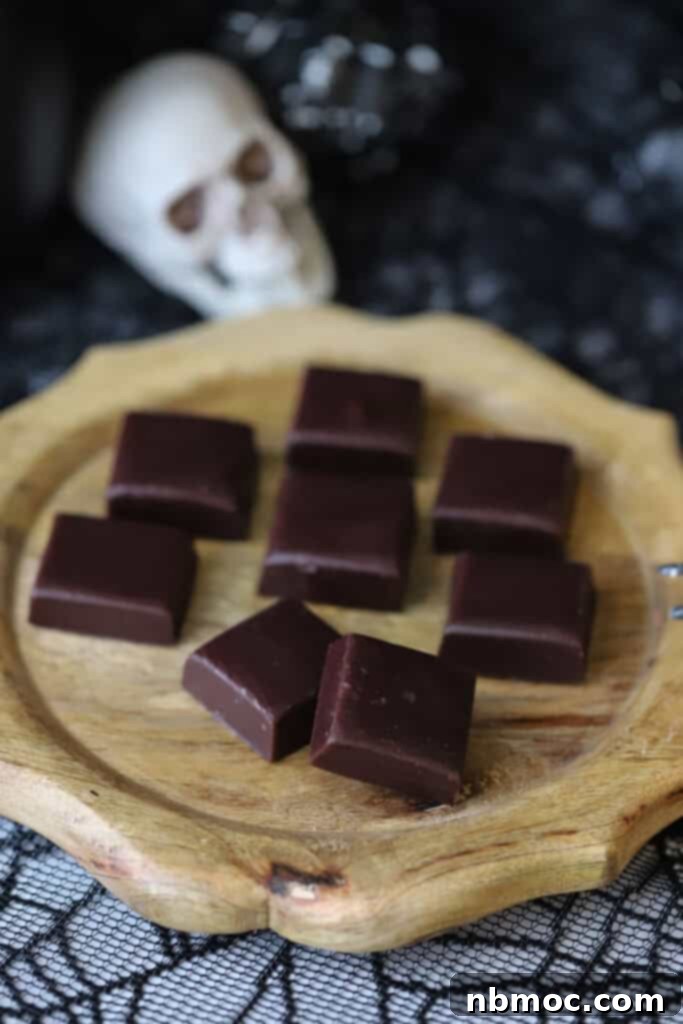
Prepare to be enchanted by these homemade Black Licorice Caramels. Each piece is a testament to buttery perfection, a delightful balance of soft chewiness, and an unforgettable flavor. Even the most skeptical palates will find themselves reaching for more, captivated by the harmonious blend of rich caramel and distinctive black licorice, subtly enhanced with a hint of sea salt. This isn’t just candy; it’s an experience designed to surprise and satisfy.
These exquisite caramels are wonderfully versatile, perfect for sharing as thoughtful gifts during the holidays, adding a unique touch to Halloween parties, or simply indulging in a special treat at home. If you’re a fan of classic caramel confections and eager to explore more handcrafted delights, consider trying our beloved Homemade Caramels, luxurious Chocolate Covered Caramels, or the fun and easy Nilla Wafer Caramel Candy. Each recipe promises the joy of homemade goodness.
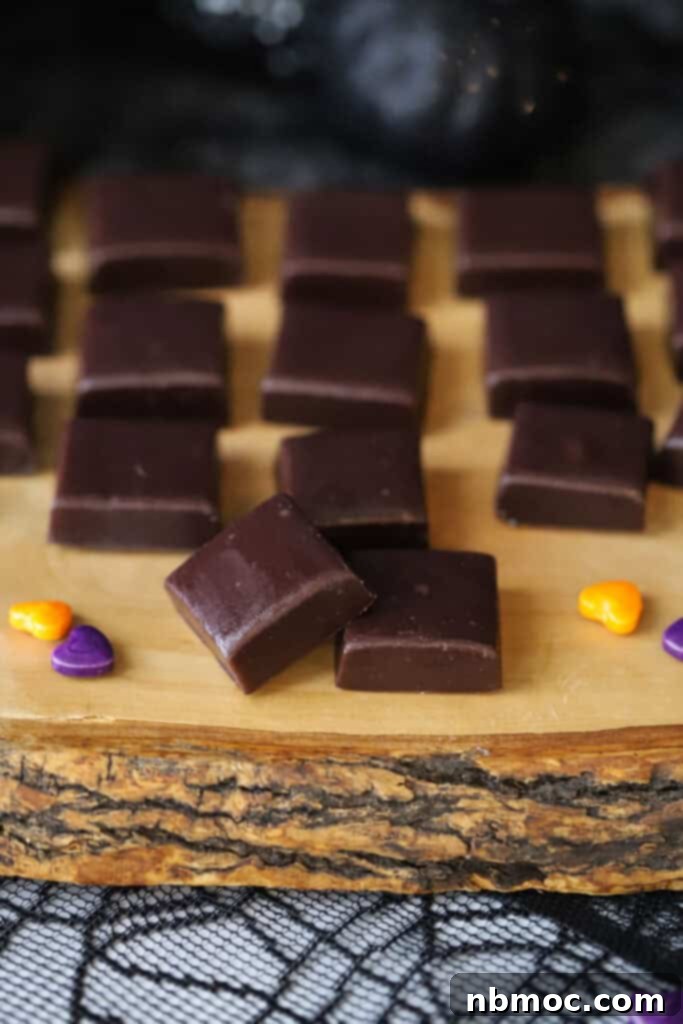
The Unexpected Magic of Black Licorice Caramels
Before you dismiss this recipe thinking, “Nope, I don’t like black licorice,” I urge you to trust the process. These black licorice caramels unveil a truly magical transformation that occurs when the subtle, aromatic notes of anise (which gives black licorice its signature flavor) are introduced into a luscious, buttery, and perfectly salted caramel. It’s a flavor combination that defies expectations and creates something truly extraordinary.
Each soft, chewy square is packed with a complex flavor profile that will have you reaching for another, and then another. The anise extract brightens the sweetness of the caramel without overpowering it, resulting in a sophisticated candy that’s both familiar and intriguing. Furthermore, don’t be intimidated by the idea of making caramel from scratch. This recipe is designed to be virtually foolproof, relying on just a few simple ingredients and clear instructions to guide you to success.
Making homemade candy is a rewarding culinary adventure, offering unparalleled freshness and the satisfaction of creating something truly special. We’ve meticulously detailed everything you need to know: from ingredient specifics and precise step-by-step instructions to a comprehensive section of expert tips. Our goal is to ensure your first batch of black licorice caramels is nothing short of spectacular. And here’s a final pro tip: enlist your kids to help with wrapping these delightful treats – it’s a fun activity everyone can enjoy!
Essential Ingredients for Irresistible Black Licorice Caramels
Crafting the perfect batch of these unique caramels starts with understanding the role of each key ingredient. Quality components ensure the best texture and flavor.
- Butter: High-quality butter is the foundation of rich, smooth caramels. We recommend using unsalted butter for better control over the salt content. If you opt for salted butter, remember to reduce the additional salt in the recipe to about 1/8 teaspoon to prevent your caramels from becoming overly salty.
- Sugars: This recipe calls for both granulated sugar and light brown sugar. Granulated sugar provides foundational sweetness and structure, while light brown sugar adds depth, a hint of molasses flavor, and contributes to the caramel’s wonderfully soft and chewy texture. The combination is key for achieving that classic caramel richness.
- Karo Syrup/Corn Syrup: This is a crucial ingredient for achieving professional-grade caramels. Corn syrup (or Karo syrup) acts as an interfering agent, preventing the sugar crystals from reforming as the mixture cooks. Without it, your caramels can become gritty and have a less desirable texture. It ensures a smooth, silky finish.
- Sweetened Condensed Milk: Do not substitute this ingredient! Sweetened condensed milk is vital for the distinct creaminess and tenderness of these caramels. It’s a concentrated form of milk with sugar already added, contributing significantly to the caramel’s body and sweetness. Heavy cream or evaporated milk will not yield the same results, so stick to sweetened condensed milk for success.
- Black Licorice Extract (or Anise Extract): This is where the magic happens! Black licorice extract provides the signature flavor. If black licorice extract is hard to find, anise extract is an excellent substitute, as the primary flavor compound in black licorice is anethole, which is also the main component of anise. Both will give you that authentic, aromatic licorice taste.
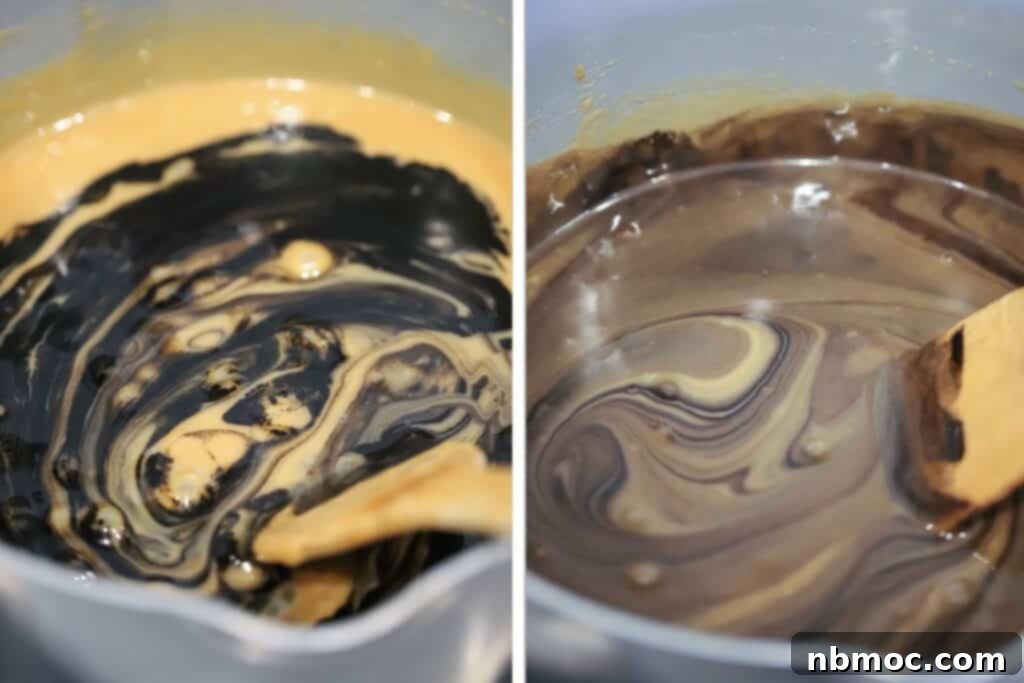
- Black Food Coloring: While not strictly necessary for flavor, black food coloring enhances the visual appeal, making these caramels truly “black licorice” in appearance. Without it, the caramels will retain their natural golden-brown caramel color, which is still delicious but less visually striking for a licorice candy. A paste or gel food coloring is preferred over liquid drops because it’s more concentrated and has less water content, which won’t thin out your caramel mixture.
- Salt: A small amount of salt balances the sweetness and brings out the complex flavors of both the caramel and licorice. It’s a flavor enhancer that makes a significant difference.
Step-by-Step Guide: Crafting Your Black Licorice Caramels
Follow these detailed steps to create a batch of perfectly soft, chewy, and flavorful black licorice caramels.
- Prepare a 9” x 13” Baking Dish: Begin by lightly greasing your baking dish with butter. It’s crucial to use butter here, not non-stick cooking spray, as sprays can impart an undesirable flavor to your caramels. Set the prepared dish aside; having it ready ensures a smooth transfer of the hot caramel mixture.
- Combine and Cook the Caramel Mixture: In a large, heavy-bottomed nonstick pot, combine the butter, granulated sugar, brown sugar, Karo syrup, sweetened condensed milk, and salt. Place the pot over medium heat. Stir the mixture constantly with a sturdy spatula or wooden spoon until all the sugar has dissolved and the butter is fully melted. Continue stirring frequently to prevent sticking and burning.
- Reach the Perfect Temperature: Once the mixture comes to a gentle boil, insert a reliable candy thermometer. Continue stirring constantly to ensure even cooking and prevent scorching. Cook the caramel mixture until it reaches precisely 240 degrees F (116 degrees C) on the candy thermometer. This temperature is critical for achieving the ideal soft-ball consistency. Do not rush this step.
- Add Flavoring and Coloring: As soon as the caramel reaches 240 degrees F, remove the pot from the heat immediately. Swiftly stir in the vanilla extract, black licorice extract, and black food coloring. Stir vigorously until all the extracts and coloring are thoroughly combined and the caramel has a uniform black hue.
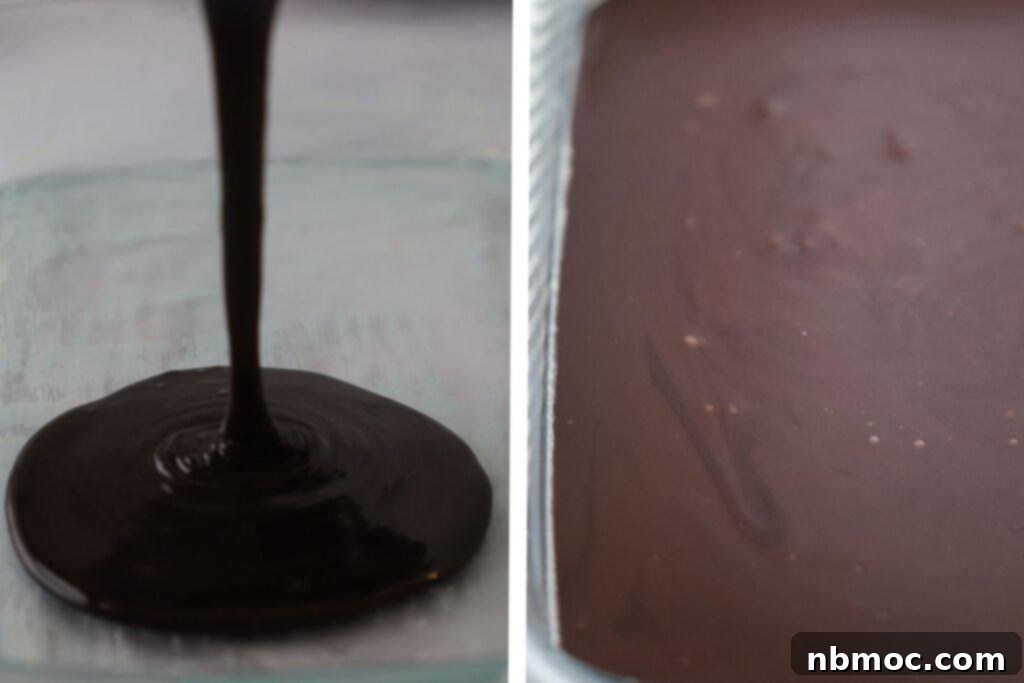
- Pour and Cool: Carefully pour the hot caramel mixture into your prepared 9″ x 13″ baking dish. Be cautious, as the caramel is extremely hot. Allow the caramel to cool undisturbed at room temperature until it is completely set. This typically takes at least 2 hours, or even longer depending on your kitchen’s temperature. Resist the urge to cut it before it’s firm.
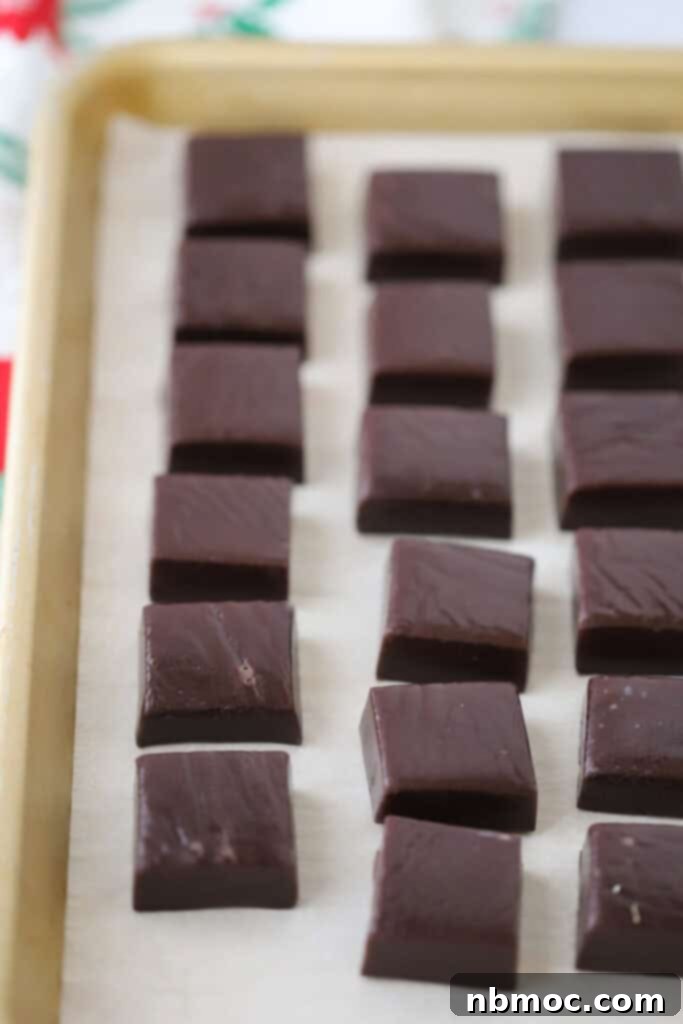
- Cut and Wrap: Once the caramels are fully cooled and firm, transfer the sheet of caramel to a large cutting board. Using a sharp, buttered knife or a pizza cutter, cut the caramel into small, desired pieces. For easy storage and gifting, wrap each individual caramel candy in small squares of wax paper. Twist the ends firmly to seal.
Frequently Asked Questions About Black Licorice Caramels
How long does it take for caramels to cool at room temperature?
After pouring your caramel mixture into the pan, it typically takes about 2 hours for the caramels to cool and set completely at room temperature. However, the exact cooling time can vary depending on factors such as the ambient temperature of your kitchen and the size of the pan you used. Thicker caramels, for instance, will naturally require a longer cooling period compared to thinner ones.
What if I don’t have a candy thermometer?
Even without a candy thermometer, you can still successfully make these delicious caramels! The traditional “cold water method” is an excellent alternative to determine if your caramel has reached the soft-ball stage. To do this, prepare a small bowl with 1-2 cups of very cold water (ice water works best). When you suspect your caramel is nearing readiness, carefully drop about a tablespoon of the hot caramel mixture into the cold water. Use your fingertips to gently gather and test the caramel. If it forms a soft, pliable ball that holds its shape, it’s ready. If the caramel dissolves, becomes stringy, or is too sticky to form a ball, continue cooking and test again in a few minutes.
Why are my caramels so soft and won’t set?
If your caramels have cooled for several hours and remain too soft to cut or handle, it’s highly probable that they were not cooked to a sufficiently high temperature. The sugar needs to reach a specific point for the caramel to set properly. It’s incredibly important to cook the mixture all the way until it reaches 240 degrees F (116 degrees C) on a candy thermometer, or until it consistently passes the soft-ball cold water test. If the sugars haven’t cooked enough, the caramel will lack the structural integrity to set up firmly.
What’s the best way to wrap black licorice caramels?
The easiest and most effective way to wrap individual caramel candies is by using small squares of wax paper. Cut your caramels into bite-sized pieces, then wrap each piece snugly in a square of wax paper. Fold the paper around the caramel and then twist the sides tightly, much like a classic candy wrapper. Ensure you cut the caramel small enough that you have ample wax paper on each side to twist securely, preventing the wrapper from unraveling and the caramel from sticking together.
Can I use real licorice root or licorice powder instead of extract?
While real licorice root or powder can be used in some recipes, for caramels, extract is generally preferred for its consistent flavor intensity and ease of incorporation. Using root or powder might introduce textural changes or require more complex infusion methods to achieve a strong enough flavor without affecting the caramel’s smooth consistency. For best results and foolproof success with this recipe, stick to black licorice or anise extract.
How can I make my caramels harder or softer?
The final texture of your caramels is primarily determined by the temperature they reach during cooking. For a slightly firmer caramel, cook the mixture to 245 degrees F (118 degrees C). For an even softer, chewier caramel, you can aim for 235 degrees F (113 degrees C). However, be cautious with temperature adjustments, as even a few degrees can make a significant difference. For this recipe, 240°F is recommended for a perfect soft-chew texture.
Expert Tips for Perfect Black Licorice Caramels Every Time
Achieving consistently perfect homemade caramels requires attention to detail. These expert tips will help you navigate the cooking process like a pro and ensure your black licorice caramels turn out beautifully every time.
- Use a Nonstick Pan: A large, heavy-bottomed nonstick pot is your best friend when making caramel. It significantly reduces the chances of the caramel sticking to the bottom and sides, minimizing scorching and making cleanup much easier. Even if you stir diligently, a nonstick surface offers an extra layer of protection.
- Master the Stirring Technique: Constant stirring is non-negotiable for smooth caramels. Employ a systematic stirring pattern: move your spoon vertically across the pan, then around the perimeter, and finally in a horizontal motion. This ensures that every part of the mixture is agitated and evenly heated, preventing hotspots and sugar crystallization.
- The Right Spoon Matters: For optimal scraping of the entire bottom surface of the pan, a square-tipped wooden spoon or a heat-resistant silicone spatula is highly effective. Its flat edge allows you to reach into the corners and along the bottom, ensuring no sugar crystals are left unattended.
- Do Not Stop Stirring: This cannot be stressed enough—do not stop stirring once the caramel mixture begins to boil! Continuous motion helps prevent the sugar from crystallizing on the sides of the pan and ensures even cooking, which is crucial for a smooth, uniform texture.
- Butter the Dish Generously: Always use real butter to prepare your baking dish, not non-stick cooking spray. Butter not only prevents sticking but also complements the rich flavor of the caramel. Cooking spray can impart an artificial taste that will detract from your delicious homemade candy.
- Mind the Temperature: Accuracy is key in caramel making. Invest in a reliable candy thermometer and ensure it is calibrated correctly. The specified temperature (240°F) is crucial for the correct soft-ball consistency. Overcooking will result in hard, brittle caramels, while undercooking will yield soft, unset caramels.
- Speed Up Cooling (Carefully): If you’re short on time, you can carefully slide the baking dish of hot caramels into the refrigerator or a cool garage. However, ensure the caramel has cooled slightly at room temperature first (about 30 minutes) to prevent too rapid a temperature change, which can sometimes affect texture. Do not move it while still liquid-hot.
- Wait for Complete Cooling Before Cutting: Patience is a virtue here. Do not attempt to cut the caramel until it has had ample time to cool completely and come to a firm room temperature. Cutting too early can result in sticky, misshapen pieces that are difficult to handle and wrap.
- Chilling for Dipping: If you plan to dip your black licorice caramels in chocolate, an extra step is beneficial. After cutting them into pieces, chill them in the refrigerator for at least 15 minutes. This firms up the caramels, helping them maintain their shape beautifully when dipped into warm chocolate.
- Be Safe with Hot Caramel: Hot caramel is incredibly hot and can cause severe burns. Always exercise extreme caution when cooking and handling the mixture. Keep children and pets away from the stovetop. Have oven mitts ready and avoid touching the hot caramel directly.
Storing Your Delicious Black Licorice Caramels
Proper storage is essential to maintain the freshness and delightful chewiness of your homemade black licorice caramels. Here’s how to keep them at their best:
- Room Temperature: Once individually wrapped in wax paper, store your caramels in an airtight container at cool room temperature. They will remain fresh and wonderfully chewy for up to 2 weeks. Avoid direct sunlight or warm environments, which can cause them to soften or melt.
- Freezer: For longer storage, both cut and uncut caramels can be frozen. Wrap them tightly in plastic wrap (if uncut) or ensure individual pieces are well-wrapped in wax paper, then place them in a freezer-safe bag or airtight container. They will keep well in the freezer for up to 2 months. Thaw them at room temperature before enjoying.
Black Licorice Caramels Recipe
Black Licorice Caramels Recipe
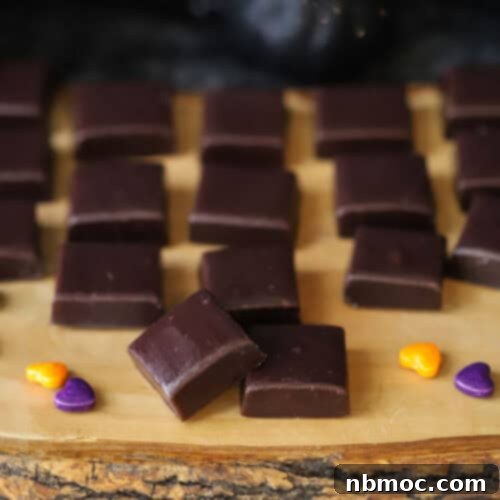
These homemade Black Licorice Caramels are buttery, soft, and so easy to make. The combination of caramel and licorice flavors with a little hint of salt makes them impossible to resist, even for skeptics.
Pin Recipe
Ingredients
- 1 cup butter
- 1 cup granulated sugar
- 1 cup light brown sugar
- 1 cup Karo syrup (corn syrup)
- 1 can Sweetened Condensed Milk (14 oz)
- 1/4 teaspoon salt
- 1 teaspoon vanilla extract
- 1 teaspoon Black Licorice Extract (or anise extract)
- 1/2 teaspoon Black Food Coloring (gel or paste recommended)
Instructions
- Grease a 9″ x 13″ baking dish generously with butter and set aside. (Do not use nonstick cooking spray.)
- In a large nonstick pot, combine butter, granulated sugar, brown sugar, Karo syrup, sweetened condensed milk, and salt. Heat over medium heat, stirring constantly until all sugar is dissolved and butter is melted.
- Once the mixture comes to a boil, continue stirring constantly. Cook the caramel mixture until it reaches 240 degrees F (116 C) on a candy thermometer.
- Immediately remove from heat. Stir in vanilla extract, black licorice extract, and black food coloring until thoroughly combined.
- Pour the hot caramel into the prepared baking dish. Let cool completely at room temperature (at least 2 hours) until fully set. Once firm, transfer to a cutting board and cut into small pieces. Wrap candies as desired in wax paper. Enjoy!
Nutrition
Disclaimer: Nutritional values were calculated using a third-party tool and are provided as an estimation only.
Sharing this recipe with a link is both encouraged and appreciated. Copying/pasting and/or screenshots of full recipes to any social media is strictly prohibited. Content and photographs are copyright protected.
Did you make this? Don’t forget to leave a rating below and make sure to follow on Pinterest, Instagram and Tiktok for more!
More Delicious Homemade Candy Recipes
If you’ve enjoyed crafting these unique black licorice caramels, you’re sure to love exploring other homemade candy creations. From nutty brittles to creamy fudges, there’s a world of sweet treats waiting to be discovered in your kitchen. Here are some more delightful recipes to inspire your next candy-making adventure:
- Crunchy Peanut Brittle
- Classic Divinity Candy
- Colorful Jello Divinity Candy
- Homemade Turtles Candy
- Refreshing Peppermint Patties
- Festive White Chocolate Dipped Oreos (Ornament Oreos)
- Delightful Mint Chocolate Dipped Oreos
- Spiced Cinnamon Caramel Candy
- Sweet and Salty Caramel and Chocolate Pretzels
- Quick and Easy Rolo Pretzel Bites
- Discover even more Irresistible Christmas Candy Recipes
- Explore a wide array of Decadent Dessert Recipes
These buttery, soft, and satisfyingly chewy licorice caramels, flavored with aromatic anise extract and beautifully colored with black food coloring, are more than just a candy – they’re a memorable homemade treat that’s surprisingly easy to achieve. Enjoy the process and the delicious reward!