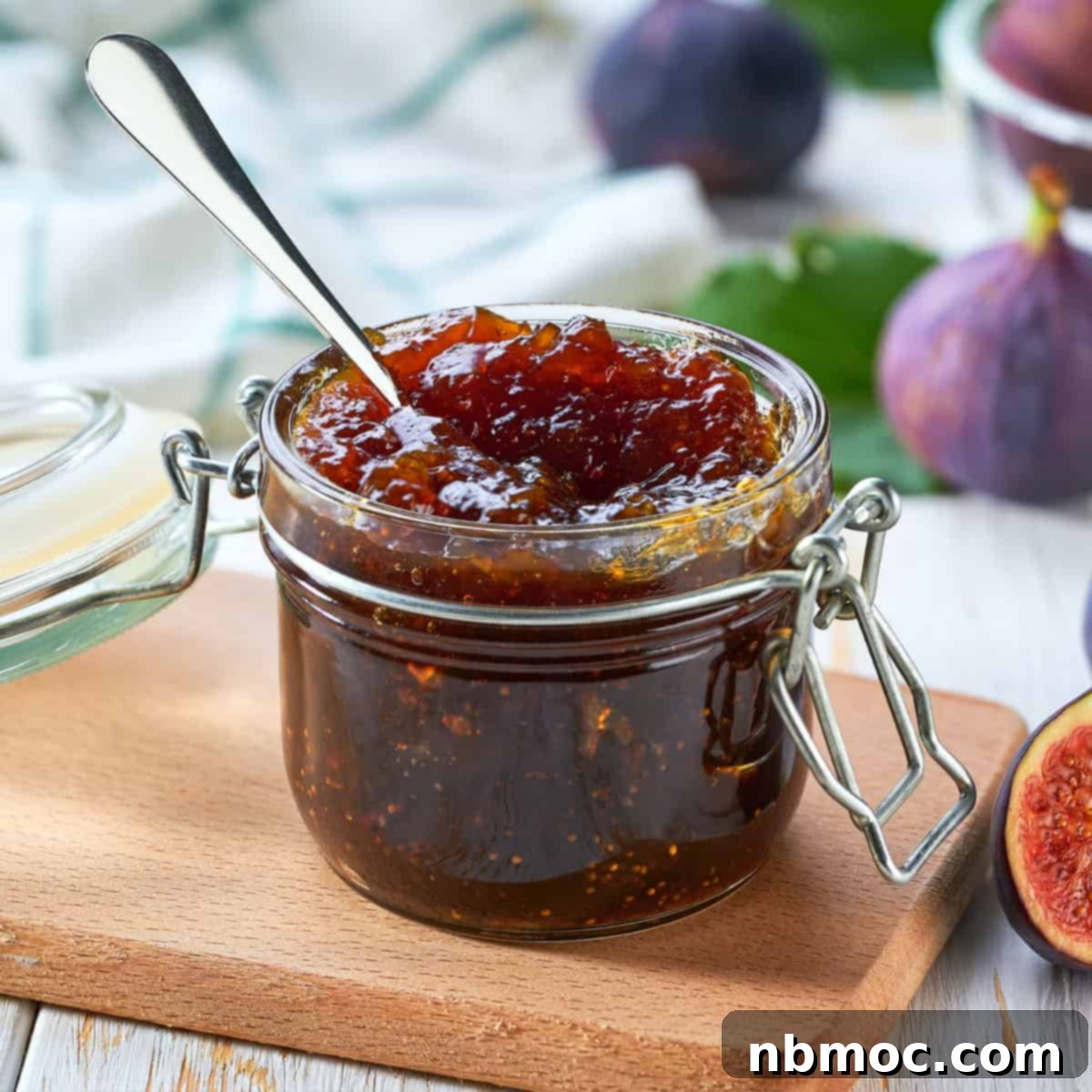
Unlock the delightful taste of summer all year long with this incredible Homemade Fig Jam Recipe. Crafted with just a few simple ingredients, this versatile jam offers a perfect balance of sweet and subtle tang, making it a fantastic addition to both savory and sweet dishes. Imagine it elevating your morning toast, complementing a gourmet burger, or drizzled over a scoop of vanilla ice cream. This recipe is your secret weapon to capture the fleeting magic of fig season and enjoy its rich, fruity essence whenever the craving strikes.
Beyond being a standalone delight, this homemade fig jam shines in a variety of culinary applications. It’s the star ingredient in appetizers like our popular Baked Brie with Fig Jam, offering a beautiful contrast of creamy cheese and sweet fruit. If you share our passion for figs, you’ll also adore these exquisite Caramelized Figs or our elegant Fig and Prosciutto Crostini. These recipes showcase just how adaptable and irresistible fresh figs can be.
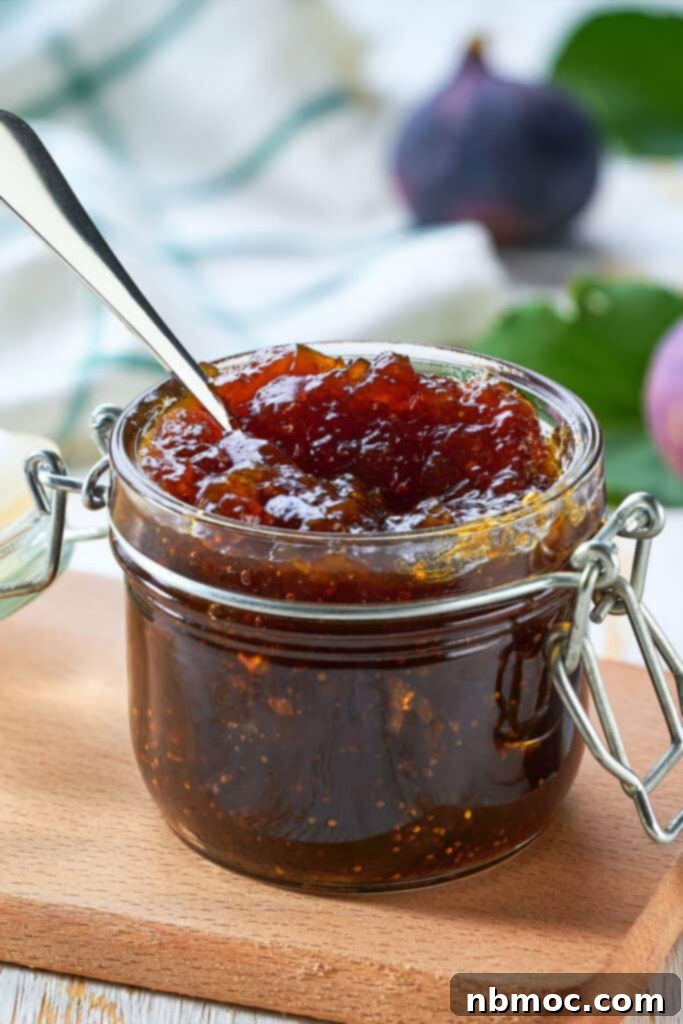
Crafting the Perfect Easy Homemade Fig Jam Recipe
The arrival of fig season is a true culinary highlight, yet its brevity is often a bittersweet reminder of summer’s fleeting nature. Figs ripen quickly and have a notoriously short shelf life, making the window to enjoy their fresh, luscious flavor incredibly small. This very challenge is what inspired us to create this super easy homemade fig jam recipe. It’s the ideal way to preserve the unique taste of this summer fruit, allowing you to savor its essence long after the season has passed.
Making your own fig jam is a surprisingly simple process that requires only a handful of essential ingredients: fresh figs, granulated sugar, a touch of salt, fragrant vanilla extract, and bright, fresh lemon juice. The method involves gently simmering these ingredients, with frequent stirring to prevent sticking and ensure even cooking. From this basic foundation, you unlock a world of culinary possibilities. Spread your freshly made jam on toasted crostini for a quick appetizer, dollop it onto a sophisticated cheese plate, use it to enhance sandwiches or gourmet burgers, or swirl it into desserts like ice cream and cake. If you’re looking to create a larger batch for long-term storage, we’ve included detailed canning instructions below. Otherwise, simple refrigeration or freezing will allow you to enjoy this delightful preserve throughout the entire year.

The Magic of Figs: Why Make Your Own Jam?
Figs, with their tender skin and sweet, jammy flesh, are truly a gift of late summer and early fall. Their delicate nature means they don’t travel well or last long, which is why encountering a batch of fresh, perfectly ripe figs feels like hitting the jackpot. While there are many varieties – from the dark, intensely sweet Black Mission to the lighter, honeyed Kadota or Brown Turkey – all offer a unique flavor profile that transforms beautifully into jam. Making your own fig jam isn’t just a way to extend their season; it’s an opportunity to control the quality of your ingredients, avoid artificial preservatives, and customize the sweetness and spice levels to your exact preference. Store-bought jams often contain excessive sugar or high-fructose corn syrup, but homemade versions allow for a healthier, more natural alternative.
Essential Ingredients for the Best Fig Jam
- Fresh Figs: The star of our jam! Figs are typically available in late summer and can sometimes extend into early fall. When selecting figs, look for plump, slightly firm fruits that yield gently to pressure but aren’t mushy. Avoid any with bruising or mold. Remember, figs ripen very quickly and have a short shelf life, so plan to use them within a day or two of purchase for the best results. A quick rinse under cool water is all they need before preparation.
- Sugar: This recipe primarily uses white granulated sugar, which acts as both a sweetener and a crucial preservative. Sugar also contributes to the jam’s desirable texture and sheen. For a slightly different flavor dimension, you could experiment by substituting a portion of the granulated sugar with honey or light brown sugar, which will impart subtle caramel notes. However, be mindful that different sugars can affect the jam’s final consistency.
- Lemon Juice: Always opt for fresh lemon juice in your jams. It’s an indispensable ingredient for several reasons: it provides a refreshing counterpoint to the sweetness of the figs, brightening the overall flavor. More importantly, the acidity in lemon juice helps to activate the natural pectins present in the fruit, which are vital for achieving that perfect, thick jam consistency. Without sufficient acidity, your jam might not set properly.
- Salt: Just a pinch of salt is used to enhance the natural flavors of the figs and balance the sweetness, preventing the jam from tasting one-dimensional.
- Vanilla Extract: Added at the end of the cooking process, vanilla extract provides a warm, aromatic depth that beautifully complements the fruity notes of the figs. Use good quality pure vanilla extract for the best flavor.
Step-by-Step Guide: How to Make Fig Jam
- Prepare the Figs: Begin by thoroughly washing your fresh figs under cool running water. Gently pat them dry. Remove the tough stems, then cut each fig in half. Transfer the fig halves to a food processor or a blender. Pulse gently a few times until the figs are finely chopped but still retain some texture – you want small pieces, not a completely smooth puree at this stage. This quick processing ensures an even cooking process and a pleasant texture in the finished jam.
- Simmer the Jam Base: Find a large, heavy-bottomed pot or Dutch oven, which helps distribute heat evenly and prevents sticking. Place it over medium-high heat. Add the pureed figs, granulated sugar, and salt to the pot. Stir the mixture frequently as it heats up, ensuring the sugar dissolves and the figs don’t scorch. Continue cooking until the mixture reaches a low boil, indicated by small, steady bubbles across the surface.
- Cook to Perfection: Once a low boil is achieved, reduce the heat to low. Allow the jam to simmer uncovered for approximately 60 minutes. During this simmering period, it is crucial to stir frequently, especially scraping the bottom of the pan, to prevent the figs from sticking and burning. The goal here is to reduce the liquid, thicken the jam, and concentrate the flavors. The jam will deepen in color and become more translucent as it cooks.
- Refine Consistency and Add Flavor: After simmering for about an hour, check the jam’s consistency. It should be thick enough to coat the back of a spoon and hold its shape. If you prefer a smoother jam or wish to break down any remaining fig skins or larger pieces, carefully transfer the hot jam to a blender and pulse briefly until your desired texture is reached. Return it to the pot if necessary.
- Finish with Vanilla and Lemon Juice: Remove the jam from the heat. Stir in the vanilla extract, which adds a beautiful aroma and warmth. Then, add the fresh lemon juice. The lemon juice is vital as it not only brightens the flavor but also helps the jam to set due to its pectin-activating properties. Pulse once more to combine. Taste and adjust with a little more lemon juice if you desire a tangier profile.
- Can or Store: Your delicious fig jam is now ready! If you plan to preserve it for long-term pantry storage, follow the detailed canning instructions provided below. Otherwise, allow the jam to cool completely at room temperature before transferring it to airtight containers. It can be stored in the refrigerator for up to 1 month or in the freezer for up to a full year. Enjoy your homemade fig jam anytime!

Comprehensive Instructions for Canning Fig Jam
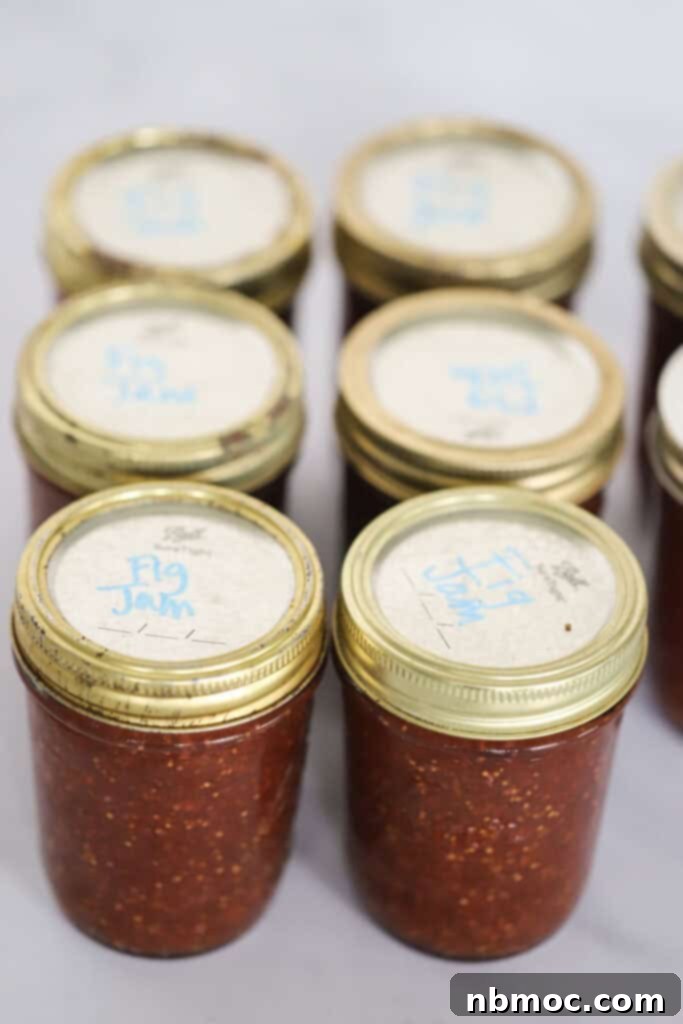
Canning is an excellent method for preserving your homemade fig jam, allowing it to remain shelf-stable for an extended period without requiring valuable refrigerator or freezer space. This process involves using a water bath canner to create an airtight seal, ensuring safety and longevity. Here’s how to properly can your fig jam:
- Sterilize Jars and Lids: Before you begin, ensure your canning jars are meticulously clean and sterilized. You can achieve this by boiling them in water for at least 10 minutes, heating them in an oven (at around 225°F or 107°C) for 10 minutes, or running them through a hot cycle in your dishwasher. New canning lids should be simmered in hot (not boiling) water to soften the sealing compound. Keep jars and lids hot until ready to use to prevent thermal shock and ensure proper sealing.
- Fill Jars with Jam: While the jars are still hot, carefully ladle the hot fig jam into them. Fill each jar, leaving approximately ½ inch of headspace at the top. Headspace is crucial for creating a vacuum seal and preventing jar breakage during processing. Use a non-metallic utensil (like a plastic spatula) to gently remove any air bubbles by running it around the inside of the jar. Wipe the rims of the jars clean with a damp cloth to ensure a perfect seal.
- Seal and Process in Boiling Water: Place new, warm lids onto the filled jars, then screw on the top rings until fingertip tight (snug but not overly tight). Carefully lower the jars into a boiling water canner, ensuring they are fully submerged under at least 1 inch of boiling water. Bring the water back to a rolling boil and process the jars for about 10 minutes. Adjust processing time according to your altitude requirements (check local canning guidelines for specific recommendations).
- Cool and Check Seals: After the processing time, turn off the heat and carefully remove the jars from the canner using a jar lifter. Place them on a wire rack or a towel-lined surface, ensuring there’s space between each jar for air circulation. Let them cool undisturbed for 12-24 hours. As the jars cool, you will hear a distinctive “pop” sound, which indicates that the vacuum seal has formed. Once completely cool, check the seals by pressing down on the center of each lid; it should be firm and concave, not flex when pressed.
- Store Canned Jam: Jars with proper seals can be stored at room temperature in a cool, dark place, such as a pantry or cupboard, for up to 2 years. If any jars did not seal properly, refrigerate them and consume the jam within 1 month.
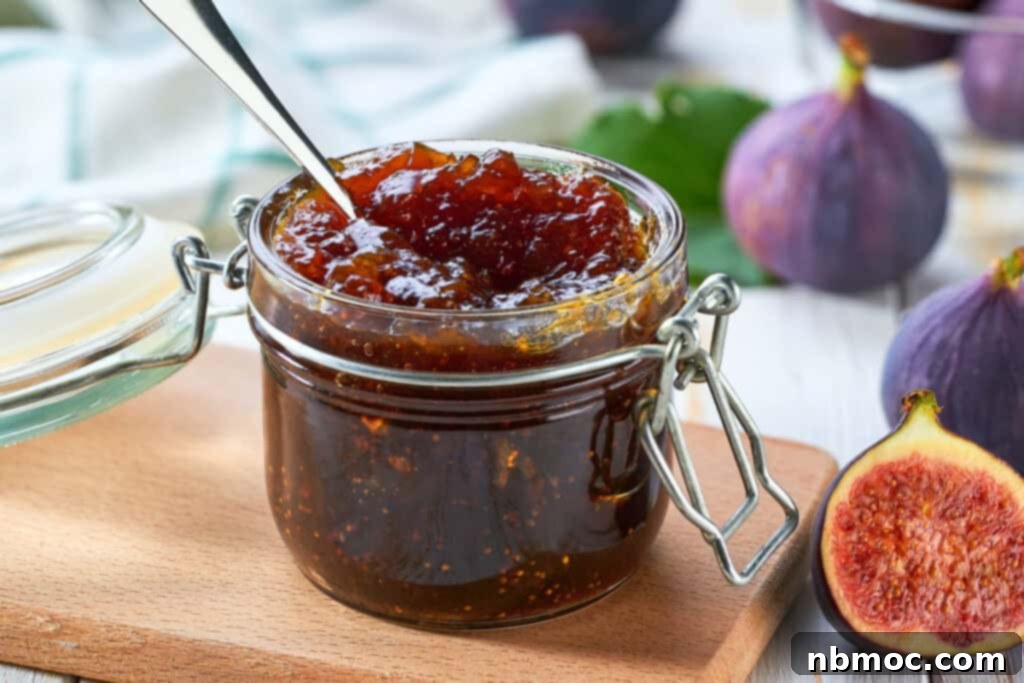
Frequently Asked Questions About Fig Jam
No, canning is not strictly necessary for enjoying homemade fig jam, but it offers significant benefits. The primary reasons for canning are to extend the jam’s shelf life considerably and to free up valuable space in your refrigerator and freezer. If you only make a small batch or plan to consume it relatively quickly, you can simply store your fig jam in an airtight container in the freezer for up to 1 year or in the refrigerator for up to 1 month. Canning is an excellent option for long-term, pantry-stable storage.
While the terms “jam” and “preserves” are often used interchangeably in everyday language, there’s a subtle distinction in their texture and preparation. Jams are typically made from fruit that has been pureed, crushed, or mashed, resulting in a smooth, spreadable consistency with small pieces of fruit distributed throughout. Preserves, on the other hand, feature larger pieces of fruit, or even whole fruits, suspended in a thick, often syrupy gel. Think of strawberry jam vs. strawberry preserves with whole berries.
The shelf life of your fig jam depends directly on the storage method. When stored in an airtight container in the refrigerator, homemade fig jam will remain fresh for up to 1 month. For longer storage, you can freeze it in freezer-safe containers for up to 1 full year. For the longest possible shelf life, canning your fig jam using the water bath method allows it to be stored in a cool, dark pantry for up to 2 years, often even longer if properly sealed and stored.
Here’s a fun botanical fact: although we commonly perceive figs as fruits, they are actually inverted flowers! The fig tree’s unique structure means its flowers bloom inside the “fruit” itself. Each fig is essentially a cluster of many tiny flowers that develop into the small, crunchy seeds we enjoy. Figs are also packed with dietary fiber, essential minerals like potassium and calcium, and antioxidants, making them a nutritious and delicious addition to your diet.
This recipe is specifically designed for fresh figs. Dried figs have a much lower water content and a more concentrated sweetness, which would drastically alter the jam’s texture and flavor profile. While it’s possible to make a different type of preserve with dried figs (often involving rehydration), it wouldn’t yield the same vibrant, fresh-tasting jam as this recipe. Stick to fresh figs for the best results.
Several factors can prevent jam from setting properly. The most common reasons include insufficient cooking time (the jam hasn’t reduced enough to reach setting point), not enough pectin (which the lemon juice helps activate), or incorrect sugar-to-fruit ratio. Ensure you’re using fresh lemon juice and that you’ve cooked the jam until it passes the “plate test” (a small amount spooned onto a chilled plate wrinkles when pushed with a finger). If it’s still too thin, you can return it to the heat and simmer longer, or consider adding a natural pectin supplement.
Storing and Preserving Fig Jam: A Quick Guide
- Canned Jam: Properly canned fig jam, stored in a cool, dark pantry or cupboard at room temperature, will last for up to 2 years. Ensure all jars are sealed correctly before storing.
- Refrigerator Storage: For quick consumption, store your homemade fig jam in an airtight container in the fridge for up to 1 month.
- Freezer Storage: Extend the freshness by storing the jam in freezer-safe bags or other airtight containers in the freezer for up to 1 full year. Thaw in the refrigerator before use.
Creative Ways to Enjoy Your Homemade Fig Jam
- Gourmet Appetizers: Elevate a simple cheese board with a dollop of fig jam, pairing it beautifully with goat cheese, brie, or sharp cheddar. Try it in our Baked Fig and Brie Puff Pastry or on Fig and Prosciutto Crostini for an impressive starter.
- Savory Enhancements: Use it as a glaze for roasted pork tenderloin or chicken, a spread for gourmet sandwiches, or a sweet counterpoint on a burger. It also makes an unexpected and delicious addition to a grilled cheese sandwich.
- Sweet Treats: Spread it on toast, muffins, scones, or croissants for a decadent breakfast. Swirl it into yogurt or oatmeal, or use it as a filling for thumbprint cookies, tarts, and cakes. It’s also an incredible topping for vanilla bean ice cream or a simple panna cotta.
- Unique Pizza Topping: Experience a sophisticated flavor with a Fig and Prosciutto Pizza, where the jam provides a sweet base.
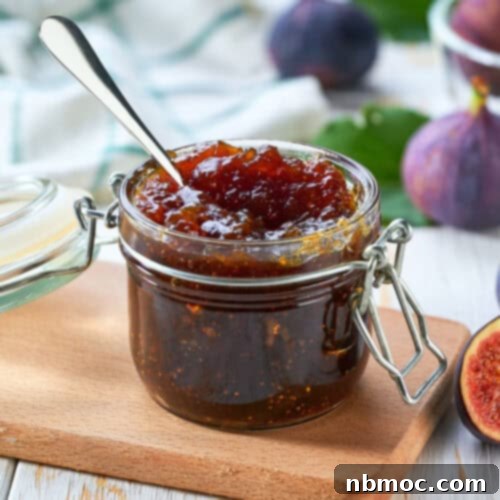
Fig Jam Recipe
Pin
Ingredients
- 2 pounds fresh figs
- 2 cups sugar
- 1/8 teaspoon salt
- 1 teaspoon vanilla extract
- 2 tablespoons lemon juice, fresh
Instructions
- Prepare your figs by washing, removing the stems, and slicing in half. Add the halves to a food processor or blender and pulse gently until there are no large chunks.
- Heat a large, heavy bottom pot over medium-high heat. Add the pureed figs, sugar, and salt. Cook over medium-high heat, stirring frequently, until it comes to a low boil.
- Reduce the heat to low and simmer uncovered for about 60 minutes, stirring frequently so that the figs don’t stick to the bottom of the pan.
- Once the desired consistency has been reached, remove from heat. Carefully transfer to a blender and pulse to smooth out any of the fig skins or remaining large pieces.
- Add the vanilla and lemon juice, pulse, and then add more lemon juice to taste, if needed.
- To can your fig jam, follow the directions below. Otherwise, allow it to cool at room temperature before serving or storing in the fridge for up to 1 month, or the freezer for up to 1 full year. Enjoy!
Notes
Storing canned jam: Store canned fig jam in a cool dark place at room temperature for up to 2 years.
Nutrition
Disclaimer: Nutritional values were calculated using a third-party tool and are provided as an estimation only.
Sharing this recipe with a link is both encouraged and appreciated. Copying/pasting and/or screenshots of full recipes to any social media is strictly prohibited. Content and photographs are copyright protected.
Did you make this?
Don’t forget to leave a rating below and make sure to follow on Pinterest, Instagram and Tiktok for more!
Explore More Recipes for Jams, Preserves, and Syrups
- Raspberry Syrup
- Homemade Plum Jelly
- Strawberry Freezer Jam
- Cranberry Salsa
- Bacon Jam
- Cranberry Orange Sauce
- Blueberry Syrup
- Lemon Syrup
- Discover more Recipes for Sauces and Condiments
- Perfect for the season: more Fall Recipes
This recipe for homemade fig jam is incredibly easy to prepare and remarkably versatile, offering a burst of sweet, nuanced flavor that enhances countless sweet and savory dishes. It truly stands out as one of the most delightful and effective ways to savor the precious bounty of fig season all year long. Make a batch today and keep the taste of summer alive!