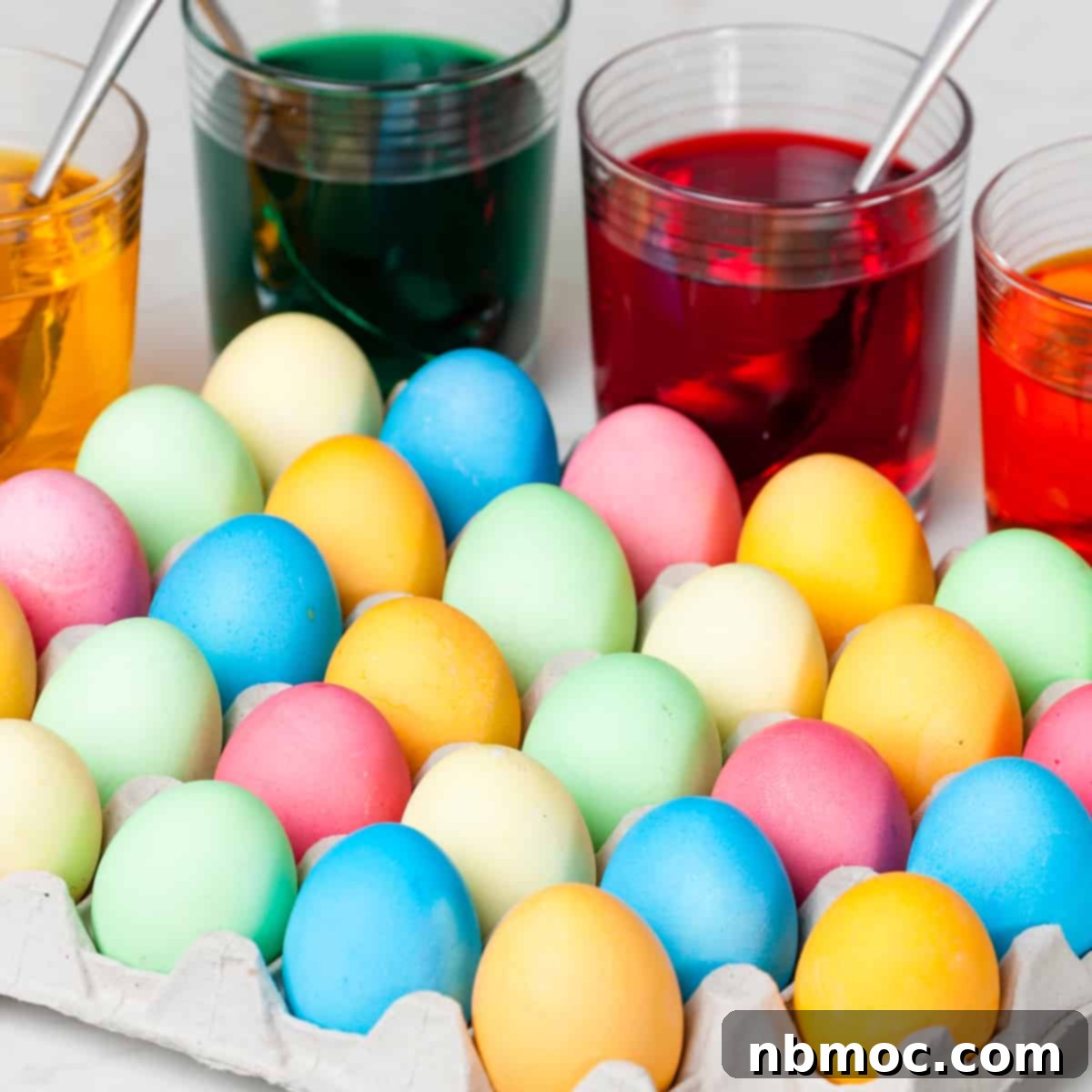
Welcome to your ultimate guide on How to Dye Easter Eggs using common food coloring and everyday pantry staples! Get ready to transform plain eggs into a vibrant spectrum of colors, making your Easter celebrations even more festive and memorable. This comprehensive guide will walk you through everything, from achieving perfectly hard-boiled eggs to mastering various decorating techniques, ensuring you create stunning, colorful Easter eggs with ease. Say goodbye to store-bought kits and hello to a world of personalized, dazzling designs!
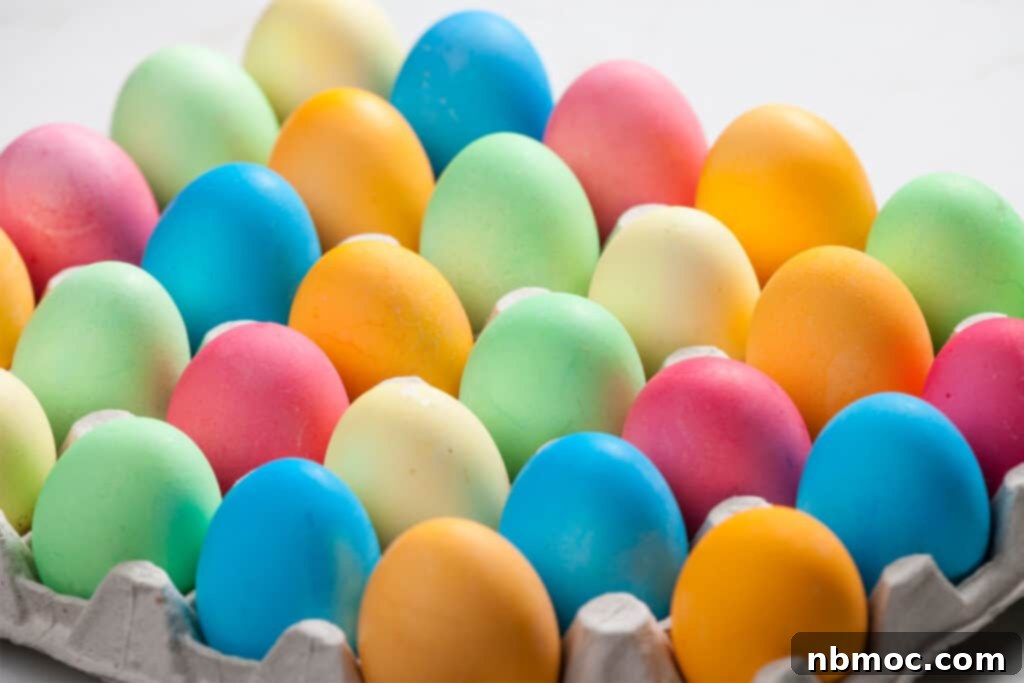
Unlock the Art of Easter Egg Dyeing with Food Coloring
This year, elevate your Easter tradition by skipping the conventional egg dyeing kits and embracing the simple yet effective method of using food coloring and white vinegar. This detailed, step-by-step guide is designed to empower you with the knowledge to craft easy, perfect hard-boiled eggs, prepare rich, colorful dye baths, and dip your Easter eggs like a true artisan. Imagine the delight on your family and friends’ faces as they behold your beautifully decorated creations!
Beyond basic dyeing, we’re sharing a treasure trove of expert tips and inspiring decorating ideas that will help you impress everyone. For those seeking more Easter culinary delights, don’t miss our fantastic recipes for Perfect Hard Boiled Eggs and delicious Deviled Eggs. And if you’re planning a full holiday feast, our guide to the Best Easter Dinner Recipes is an absolute must-read!
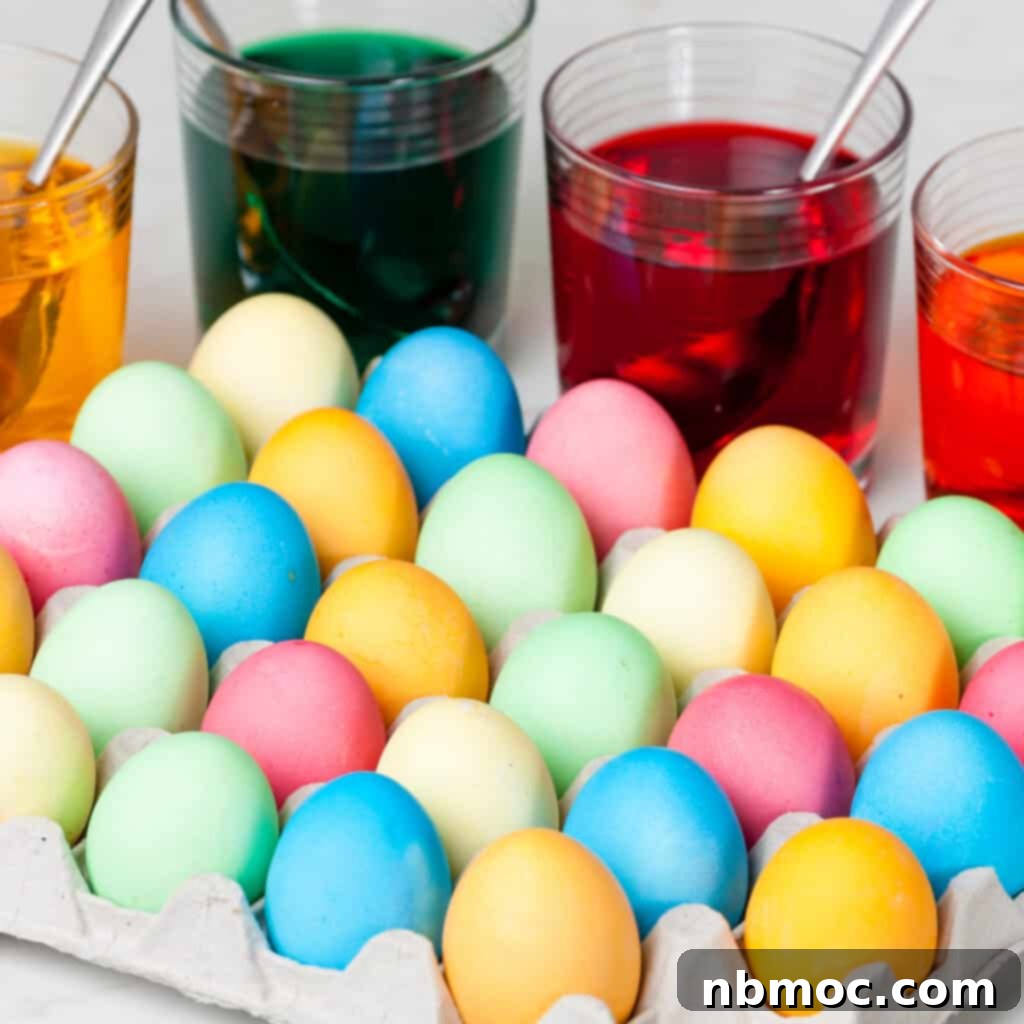
Essential Ingredients for Vibrant Food Coloring Easter Eggs
Gathering the right ingredients is the first step towards achieving beautifully colored Easter eggs. You’ll be surprised how few items you need, most of which are likely already in your kitchen!
- Eggs: Any type of egg works, but for the best color absorption and brightest results, we highly recommend using white-shelled eggs. Older eggs are generally easier to peel after hard-boiling, as some moisture has evaporated from the shell, creating a slight air gap. If you’re planning to eat your dyed eggs, freshness is important for consumption, but for ease of peeling, slightly older (but still fresh enough to eat) eggs are preferred.
- Baking Soda: A secret ingredient for easier peeling! Adding baking soda to the boiling water helps raise the pH level of the water, making the eggs less likely to stick to their shells.
- Ice: Crucial for creating an ice bath. This bath serves a dual purpose: it rapidly stops the cooking process, preventing overcooked, rubbery eggs, and quickly cools them down, making them ready for dyeing. If ice isn’t available, a large metal bowl under cold running water in the sink can serve as a substitute.
- Liquid Food Coloring: The star of our dyeing process! You can use any brand of liquid food coloring. Liquid drops blend seamlessly into the dye solution, ensuring even, consistent colors. Gel food colorings tend to be more concentrated and may not dissolve as uniformly in water, potentially leading to streaky results, so they are best avoided for this method.
- White Vinegar: An indispensable ingredient that acts as a mordant, helping the food coloring adhere to the eggshell more effectively. This results in much brighter and more intense colors. If white vinegar is unavailable, apple cider vinegar or even lemon juice can be used as a last-minute alternative, though white vinegar is ideal for its clear color and strong acidity.
Mastering the Art: Step-by-Step Instructions to Dye Easter Eggs with Food Coloring
Dyeing Easter eggs is a delightful tradition, and with these clear instructions, you’ll achieve stunning results every time. Follow these steps for vibrant, beautifully colored eggs:
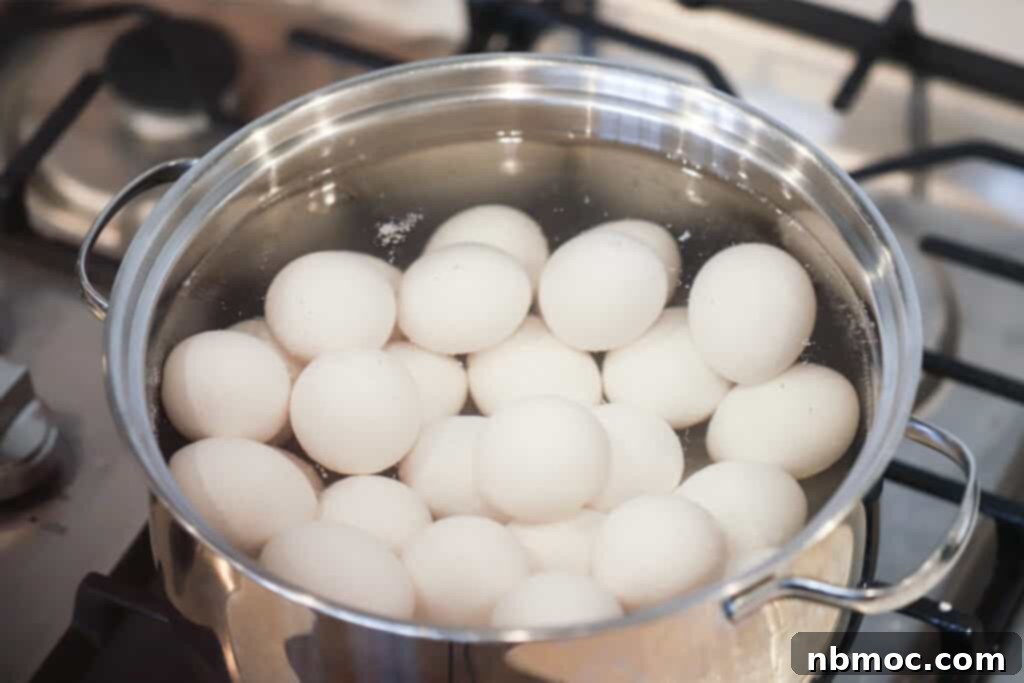
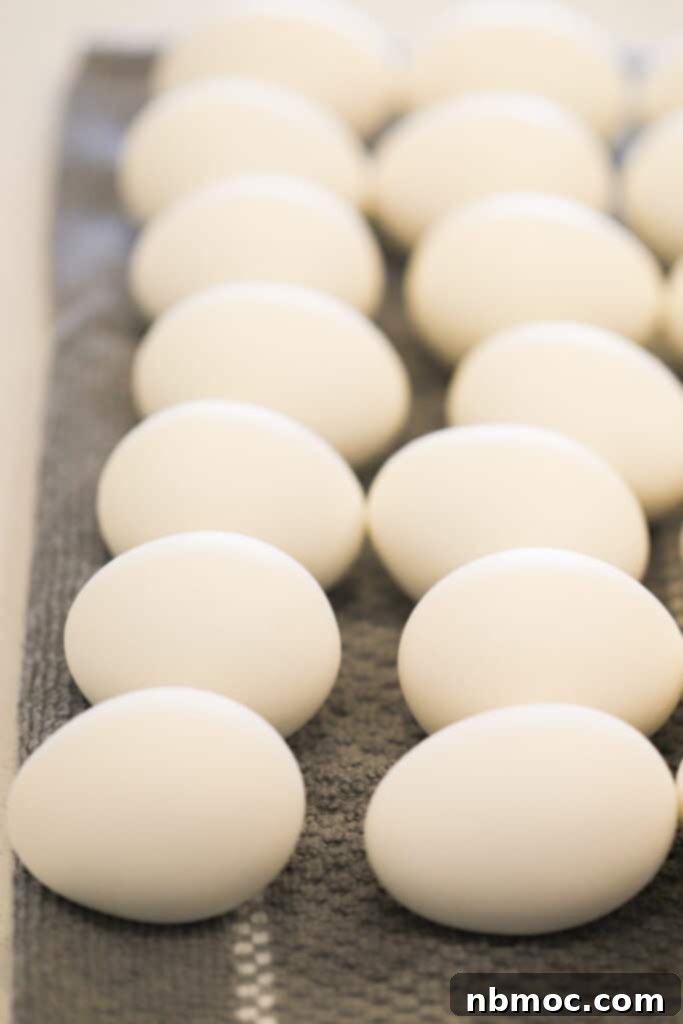
- Perfectly Hard Boil Your Eggs: The foundation of great dyed eggs is a perfectly cooked, easy-to-peel hard-boiled egg. For detailed instructions on achieving this, refer to our comprehensive guide on making Hard Boiled Eggs. In summary:
- Place your raw eggs in a large pot or Dutch oven, covering them with about an inch of cold water.
- Add 1/2 teaspoon of baking soda to the water.
- Bring the water to a rapid boil over medium-high heat.
- Once boiling, immediately remove the pot from the heat, cover it with a lid, and let the eggs sit in the hot water for 9-12 minutes. The exact time depends on your preferred doneness.
- While the eggs are resting, prepare an ice bath by filling a large bowl with ice and cold water.
- After the designated resting time, use a slotted spoon to transfer the eggs directly into the ice bath. This stops the cooking process and makes peeling easier.
- Allow the eggs to cool completely in the ice bath for at least 5 minutes before removing them and letting them dry on a towel.
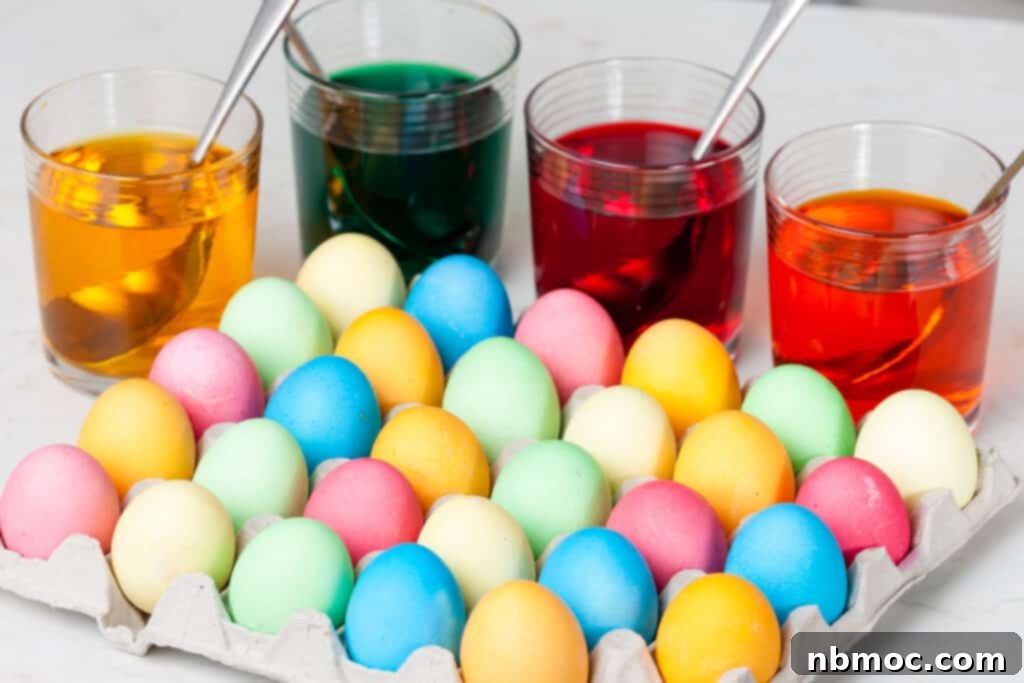
- Prepare Your Dye Baths: For each desired color, take a separate cup or bowl. Combine 1/2 cup of hot water (warm water helps the dye dissolve and absorb better), 1 teaspoon of white vinegar, and several drops of your chosen liquid food coloring. Stir well with a spoon or whisk until the color is fully and evenly dissolved. Repeat this process for every color you wish to create. Don’t be shy with the food coloring; more drops will yield more intense, vibrant hues.
- Dip for Desired Color: Gently place a single hard-boiled egg into one of your prepared dye baths. Use a spoon or a small pair of tongs to fully submerge the egg. The longer an egg stays in the dye, the deeper and more saturated its color will become. For pastel shades, a soak of 3-5 minutes is often sufficient. For bold, rich colors, leave the egg in for 10-15 minutes, or even longer for truly intense results. Experimentation is key to finding your perfect shades!
- Carefully Remove and Dry: Once your egg has reached its desired color, carefully lift it out of the dye bath using a spoon or tongs. Allow any excess dye to drip back into the cup. Place the freshly dyed egg onto a paper towel-lined surface or an empty egg carton to dry completely. Avoid handling the eggs while they are still wet to prevent smudges and uneven color. Patience during the drying phase is essential for flawless results.
- Get Creative with Decoration (Optional): The fun doesn’t stop at solid colors! If you’re feeling adventurous, you can create unique designs. Once an egg is dry, you can dip parts of it into a different color for an ombre effect, or use a paintbrush or cotton swab dipped in a contrasting dye to add dots, stripes, or other patterns. Consider using wax crayons before dyeing to create resist patterns, or rubber bands to make intricate lines. The possibilities are endless!
- Final Drying: Ensure all your beautifully dyed and decorated eggs are completely dry before you display them, hide them for an egg hunt, or incorporate them into your Easter festivities. This ensures the colors are set and won’t smudge. Enjoy your colorful creations!
Expert Tips for Dying Easter Eggs Like a Pro
Transforming plain eggs into vibrant masterpieces is a joyous part of Easter. Here are some of our top tips and decorating ideas to help you create beautiful, colorful Easter eggs that your family and friends will adore:
- Opt for White Eggs: While you can dye brown eggs, white-shelled eggs provide the best canvas for vibrant and true-to-color results. The lighter shell allows the dye to show up much brighter and more distinctly.
- Perfect Your Hard-Boiling Technique: The success of your dyed eggs starts with a perfectly cooked hard-boiled egg. As mentioned, place eggs in cold water, bring to a boil, remove from heat, cover, and let sit for 10-12 minutes. Immediately transfer to an ice bath for rapid cooling. This process yields firm yolks and easy-to-peel shells, ideal for decorating.
- Protect Your Workspace: Egg dyeing can be a delightfully messy activity, especially with children! Lay down newspapers, old towels, or a plastic tablecloth to protect your table and floor from any accidental spills or splatters. Wearing old clothes or aprons is also a good idea.
- Harness the Power of Vinegar: Don’t skip the vinegar! Adding a teaspoon of white vinegar to each dye bath is crucial. The acidity helps etch the eggshell’s surface slightly, allowing the food coloring pigments to adhere more effectively and resulting in significantly brighter, more intense, and more uniform colors.
- Choose Liquid Food Coloring Drops: For the most consistent and vibrant colors, liquid food coloring drops are your best bet. They dissolve easily and allow for precise control over color intensity. This precision is also invaluable if you wish to record your custom color recipes for future Easter celebrations.
- Embrace Different Dyeing Techniques: Don’t limit yourself to single-color dips!
- Rubber Bands: Wrap rubber bands around eggs before dyeing to create interesting stripe patterns.
- Stickers: Apply small stickers or adhesive shapes to the eggs before dyeing. Once dry, peel them off to reveal the original egg color underneath.
- Wax Resist: Use wax crayons to draw designs on the eggs. The wax repels the dye, leaving your drawings in white or the egg’s original color.
- Ombre Effect: Partially dip an egg and slowly lift it out in stages, allowing different sections to soak for varying times, creating a gradient effect.
- Marbled Eggs: Add a teaspoon of vegetable oil to your dye bath. Dip the egg, and the oil will create beautiful marbled patterns.
- Allow for Complete Drying: After dyeing, gently remove your eggs and place them on a rack, paper towels, or an egg carton. It’s vital to allow them to dry completely before handling them extensively or moving them. Handling wet eggs can lead to smudged colors, fingerprints, and uneven finishes.
- Document Your Favorite Color Blends: Experimenting with different drops of primary colors to create unique shades is part of the fun. When you discover a combination you love, make a note of the exact number of drops for each color. This way, you can easily replicate your favorite custom hues next year!
- Use Egg Tongs: For easy and clean dipping and retrieving of eggs, a pair of small kitchen tongs (especially plastic ones for kids) can be incredibly helpful.
Frequently Asked Questions About Easter Egg Dyeing
What type of food coloring is best for dyeing Easter eggs?
Liquid food coloring drops are ideal for dyeing Easter eggs. They disperse evenly in water, resulting in consistent and vibrant colors. Gel colors, while concentrated, can sometimes be harder to mix uniformly and may lead to streaky results.
Are dyed Easter eggs safe to eat?
Absolutely! Eggs dyed with food coloring are perfectly safe to eat, provided they are hard-boiled properly and kept at safe temperatures. Treat them as you would any other hard-boiled egg. They need to be refrigerated if not consumed within a couple of hours after dyeing. You can enjoy them whole as a snack, chop them for salads, or use them in classic recipes like deviled eggs.
Can I dye brown eggs?
Yes, you can dye brown eggs! However, keep in mind that the natural brown hue of the shell will influence the final color. Dyes will appear darker and richer, often taking on more muted or earthy tones compared to the bright, vivid colors achieved on white eggs. For the most vibrant results, white eggs are recommended.
Should I use hot or cold water for my dye baths?
Warm or hot water is highly recommended for preparing your dye baths. Hot water helps the food coloring dissolve more thoroughly and promotes better absorption of the dye into the eggshell, leading to brighter and more uniform colors. Just be careful when handling hot water around children.
How long do dyed Easter eggs last?
If kept refrigerated, unpeeled, hard-boiled and dyed Easter eggs can last up to one week. Always store them in an airtight container or their original carton to maintain freshness and prevent odor absorption from other foods in the refrigerator.
What if I don’t have vinegar? Are there alternatives?
While white vinegar is ideal for its acidity and clear color, you can use other acidic liquids. Apple cider vinegar works well, though its slight amber tint might subtly alter light colors. Lemon juice is another viable alternative in a pinch. The key is the acidity, which helps the dye adhere to the shell.
Storing Your Beautifully Dyed Easter Eggs
Once you’ve finished dyeing your eggs, proper storage is essential to keep them fresh and safe to eat.
- Storing Unpeeled Eggs: After the eggs are completely dry and cooled to room temperature, place them in an airtight container or back into an egg carton. Store them in the refrigerator for up to 1 week.
- Storing Peeled Eggs: If you’ve peeled some of your hard-boiled eggs, store them in an airtight container filled with enough cold water to cover them. Change the water daily to maintain freshness. Peeled eggs will last for up to 3 days in the refrigerator.
How to Dye Eggs With Food Coloring
Author: The Carefree Kitchen
This is a complete guide to dyeing Easter eggs with food coloring and a few other pantry staples. We’ll show you how to perfectly hard boil eggs and provide you with plenty of decorating tips and Easter egg ideas to have you creating bright and colorful eggs in no time.
Recipe Details:
- Prep Time: 20 mins
- Cook Time: 15 mins
- Total Time: 35 mins
- Yields: 18 eggs
Ingredients
Hard Boiled Eggs
- 18 large eggs
- 1/2 gallon water
- 1/2 teaspoon baking soda
- 8 cups ice
For Coloring Easter Eggs
- Liquid food coloring, various colors
- 1 cup white vinegar
Instructions
How to Hard Boil Eggs
- Place raw eggs in a large Dutch oven or pot and cover them with water by about 1 inch. Add the baking soda, then bring the water to a low boil over medium-high heat.
- Once the water has reached a rapid boil, remove the pot from the heat and cover with a lid. Let the eggs sit for 9-12 minutes, depending on how “done” you want your eggs.
- While the eggs cook, prepare a bowl of ice water. After the desired resting time, use a slotted spoon to remove the eggs from the hot water and place them in the ice water to stop the cooking and cool completely.
- Let the eggs sit in the ice water for about 5 minutes, then remove and place on a towel to dry.
How to Dye Easter Eggs with Food Coloring
- Prepare the dye: In a cup or bowl, mix 1/2 cup of hot water, 1 teaspoon of vinegar, and several drops of food color drops or liquid food coloring. Use a spoon or whisk to mix the ingredients until the color is evenly distributed. Repeat for as many colors as you want to use.
- Dip the eggs: Carefully place a hard-boiled egg into the cup or bowl with the dye. Use a spoon to submerge the egg fully in the dye. Leave the egg in the Easter egg dye for about 5 minutes, or until you achieve the desired color.
- Remove the egg: Use a spoon to carefully remove the egg from the dye. Place the egg on a paper towel or egg carton to dry. Allow the egg to dry completely before handling it.
- Repeat: If you want to create different colors or shades, repeat the process with new cups or bowls and different color combinations.
- Optional: You can use a paintbrush or q-tip to add designs or patterns to the dyed eggs using different colors of dye. Enjoy!
Notes
Storing instructions: Make sure that the eggs are dry and completely cooled then store in an airtight container or an egg carton for up to 1 week.
How to store peeled eggs: Place peeled eggs in an airtight container with enough cold water to cover the eggs. Store in the refrigerator for up to 3 days making sure to replace the cold water each day.
Nutrition Information (Estimated Per Serving)
Calories: 72 kcal | Carbohydrates: 0.4g | Protein: 6g | Fat: 5g | Saturated Fat: 2g | Polyunsaturated Fat: 1g | Monounsaturated Fat: 2g | Trans Fat: 0.02g | Cholesterol: 186mg | Sodium: 112mg | Potassium: 69mg | Sugar: 0.2g | Vitamin A: 270IU | Calcium: 34mg | Iron: 1mg
Disclaimer: Nutritional values were calculated using a third-party tool and are provided as an estimation only.
Recipe Tags
- Course: Breakfast, Snack
- Cuisine: American
Sharing this recipe with a link is both encouraged and appreciated. Copying/pasting and/or screenshots of full recipes to any social media is strictly prohibited. Content and photographs are copyright protected.
Did you make this?
Don’t forget to leave a rating below and make sure to follow us on Pinterest, Instagram and Tiktok for more delicious ideas!
More Delightful Easter Recipes to Explore
Looking for more ways to celebrate Easter with delicious food? Here are some of our favorite recipes that pair perfectly with your dyed Easter eggs or make wonderful additions to your holiday menu:
- Perfect Hard Boiled Eggs
- Sweet Coconut Macaroon Easter Nests
- Classic Deviled Eggs
- Irresistible Honey Glaze for Ham
- Creamy Cheesy Scalloped Potatoes
- Easy Ham and Cheese Quiche
- Adorable Bunny Cinnamon Rolls
- Delicious Cadbury Mini Egg Cookies
- Fun Rice Krispy Bird Nests
- Scrumptious Cadbury Cookie Bars
- Explore even more Easter Dinner Menu Ideas
- Discover a variety of Easy Appetizer Recipes
Embark on a creative journey this Easter and learn How to Dye Easter Eggs like a seasoned expert with this handy guide. We’ve equipped you with step-by-step instructions, clever tips, and innovative tricks to help you create truly beautiful, vividly colored Easter eggs using simple food coloring. Make this Easter a vibrant celebration filled with color and joy!