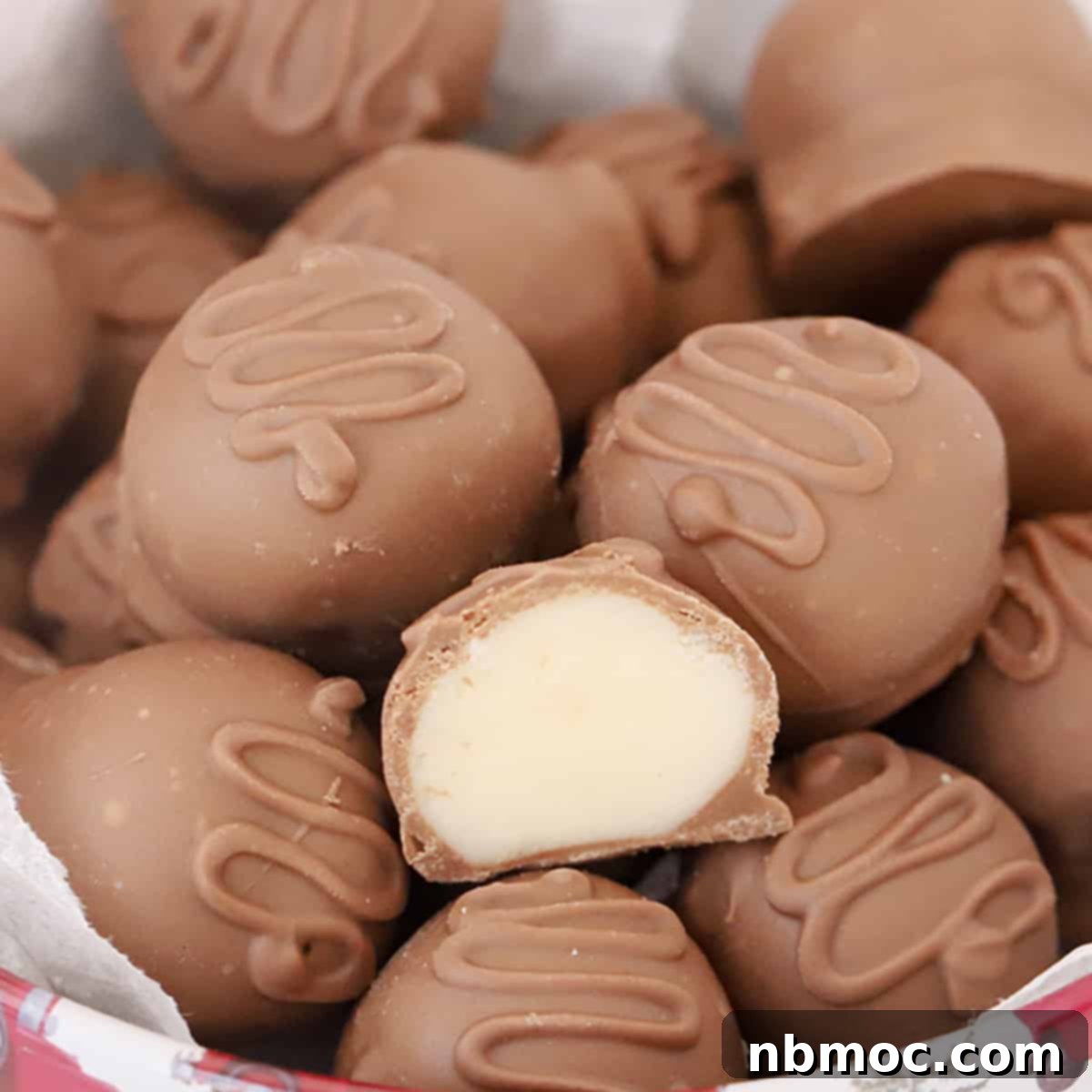
Indulge in a truly delightful homemade treat with these exquisite Chocolate Covered Coconut Balls. Imagine a perfect harmony of creamy, chewy coconut filling enveloped in a luscious layer of rich chocolate. These delectable candies are surprisingly simple to prepare in your own kitchen and promise to be the star of any dessert platter, especially during the festive holiday season. Often the first to vanish from a spread, their irresistible charm lies in their balanced flavors and enticing textures.
The magic begins with a tender coconut center, meticulously crafted by cooking a blend of heavy cream and sugar to achieve a wonderfully soft, melt-in-your-mouth consistency. This homemade coconut fondant forms the heart of each treat. For the glorious outer shell, each ball is lovingly dipped in perfectly tempered chocolate, then finished with a delicate drizzle for an elegant touch that’s sure to impress.
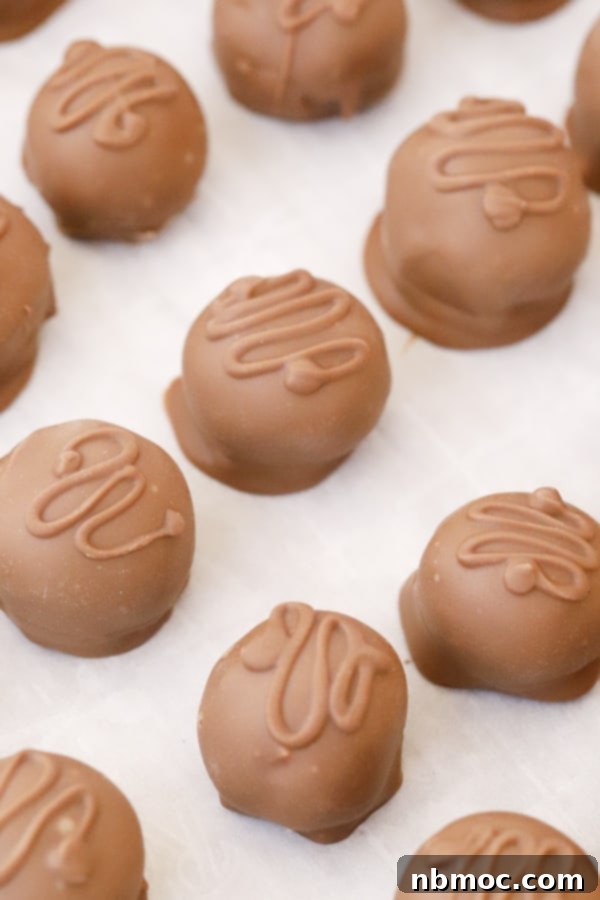
Homemade Chocolate Covered Coconut Balls: A Sweet Symphony
Chocolate and coconut are a flavor combination revered by many, a true match made in heaven. This recipe for homemade chocolate covered coconut balls proudly stands as one of our all-time favorites. It’s a culinary masterpiece that strikes a delightful balance, reminiscent of both a sophisticated chocolate truffle and the beloved Mounds bar, but elevated to a truly gourmet experience. Every bite is 100% pure deliciousness!
While we won’t claim this is the absolute easiest recipe you’ll ever encounter, we firmly believe it’s entirely achievable for any home cook eager to create something special. This recipe simply requires a bit more dedicated time, careful temperature monitoring, and a touch of patience. Trust us when we say, the reward is absolutely worth every moment!
To ensure your success, we’ve provided comprehensive, step-by-step instructions. You’ll find guidance on both the “easy” method using compound coating chocolate and the more traditional “hard” way involving tempering high-quality couverture chocolate, giving you flexible options based on your comfort level and desired outcome. We also dive deep into frequently asked questions, covering everything from selecting the best chocolate for dipping to where to find it.
So, gather your ingredients, clear your schedule, and let’s get dipping into the wonderful world of homemade chocolate coconut candies!
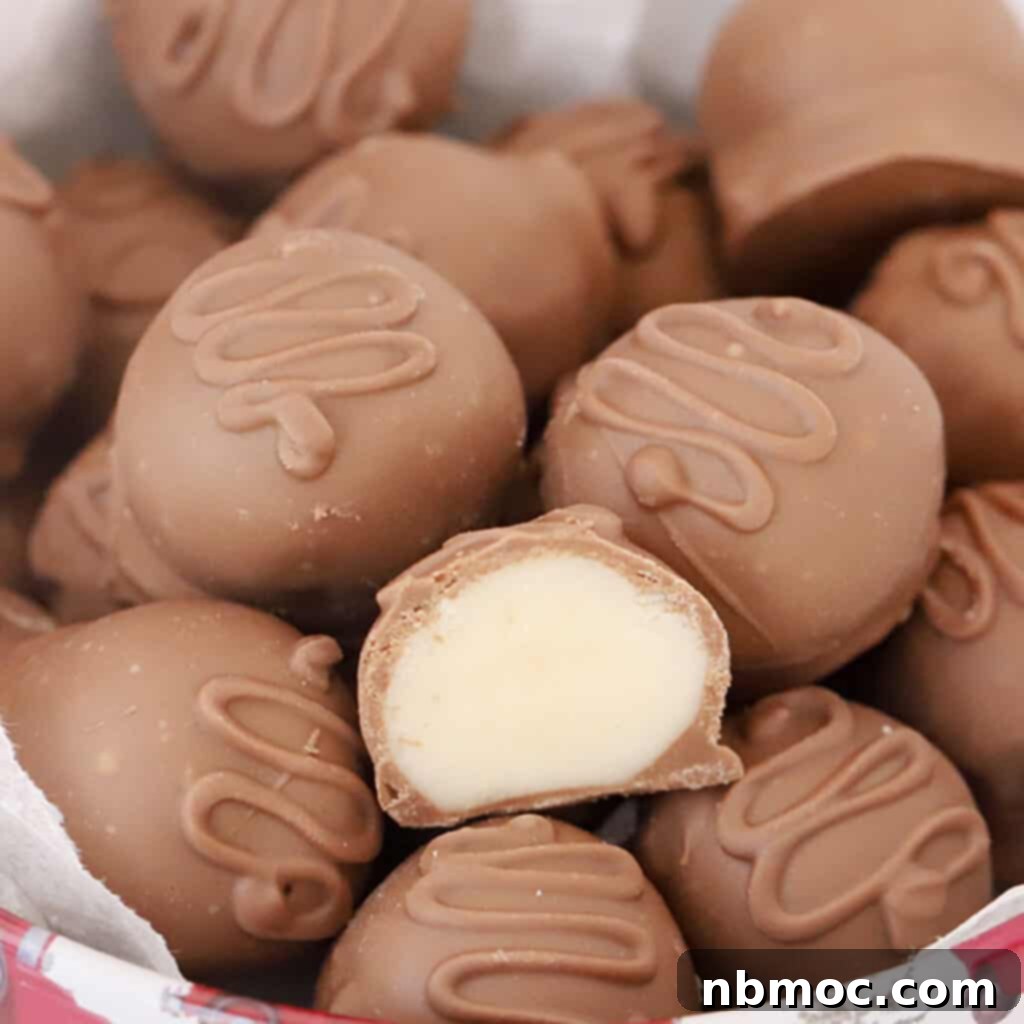
Choosing Your Chocolate: A Sweet Decision
The quality of your chocolate can make a significant difference in the final taste and texture of your coconut balls. For convenience and excellent results, many home bakers find a large chocolate bar from stores like Trader Joe’s (often available in one or two-pound sizes) to be perfect for this recipe. These larger bars are typically easy to melt and provide ample chocolate for dipping.
If you’re eager to learn more about achieving perfectly melted chocolate every time, no matter the type, be sure to explore our comprehensive guide to melting chocolate. This resource covers various techniques and tips for flawless chocolate preparation.
And if these chocolate-covered coconut balls spark your passion for homemade confections, don’t stop here! We have a delightful array of other candy recipes waiting for you to discover, including our delightful homemade Peppermint Patties, crunchy Peppermint Pretzels, and classic Buckeye Balls. Each offers a unique and satisfying sweet adventure.
Essential Ingredients for Perfect Coconut Balls
Crafting these delectable chocolate coconut balls requires a few key ingredients, each playing an important role in achieving that signature creamy, chewy texture and rich flavor. Here’s a closer look at what you’ll need:
- Heavy Whipping Cream: This is crucial for the creamy base of our coconut fondant. Any brand of heavy whipping cream with a high-fat content will work beautifully, contributing to the richness and smooth texture.
- Butter: Butter adds a wonderful richness and helps create a smooth, pliable fondant. While we typically opt for unsalted butter to better control the overall sweetness and flavor profile, you can certainly use salted butter if you prefer a subtle salty-sweet contrast in your final candy.
- Granulated Sugar: Standard white granulated sugar provides the primary sweetness and structure for the coconut filling. Ensure it’s fresh and free of clumps for the best results in your sugar mixture.
- Corn Syrup: A secret weapon in candy making, corn syrup is essential here. It acts as an invert sugar, preventing the sugar mixture from crystallizing as it cools. This ensures your coconut fondant remains smooth, soft, and never grainy.
- Coconut Extract: To truly amplify that tropical coconut flavor, a good quality coconut extract is a must. You can often find this at larger grocery stores in the baking aisle, or it’s readily available for purchase online. Don’t skip this for an authentic coconut punch!
- Shredded Coconut (Optional but Recommended): While the extract provides flavor, adding shredded coconut boosts both the taste and the delightful chewiness of the centers. Unsweetened shredded coconut is ideal, allowing you to control the sweetness of the candy. If you can only find sweetened, reduce the granulated sugar slightly if preferred.
- Chocolate for Dipping: This is where you can truly customize your candy! The type, flavor, and brand of chocolate you choose will significantly impact the final product. From dark to milk to white chocolate, the possibilities are vast. Dive into our Frequently Asked Questions section below for an in-depth guide on selecting the best chocolate for dipping.
Crafting the Irresistible Coconut Centers: Step-by-Step
Creating the perfectly soft and chewy coconut fondant for these chocolate-covered treats involves a careful cooking process. Follow these steps to ensure a smooth, delightful center every time:
- Initiate the Sugar Mixture: In a sturdy, heavy-bottomed saucepan, combine the heavy whipping cream, butter, granulated sugar, corn syrup, and a pinch of salt. Place the saucepan over medium heat. Stir the mixture continuously as it heats to dissolve the sugar evenly. Bring the mixture to a rolling boil. As it heats, keep an eye on the sides of your saucepan; if any sugar crystals begin to form, gently brush them down with a pastry brush dipped in a little water. This prevents premature crystallization in your fondant.
- Achieve Soft Ball Stage: Once the sugar mixture is actively boiling, securely clip a candy thermometer to the side of the pan. Continue stirring and cooking. Your goal is to reach precisely 228 degrees F (109 degrees C), which is known as the “soft ball stage” in candy making. This temperature ensures the perfect balance of moisture and sugar for a chewy, yet soft, fondant.
- Prepare for Cooling: As soon as the mixture hits 228 degrees F, immediately remove the saucepan from the heat. Carefully pour the hot sugar mixture into the bowl of a stand mixer. It’s important to avoid scraping the bottom or sides of the pan at this stage, as residual sugar crystals could trigger unwanted crystallization in your fondant.
- Cool and Beat to Fondant: Allow the sugar mixture to cool completely to room temperature. This cooling process is crucial for proper fondant formation. Once cooled, attach the paddle attachment to your stand mixer. Begin mixing on a low speed for approximately 15 minutes. During this time, you’ll observe a remarkable transformation: the glossy, slightly runny sugar mixture will gradually thicken into a more opaque, pliable consistency, resembling play dough that holds its shape. When it reaches this desired consistency, stop the mixer and carefully remove the fresh coconut fondant from the bowl.
- Infuse Flavor and Texture: Now it’s time to add the signature taste! Incorporate the coconut extract and, if desired, the shredded coconut into the fondant. Mix thoroughly until these additions are evenly distributed, ensuring every bite is bursting with coconut flavor and a pleasant chew.
- Shape Your Candies: Divide the fondant into manageable sections. Roll each section into long, thin cords, about 3-4 inches in length and roughly 1/2 inch thick. Using a sharp knife, cut these cords into even, bite-sized pieces, approximately 3/4″ to 1″ in size. Then, gently roll each small piece between your palms to form smooth, uniform balls. Place these shaped coconut balls onto a baking sheet lined with parchment paper. If you find the fondant sticky, lightly dust your hands with a little powdered sugar or butter.
- Chill for Dipping: Transfer the baking sheet with the coconut balls to the refrigerator for about 1 hour. This chilling period is essential; it allows the balls to firm up sufficiently, making them easier to handle and preventing them from melting or distorting when dipped into warm chocolate. They should be firm and no longer warm to the touch.
Mastering the Art of Chocolate Dipping
The final touch for your homemade coconut balls is the luscious chocolate coating. Proper dipping technique is key to achieving a smooth, professional-looking finish. Here’s how to do it:
- Prepare Your Chocolate: Begin by preparing your chosen dipping chocolate. This involves either simply melting compound coating chocolate (which is designed for easy melting and setting) or, for a superior finish, tempering high-quality couverture chocolate (refer to our detailed notes on tempering below if you choose this method). Once prepared, pour the melted chocolate into a bowl that’s deep enough for dipping but wide enough to allow for easy access.
- The Dipping Process: Working with one chilled coconut ball at a time, carefully drop it into the prepared chocolate. Use a dipping fork or a regular fork to submerge the ball completely, ensuring it’s thoroughly coated. Lift the ball out of the chocolate, gently tapping the handle of the fork against the side of the bowl. This helps to shake off any excess chocolate, preventing thick pooling at the bottom of your candies.
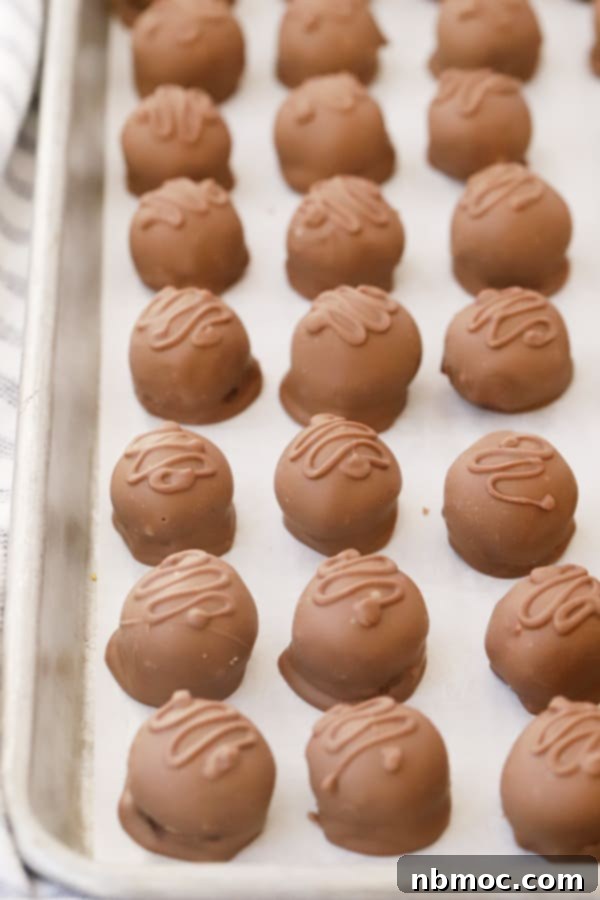
- Refine and Place: Lightly scrape the bottom of the chocolate-covered ball against the rim of the bowl to remove any remaining drips. Then, using a butter knife or an offset spatula, carefully slide the chocolate-covered ball off the fork and onto a clean sheet of parchment paper or wax paper. Repeat this process for all your coconut balls. For an extra decorative flourish, once all the candies are dipped, you can return to them and add a fine drizzle of chocolate over the tops for a beautiful, artisanal look.
- Set and Store: Allow the chocolate to harden completely in a cool place. Avoid placing them directly in the fridge at this stage, especially if you tempered the chocolate, as rapid temperature changes can cause blooming. Once the chocolate has fully set and is firm to the touch, your delicious candies are ready to be stored. Keep them in an airtight container in the refrigerator, where they will maintain their freshness and delightful texture for up to 2 months.
Frequently Asked Questions About Chocolate Covered Coconut Balls
Here are some common questions to help you achieve perfect chocolate-covered coconut balls every time:
For the most professional finish with a beautiful shine and firm snap, we recommend using a higher-quality couverture chocolate. Couverture chocolate is specially formulated with a higher percentage of cocoa butter solids, which makes it suitable for tempering. Tempering is the process that stabilizes the chocolate’s crystal structure, leading to that desirable glossy finish and satisfying snap. We provide basic home tempering instructions further down in this article.
Finding couverture chocolate is easier than you might think! Many local grocery stores carry it, often disguised as regular chocolate bars. Look for chocolate bars or bags of chocolate that specify a percentage (e.g., 70% cacao). This percentage indicates the amount of cacao mass (cocoa liquor and cocoa butter), which is key for tempering. You’ll likely find brands like Ghirardelli, Godiva, and Guittard in the baking aisle. Stores such as Trader Joe’s and Whole Foods often stock their own private-label couverture chocolates. Don’t forget to check for various local chocolate companies whose bars might be available at your grocery store.
For larger quantities or a wider selection of professional-grade chocolates, consider online shops. Worldwide Chocolate, for example, offers an extensive range from renowned brands like Felchlin, Cacao Barry, Valrhona, and Callebaut.
Without a doubt, using compound coating chocolate (also known as melting chocolate or candy melts) is the simplest method. This type of chocolate is engineered to melt smoothly and set firmly without requiring any tempering. All you need to do is melt it according to package directions and dip your candies. It’s virtually foolproof and perfect for beginners or when you’re short on time, especially compared to the precise technique of tempering true chocolate.
Unfortunately, “regular” chocolate, such as standard Hershey’s chocolate bars or common chocolate chips, is generally not suitable for dipping candies. These chocolates contain stabilizers or different fat compositions that prevent them from setting up properly and maintaining a glossy finish once melted. For successful dipping, you must use either a melting chocolate designed for coating or a high-quality couverture chocolate that can be tempered.
Under normal circumstances, well-melted dipping chocolate shouldn’t require thinning. However, if you accidentally overheat melting chocolate, it can sometimes seize up and become thick or clumpy. To rescue it, a common solution is to add a small amount of melted coconut oil or a neutral vegetable oil (like grapeseed or canola oil). A tiny quantity of extra fat can help emulsify and thin out the chocolate, restoring it to a dippable consistency. Add just a teaspoon at a time and stir well until the desired texture is achieved.
When stored properly in an airtight container in the refrigerator, these chocolate-covered coconut balls can last for up to 2 months. For best texture and flavor, we recommend consuming them within 2-3 weeks. You can also freeze them for longer storage, up to 3-4 months, by placing them in a freezer-safe container. Thaw them in the refrigerator before serving.
While the recipe calls for heavy whipping cream and butter, you can experiment with dairy-free alternatives. Look for full-fat coconut cream (the thick part from a can of coconut milk, chilled) as a substitute for heavy cream and a plant-based butter alternative. Ensure your chosen chocolate for dipping is also dairy-free. Keep in mind that taste and texture might vary slightly from the original recipe.

Advanced Technique: How to Temper Chocolate for Chocolate Covered Coconut Balls
If you’re ready for a rewarding challenge, tempering chocolate will give your homemade coconut balls a professional, glossy finish and a satisfying snap. This technique can be a bit tricky initially, so don’t get discouraged if your first attempt isn’t perfect – practice makes perfect! Here are detailed instructions for tempering chocolate at home:
- Select the Right Chocolate: The foundation of successful tempering is choosing a high-quality couverture chocolate. Look for a percentage indicated on the packaging (e.g., 60% cacao). This signifies it contains sufficient cocoa butter to temper properly. Standard baking chips or Hershey’s bars will not work for tempering. Refer to our FAQs for more insights into selecting the best chocolate.
- Prepare the Chocolate: If your chocolate comes in a large bar, chop it finely into small, even chunks using a sharp knife. Uniform pieces will melt more evenly. If you’re using chocolate callets (small disc-shaped pieces), they’re already perfectly sized.
- Reserve a Portion: Set aside approximately one-third of your total chocolate. This reserved portion is known as “seed” chocolate and will be crucial for cooling down and stabilizing the melted chocolate.
- Initial Melting Phase: Take the remaining two-thirds of the chocolate and gently melt it. You can do this either over a double boiler (a heatproof bowl set over a saucepan of simmering water, ensuring the bowl doesn’t touch the water) or in the microwave. If using a microwave, heat in short bursts of 20-30 seconds, stirring thoroughly after each interval. It’s vital to melt the chocolate slowly and carefully to prevent burning or overheating.
- Reach the Target Temperature: Monitor the temperature closely with a reliable thermometer. For white and milk chocolate, you need to heat it to 113 degrees F (45 degrees C). For dark chocolate, aim for 118 degrees F (48 degrees C). Stir frequently to ensure all lumps are dissolved and the chocolate is completely smooth. Once it reaches the target temperature, remove it from the heat.
- Begin the Cooling Process: Transfer the melted chocolate to a new, clean, dry bowl. Allow it to sit for about 5 minutes, stirring occasionally. This helps the temperature drop slightly before adding the seed chocolate.
- Seed the Chocolate: Now, gradually add the reserved one-third of un-melted “seed” chocolate into the warm melted chocolate. Add it in small increments (about a third of the seed chocolate at a time), stirring continuously and vigorously. The goal is to melt these solid pieces while simultaneously cooling the overall mass down to a specific “working temperature.” Continue stirring until the chocolate cools to 79 degrees F (26 degrees C).
- Reheat to Working Temperature: At 79 degrees F, you might still have a few small, un-melted lumps of seed chocolate. This is perfectly normal. Now, you need to gently bring the chocolate back up to its working temperature. For white and milk chocolate, this is 86-88 degrees F (30-31 degrees C). For dark chocolate, it’s 88-90 degrees F (31-32 degrees C). You can do this by setting the bowl back over the double boiler for just a few seconds at a time, stirring constantly, or by using a hairdryer on a warm setting (keeping it at a distance and moving it constantly) to gently warm the chocolate. Be extremely careful NOT to overheat the chocolate, as this will break the temper, and you’ll have to start the entire process again! Continue checking the temperature and stirring until all chunks are completely melted and the chocolate reaches its ideal working temperature.
- Test the Temper: To confirm your chocolate is properly tempered, perform a quick test. Dip the tip of a butter knife or a spoon into the chocolate. Let it sit out at room temperature. A properly tempered chocolate will set and harden within 5-10 minutes (often faster), appearing shiny and smooth, without any streaks or dull spots.
- Immediate Use: Once your chocolate is perfectly tempered, it’s ready to use immediately for dipping your chilled coconut balls. Maintain the chocolate’s working temperature by keeping it over a very low heat (or a heat lamp) if working slowly, or by periodically giving it a quick gentle re-warming if it starts to cool and thicken.
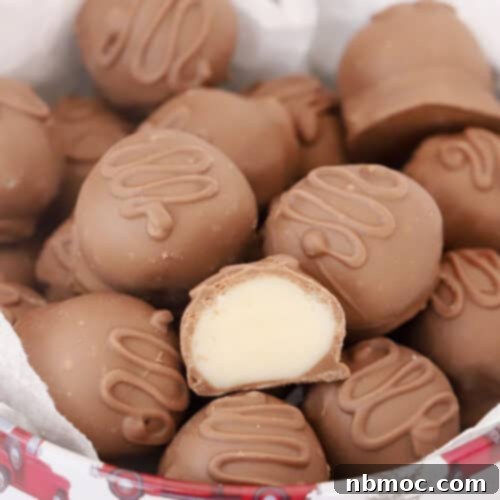
Chocolate Covered Coconut Balls Recipe
These coconut balls covered in chocolate are creamy, chewy, chocolatey and easy enough to prepare in your very own kitchen. They make an impressive addition to your cookie plate during the holiday season and are often the first thing to disappear!
Pin
Ingredients
- 2½ cups heavy whipping cream
- 6 cups sugar
- 1/4 cup butter
- 3 tablespoons corn syrup
- 1/8 teaspoon salt
- 1-2 teaspoons coconut extract
- 1 cup shredded coconut (optional)
- 1½ pounds chocolate (for dipping)
Instructions
- In a heavy saucepan, add heavy whipping cream, butter, sugar, corn syrup, and salt. Heat over medium heat while stirring and bring to a boil. If you notice any sugar on the sides of your saucepan, use a pastry brush and a little water to brush the sides so they are clean.
- When the sugar mixture starts to boil, clip a candy thermometer to the side of the pan and continue stirring and cooking until the mixture reaches 228 degrees F (soft ball stage).
- Once it gets to 228 degrees F, remove the pan from heat and pour into the bowl of a stand mixer. Do not scrape the bottom of the pan (this will help prevent crystallization).
- Let the sugar mixture cool to room temperature, then using the paddle attachment, mix on low for about 15 minutes. The sugar mixture will go from a slightly runny and glossy texture to a play dough texture and it will retain its shape. Once it has reached the desired consistency, stop the mixer and remove fondant from the bowl.
- Add the coconut flavoring and shredded coconut (if desired) and mix in until well combined.
- Roll into 3-4 long, thin cords then use a knife to cut into even bite-size pieces that are about 3/4″ – 1″. Roll each piece into a ball then place onto a baking sheet lined with parchment paper. You can use a bit of powdered sugar or butter on your hands to prevent sticking if needed.
- Transfer to the fridge for about 1 hour, or until no longer warm and hard enough to dip into chocolate.
How to Dip Chocolates
- Prepare your desired dipping chocolate by either melting coating chocolate or tempering high quality chocolate (SEE NOTES!). Add each rolled fondant ball to the prepared chocolate, one at a time.
- Use a fork to drizzle and cover fondant with chocolate, then lift the ball out and tap the fork on the side of the bowl to remove excess chocolate.
- Lightly scrape the bottom of the fork on the side of the bowl to remove more excess from the bottom of the fondant and use a butter knife or offset spatula to help slide the fondant from the fork to the parchment paper. Once you have dipped all of your chocolates, you can go back and add a little drizzle over the top of each for decoration.
- Let the chocolate harden in a cool place, then once it has completely set up your candy can be stored in an airtight container in the fridge for up to 2 months.
Notes
Nutrition Facts (per serving)
Calories: 485 kcal | Carbohydrates: 69g | Protein: 3g | Fat: 23g | Saturated Fat: 14g | Polyunsaturated Fat: 1g | Monounsaturated Fat: 6g | Trans Fat: 0.1g | Cholesterol: 35mg | Sodium: 38mg | Potassium: 199mg | Fiber: 2g | Sugar: 65g | Vitamin A: 438IU | Vitamin C: 0.2mg | Calcium: 36mg | Iron: 2mg
Disclaimer: Nutritional values were calculated using a third-party tool and are provided as an estimation only.
Sharing this recipe with a link is both encouraged and appreciated. Copying/pasting and/or screenshots of full recipes to any social media is strictly prohibited. Content and photographs are copyright protected.
Did you make this?
Don’t forget to leave a rating below and make sure to follow on Pinterest, Instagram and Tiktok for more!
Explore More Decadent Homemade Chocolate Candy Recipes
If you’ve enjoyed crafting these delightful Chocolate Covered Coconut Balls, you’re in for a treat! Our kitchen is filled with an array of tempting homemade chocolate candy recipes that are sure to satisfy your sweet tooth and impress your friends and family. From classic fudges to innovative delights, there’s something for every chocolate lover:
- Saltine Cracker Toffee: An unbelievably easy and addictive toffee made with humble saltine crackers.
- Buttery English Toffee: Rich, crunchy, and covered in chocolate and nuts – a timeless classic.
- Nutella Balls: Quick, no-bake bites bursting with hazelnut chocolate flavor.
- Peanut Butter Balls: A beloved combination of creamy peanut butter and chocolate, often called Buckeye Balls.
- Mint Chocolate Dipped Oreos: A refreshing twist on a favorite cookie, perfect for any occasion.
- Homemade Peanut Butter Cups Recipe: Recreate this iconic candy in your own kitchen, fresh and delicious.
- Chocolate Covered Caramel: Chewy, buttery caramel coated in smooth chocolate.
- Christmas Candy Recipes: A collection of festive treats perfect for holiday gifting and celebrations.
- More Candy Recipes: Discover our full range of easy-to-make sweet confections.
- More Easy Dessert Recipes: Explore simple yet impressive dessert ideas for every day and special events.
These Chocolate Covered Coconut Balls truly offer the best of both worlds: the luxurious experience of a gourmet chocolate truffle blended with the nostalgic comfort of a homemade Mounds bar. They are exquisitely smooth, wonderfully creamy, intensely chocolatey, and utterly addicting!