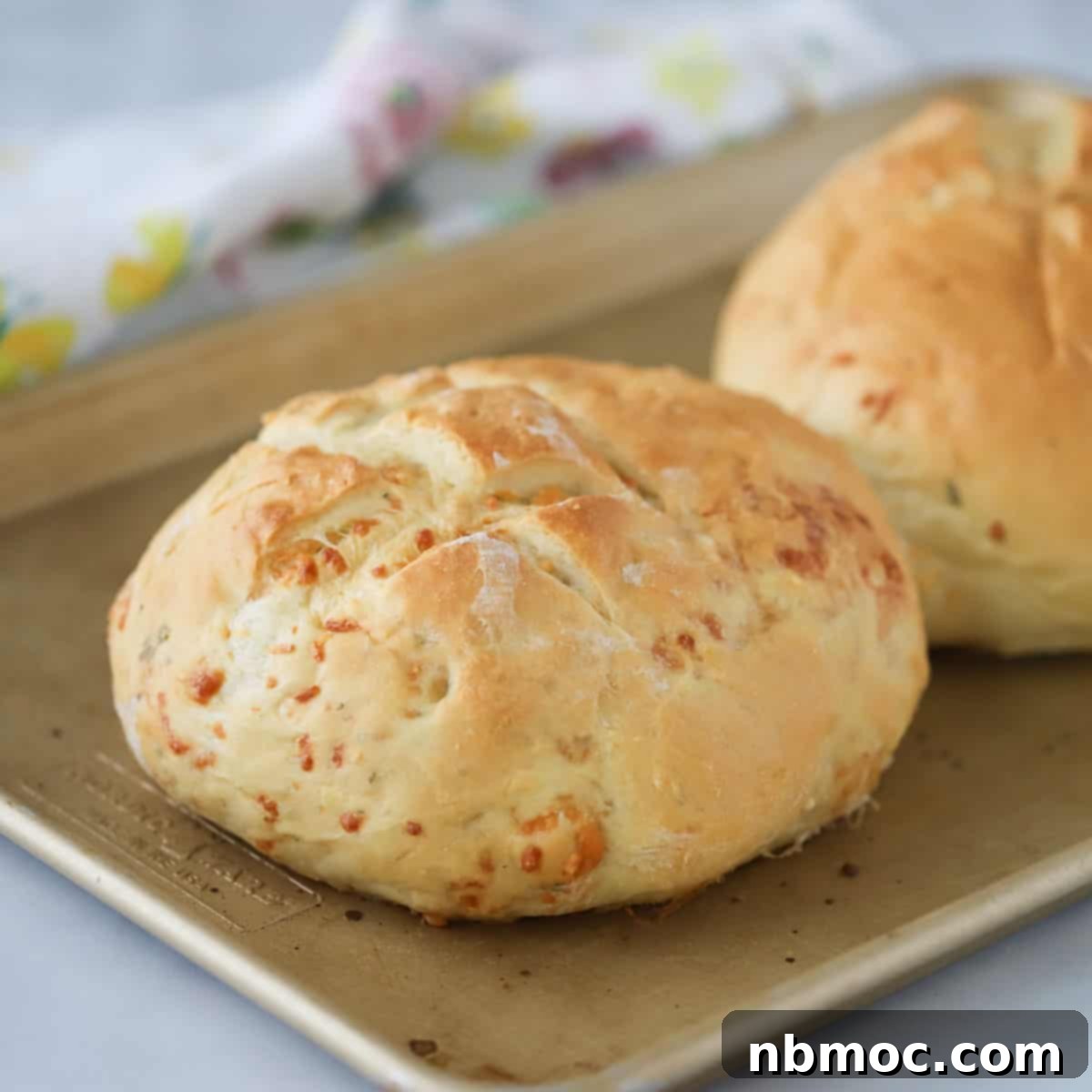
Welcome to a culinary journey that promises to fill your home with the irresistible aroma of freshly baked bread. This isn’t just any bread; it’s a magnificent loaf of Rosemary Parmesan Bread – a true masterpiece of texture and flavor. Imagine a bread so soft and tender it practically melts in your mouth, infused with the aromatic essence of fresh rosemary and the savory bite of Parmesan cheese. It’s an easy-to-master yeast bread that transforms any meal into a special occasion, whether it’s a casual weeknight dinner, a festive holiday gathering, or an elegant entertaining event.
Baking homemade bread might seem daunting, especially when yeast is involved, but this recipe is crafted for success, even for novice bakers. With clear, simple instructions, you’ll soon be scoring perfect loaves and enjoying the unparalleled satisfaction of bread baked from scratch. Each slice of this fragrant bread is a testament to the simple joy of good food, pairing exquisitely with hearty soups, rich stews, comforting pastas, and a myriad of other dishes.
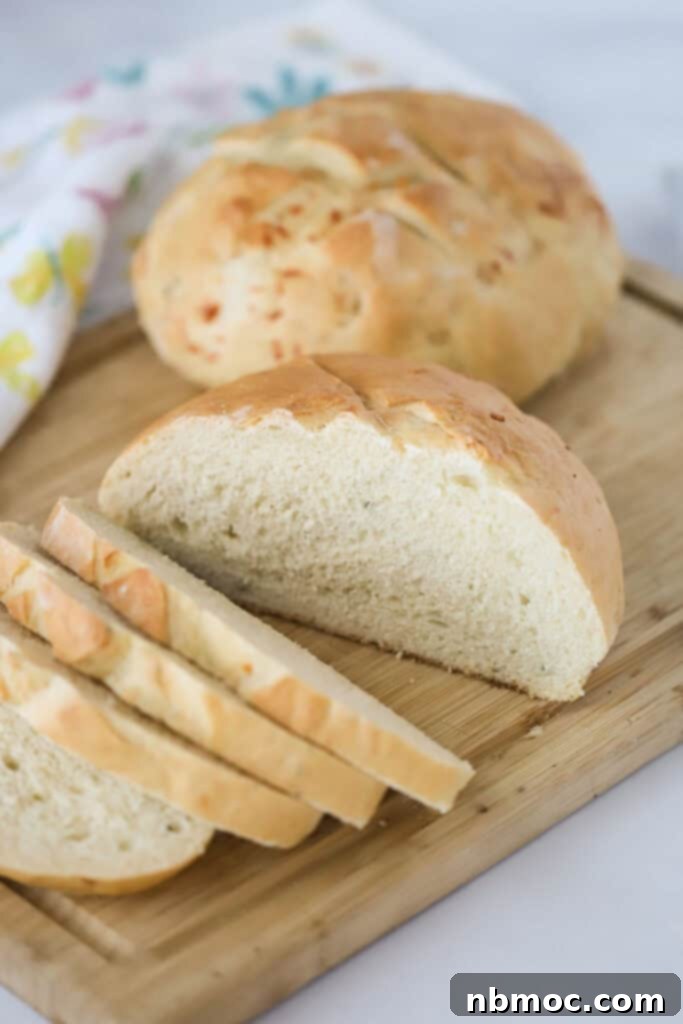
Rosemary Parmesan Bread: The Ultimate Homemade Loaf
The comforting scent of homemade bread wafting from the oven is one of life’s greatest pleasures, and when that aroma is intertwined with the piquant notes of Parmesan and the earthy perfume of fresh rosemary, it’s pure magic. Our Rosemary Parmesan Bread is an “enriched” bread, a term that signifies the inclusion of ingredients like eggs and milk in the dough. This enrichment process is the secret behind its exceptional softness, tender crumb, and beautiful golden crust, setting it apart from leaner bread varieties.
Don’t let the thought of working with yeast deter you. The process is far simpler than you might imagine. My golden rule for any yeast bread recipe is to thoroughly read through all the instructions before you begin. This allows you to visualize each step and understand the rhythm of bread making. Much of the “work” in this recipe involves patient waiting as the dough undergoes its transformative rises and bakes to golden perfection in your oven. It’s a rewarding process that yields incredible results.
If you find yourself captivated by the art of homemade bread, you’ll be delighted to explore more of our killer recipes. Dive into the savory swirls of our Garlic Herb Twist Bread, perfect your foundational skills with a classic Homemade White Bread, or indulge in the rustic charm of our Rustic Cheddar Cheese Bread. For those eager to master yeast baking, we also offer a wealth of tips on baking the perfect yeast bread to guide you every step of the way.
Why You’ll Love This Rosemary Parmesan Bread
- **Unforgettable Flavor:** The marriage of pungent Parmesan and fragrant rosemary creates a complex, savory flavor profile that is both comforting and sophisticated.
- **Incredibly Soft Texture:** Thanks to the enriched dough, this bread boasts a light, airy, and wonderfully tender crumb that’s a joy to eat.
- **Effortlessly Impressive:** While the results are restaurant-quality, the recipe is straightforward, making it perfect for impressing guests without hours of complicated work.
- **Versatile Companion:** It’s an ideal side for nearly any meal, from a simple bowl of soup to an elaborate holiday feast.
- **That Homemade Aroma:** The smell of this bread baking is pure bliss, filling your kitchen with a warmth that store-bought loaves simply can’t replicate.
Key Ingredients for Perfect Rosemary Parmesan Bread
Crafting exceptional bread starts with understanding the role each ingredient plays. Here’s a closer look at what you’ll need to create this aromatic loaf:
- Active Dry Yeast: This recipe relies on active dry yeast, which requires a brief activation period before being mixed into the dough. This vital step involves combining it with lukewarm water and a touch of sugar. You’ll know it’s ready when the mixture becomes delightfully foamy and bubbly, usually within 5-10 minutes. This bubbling indicates the yeast is alive and ready to make your bread rise beautifully.
- Warm Water: The temperature of your water is crucial for activating the yeast. Aim for a temperature between 110-115 degrees F (43-46 degrees C). It should feel pleasantly lukewarm to the touch, not too hot (which can kill the yeast) or too cold (which won’t activate it).
- Milk: Like the water, the milk should also be warmed to a lukewarm temperature before adding it to the dough. While you can substitute water for milk, using milk provides a significant advantage. It adds extra proteins and fats, resulting in a richer, softer, and more tender crumb, enhancing the bread’s overall texture and keeping it fresh for longer.
- Eggs: The inclusion of eggs is what makes this an “enriched” dough. Eggs contribute a deeper flavor, a beautiful golden color to the crust, and, most importantly, a luxurious softness and tenderness to the final product. They also aid in structure and moisture retention.
- All-Purpose Flour: For this particular bread, all-purpose flour strikes the perfect balance. It has an ideal protein content (gluten) that allows for sufficient dough development, creating a chewiness that is not overly dense, perfect for a soft yet structured loaf.
- Parmesan Cheese: The quality of your Parmesan makes a big difference here. We highly recommend using freshly grated or shredded Parmesan cheese. If possible, buy a block of high-quality Parmesan and grate it yourself just before mixing. Pre-grated cheeses can sometimes contain anti-caking agents that affect the texture and flavor, whereas fresh Parmesan offers a robust, salty, and nutty flavor that truly shines.
- Fresh Rosemary: The star herb of this recipe! You’ll need about 1-2 nice sprigs of fresh rosemary, finely chopped. Fresh rosemary provides an intensely fragrant and slightly piney aroma that permeates the bread. If fresh rosemary isn’t available, you can substitute with dried rosemary, but reduce the quantity to about 1 tablespoon, as dried herbs are more concentrated in flavor.
- Sugar: A small amount of sugar acts as food for the yeast, helping it to activate and thrive, and also contributes to the bread’s golden crust.
- Salt: Essential for flavor, salt also plays a critical role in controlling yeast activity and strengthening the gluten structure of the dough.
- Garlic Powder: While not a core structural ingredient, garlic powder adds another layer of savory depth that beautifully complements the rosemary and Parmesan.
How to Make This Rosemary Parmesan Bread Recipe
Follow these simple steps to bake your own fragrant and flavorful Rosemary Parmesan Bread:
- Activate the Yeast: In the bowl of your stand mixer, combine the warm water, sugar, and active dry yeast. Give it a gentle stir to ensure the yeast dissolves. Let this mixture rest for about 5-10 minutes. You’ll know the yeast is active and healthy when it becomes wonderfully foamy and bubbly on the surface. This is a crucial step – don’t proceed until you see those bubbles!
- Mix the Dough: To the activated yeast mixture, add the warm milk, eggs, salt, garlic powder, and finely chopped fresh rosemary. Then, begin adding the all-purpose flour, starting with about 2 cups. Using the dough hook attachment on your stand mixer, mix on low speed for about 1 minute until partially combined. Gradually add the remaining 4 to 4½ cups of flour, about ½ cup at a time. Continue mixing until the dough starts to pull away cleanly from the sides of the bowl, indicating proper gluten development.
- Knead and Incorporate Parmesan: Once the dough has pulled away from the sides, stop adding flour. Continue to mix the dough on low speed for another 2 minutes to develop the gluten further, making the bread soft and chewy. Now, add the shredded Parmesan cheese. Mix on low until the cheese is fully incorporated into the dough. If the dough starts to feel too sticky after adding the cheese, you can add a tiny bit more flour, just a tablespoon at a time, until it once again pulls away from the bowl.
- First Rise (Proofing): Lightly grease a clean bowl with a little oil. Transfer the dough to this bowl, turning it once to coat the entire surface with oil. Cover the bowl loosely with a clean kitchen towel or plastic wrap. Place it in a warm, draft-free spot in your kitchen and let the dough rise until it has doubled in size. This usually takes about 30 minutes to 1 hour, depending on the warmth of your environment.
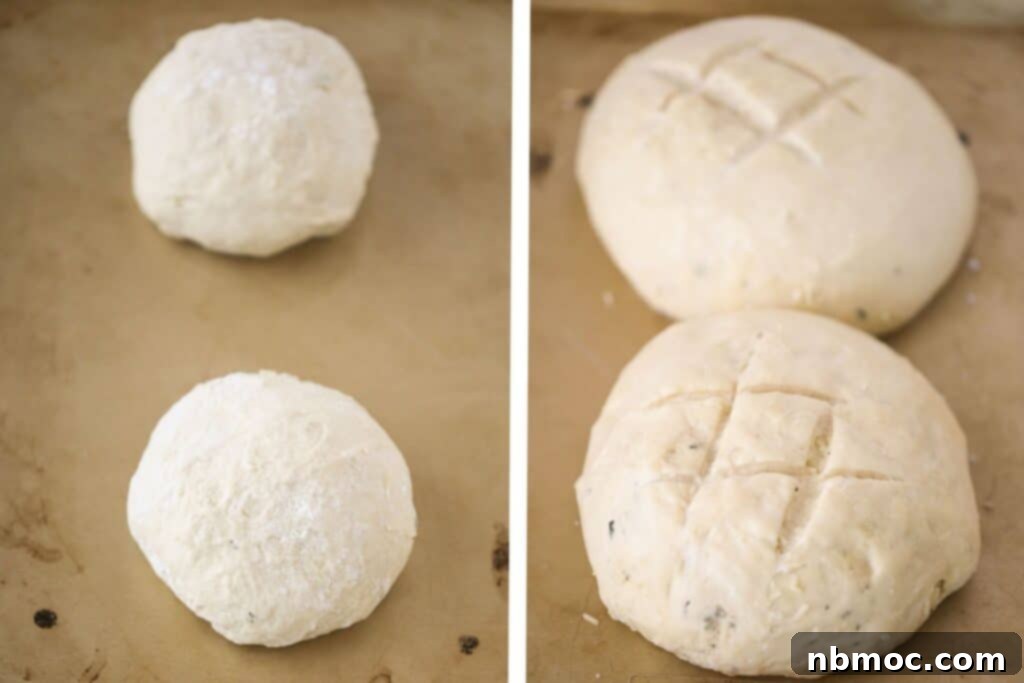
- Shape the Loaves: Once the dough has proudly doubled in size, gently punch it down to release the air. Transfer the dough to a lightly floured surface. Divide the dough into two equal pieces. For each piece, gently shape it into a round loaf by carefully rolling and tucking the edges underneath to create tension on the surface. Place the shaped dough balls onto a baking sheet lined with parchment paper. Cover them loosely with a kitchen towel and let them rise again for their second proofing until they have doubled in size, another 30-40 minutes.
- Prepare for Baking: While the dough is on its second rise, preheat your oven to 350 degrees F (175 degrees C). Once the loaves have doubled in size, they are ready for their finishing touches. Using a sharp knife or a bread scoring tool (lame), make shallow decorative cuts (scores) on the top of each loaf. This not only adds a professional touch but also allows the bread to expand properly during baking. In a small bowl, whisk together one large egg with 1 tablespoon of water to create an egg wash. Lightly brush this mixture over the top and sides of each loaf. The egg wash will give your bread a beautiful, glossy, golden-brown crust.
- Bake to Perfection: Carefully place the baking sheet with the loaves into the preheated oven. Bake for 30-40 minutes, or until the tops are a rich golden brown and the internal temperature reaches 200-210 degrees F (93-99 degrees C). If you notice the bread browning too quickly during baking, you can loosely tent the loaves with aluminum foil to prevent over-browning while allowing the inside to cook thoroughly.
- Cool and Enjoy: Once baked, remove the loaves from the oven and immediately transfer them to a wire cooling rack. Allow the bread to cool completely before slicing and serving. Cooling ensures the internal structure sets properly and prevents the bread from becoming gummy. The wait is the hardest part, but it’s worth it for the perfect texture!
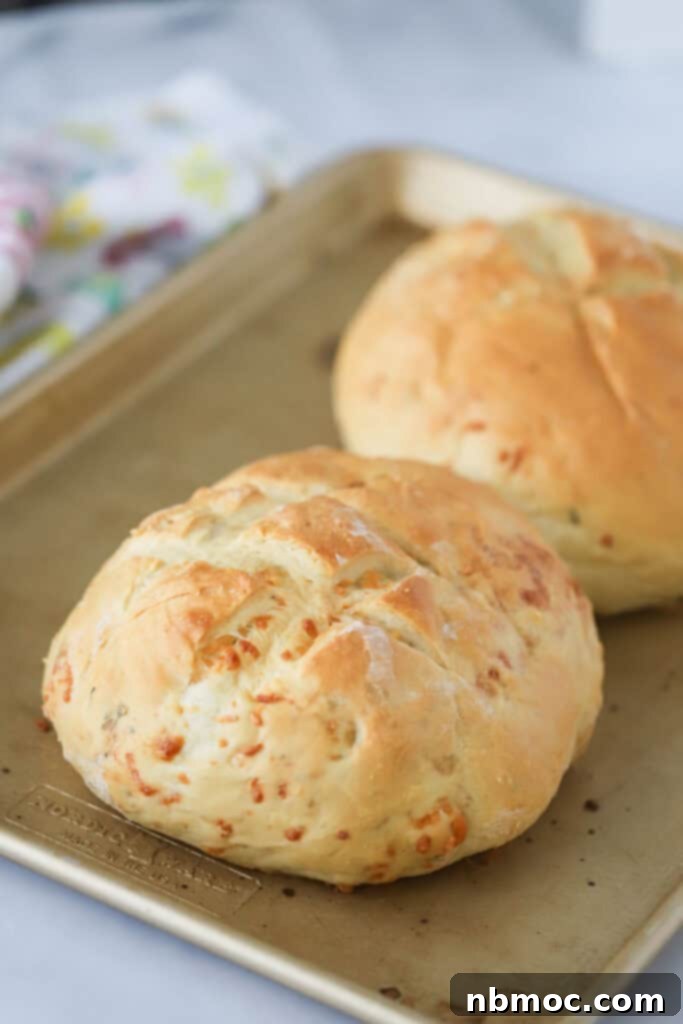
Frequently Asked Questions About Rosemary Parmesan Bread
Absolutely! Baking in a Dutch oven can yield an incredibly crispy crust and tender interior. If you choose this method, do not split the dough into two separate loaves. Instead, shape the entire dough into one round, then place it seam-side down into a lightly greased Dutch oven. Allow it to complete its second rise inside the covered Dutch oven. Once risen, score and egg wash as directed. Bake in a preheated 400-degree F (200 degrees C) oven with the lid on for about 30 minutes. Then, remove the lid and continue baking for another 10-20 minutes, or until the internal temperature of the bread reaches 200 degrees F (93 degrees C) and the crust is beautifully golden brown.
Yes, homemade bread freezes wonderfully! Ensure the bread has cooled completely to room temperature. Then, wrap it tightly in plastic wrap, followed by a layer of aluminum foil, or place it in a freezer-safe bag. It can be stored frozen for up to 2 months. To thaw, simply remove it from the freezer and let it come to room temperature on your counter. For an extra crisp crust, you can reheat the thawed bread in a preheated 350-degree F (175 degrees C) oven for a few minutes before serving.
While fresh rosemary offers a more vibrant and potent flavor, dried rosemary can certainly be used as a substitute. If you opt for dried, remember that its flavor is more concentrated. You will need to use approximately half the quantity of dried rosemary compared to fresh. For instance, if the recipe calls for 2 tablespoons of fresh rosemary, use about 1 tablespoon of dried. Crush dried rosemary lightly between your fingers before adding it to help release its essential oils.
The rise time provided in most bread recipes, including this one, is an estimate. The actual time it takes for your dough to double in size is significantly influenced by the ambient temperature and humidity level of your kitchen. Yeast thrives in warmth, so a warmer room will generally lead to a faster rise. Conversely, a cooler environment will slow down the proofing process. If your kitchen is cool, you can create a warmer environment by placing the covered dough in a slightly warmed (but turned off) oven or near a sunny window. Patience is key in bread baking!
Storing Instructions for Optimal Freshness
- Room Temperature: To keep your Rosemary Parmesan Bread fresh at room temperature, wrap it tightly in plastic wrap or store it in airtight freezer bags. It will maintain its quality for 3-5 days.
- Freezer: For longer storage, wrap the cooled bread well in plastic wrap, then transfer it to freezer-safe bags. It can be kept in the freezer for up to 2 months. Thaw at room temperature and refresh in the oven if desired.
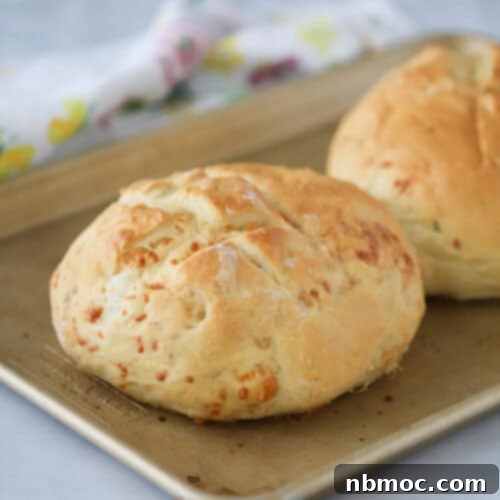
Rosemary Parmesan Bread Recipe
Pin
Ingredients
- 1½ cups warm water, around 115 degrees F
- 1 tablespoon sugar, can substitute honey
- 1½ tablespoons active dry yeast
- 1 cup milk, around 115 degrees F
- 2 large eggs
- 1 teaspoon garlic powder
- 1½ tablespoons salt
- 6-6½ cups all-purpose flour
- 1 cup Parmesan cheese, shredded
- 2 tablespoons rosemary, chopped
Egg Wash
- 1 large egg
- 1 tablespoon water
Instructions
- In the bowl of an electric mixer, add the warm water, sugar, and yeast. Stir until all the yeast has dissolved and let sit for about 10 minutes, or until it starts to get bubbly.
- Add the warm milk, eggs, salt, garlic powder, diced rosemary, and 2 cups of flour to the yeast mixture, then mix with a bread hook attachment on low for 1 minute. Add the remaining 4 – 4½ cups of flour slowly, adding about 1/2 cup of flour at a time until the dough pulls away from the side of the bowl.
- When the dough pulls away from the side of the bowl, stop adding flour and continue to mix on low for about 2 minutes. Add the shredded Parmesan cheese and mix on low until it’s fully incorporated. If it starts sticking again, add a little more flour.
- Cover the mixing bowl with a towel and let the dough rise until double, or about 30 minutes.
To Bake the Bread
- Preheat oven to 350 degrees F.
- Once the dough has doubled in size, divide in two equal pieces and shape into round loaves by gently rolling and tucking the edges under. Place the shaped dough balls onto a sheet pan, cover loosely with a kitchen towel and let the dough rise again until double, or about 30 minutes.
- After the dough has doubled in size, score the top of the rosemary loaves with a knife or scoring tool. In a small bowl, add the egg and water and whisk to combine, then brush the egg wash lightly over the top and sides of each loaf.
- Bake in a preheated degree oven for 30-40 minutes, or until golden brown on top. If the bread begins to brown too quickly, cover the loaves loosely with aluminum foil and continue to bake until 40 minutes is up.
- Remove from the oven and transfer the loaves to a wire cooling rack to cool completely before slicing and serving. Enjoy!
Notes
Nutrition
Carbohydrates: 54g |
Protein: 14g |
Fat: 8g |
Saturated Fat: 4g |
Cholesterol: 74mg |
Sodium: 730mg |
Potassium: 140mg |
Fiber: 1g |
Sugar: 2g |
Vitamin A: 300IU |
Calcium: 178mg |
Iron: 3.5mg
Disclaimer: Nutritional values were calculated using a third-party tool and are provided as an estimation only.
Sharing this recipe with a link is both encouraged and appreciated. Copying/pasting and/or screenshots of full recipes to any social media is strictly prohibited. Content and photographs are copyright protected.
Did you make this?
Don’t forget to leave a rating below and make sure to follow on Pinterest, Instagram and Tiktok for more!
Tips for Success in Bread Baking
Achieving a perfect loaf of Rosemary Parmesan Bread is simple with a few key tips:
- **Proper Yeast Activation:** Always ensure your yeast is active and bubbly before mixing it with other ingredients. If it doesn’t foam, your water might be too cold or hot, or your yeast may be old.
- **Dough Consistency is Key:** The amount of flour can vary slightly due to humidity and other factors. Add flour gradually until the dough is soft, slightly sticky, but pulls away from the sides of the bowl. Avoid adding too much flour, as this can lead to a dense, dry bread.
- **Warm Proofing Environment:** Yeast loves warmth! Find a cozy, draft-free spot for your dough to rise. A turned-off oven with the light on, or a warm spot on your counter, can work wonders.
- **Don’t Skip the Second Rise:** The second rise, or proofing, is vital for developing flavor and creating a light, airy texture. Give your shaped loaves ample time to double in size.
- **Accurate Temperature:** Use a kitchen thermometer to ensure your water and milk are at the correct temperature for yeast activation. Precision here will pay off.
- **Fresh Ingredients:** Especially for herbs and cheese, fresh is best. Freshly grated Parmesan and finely chopped fresh rosemary will provide the most potent and delicious flavors.
- **Score with Confidence:** Scoring the top of your loaves isn’t just for aesthetics; it allows steam to escape during baking, controlling how the bread expands and preventing uncontrolled cracks.
Variations and Serving Suggestions
Delicious Variations:
- **Garlic Boost:** Add a tablespoon of roasted garlic paste or an extra teaspoon of garlic powder to the dough for an even more intense garlic flavor.
- **Cheese Swaps:** Experiment with other hard, savory cheeses like Gruyere, Asiago, or even a sharp white cheddar for different flavor profiles.
- **Herb Medley:** While rosemary is wonderful, consider adding other complementary herbs like thyme, oregano, or a touch of finely chopped chives.
- **Spicy Kick:** A pinch of red pepper flakes can add a subtle warmth and excitement to each slice.
- **Seed Topping:** Before baking, sprinkle the egg-washed loaves with poppy seeds, sesame seeds, or a mixture of everything bagel seasoning for added crunch and flavor.
- **Sweet and Savory:** A drizzle of honey or maple syrup after baking can create a delightful contrast.
Perfect Serving Suggestions:
- **Soups and Stews:** This bread is the ultimate companion for a hearty bowl of soup (like tomato or French onion) or a rich beef stew, perfect for soaking up every last drop.
- **Pasta Dishes:** Serve alongside your favorite pasta, from a simple spaghetti aglio e olio to a creamy Alfredo, allowing the bread to scoop up delicious sauces.
- **Salads:** A slice of Rosemary Parmesan Bread adds substance and flavor to any salad, making it a more fulfilling meal.
- **Main Courses:** It pairs beautifully with roasted chicken, grilled steak, or baked fish, enhancing the flavors of your main dish.
- **Breakfast or Brunch:** Toast slices and serve with scrambled eggs, or simply slather with butter and enjoy with your morning coffee.
- **Appetizer:** Cut into cubes and serve with a good quality olive oil for dipping, or use as a base for bruschetta with fresh tomatoes and basil.
- **Sandwiches:** Its tender crumb makes it excellent for gourmet sandwiches, especially with deli meats, fresh mozzarella, and roasted vegetables.
More of the Best Homemade Bread Recipes
If you loved this Rosemary Parmesan Bread, you’ll surely enjoy exploring more of our delightful homemade bread creations:
- Cheddar Cheese Bread
- Homemade White Bread
- Garlic Herb Twist Bread
- Naan Bread
- Easy Homemade Cornbread
- Pull Apart Garlic Bread
- Jalapeno Cheddar Bread
- Italian Herb Focaccia Bread
- Explore more Easy Bread Recipes With Yeast
- Discover other amazing Side Dishes
This easy homemade Rosemary Parmesan Bread is truly a standout recipe, offering a perfect blend of soft texture and robust flavor from fragrant rosemary and savory Parmesan cheese. It’s a versatile loaf that elevates any meal, whether served with soup, a fresh salad, comforting pasta, or just about any other main course. Enjoy the process of baking and the joy of sharing this delicious bread with your loved ones!