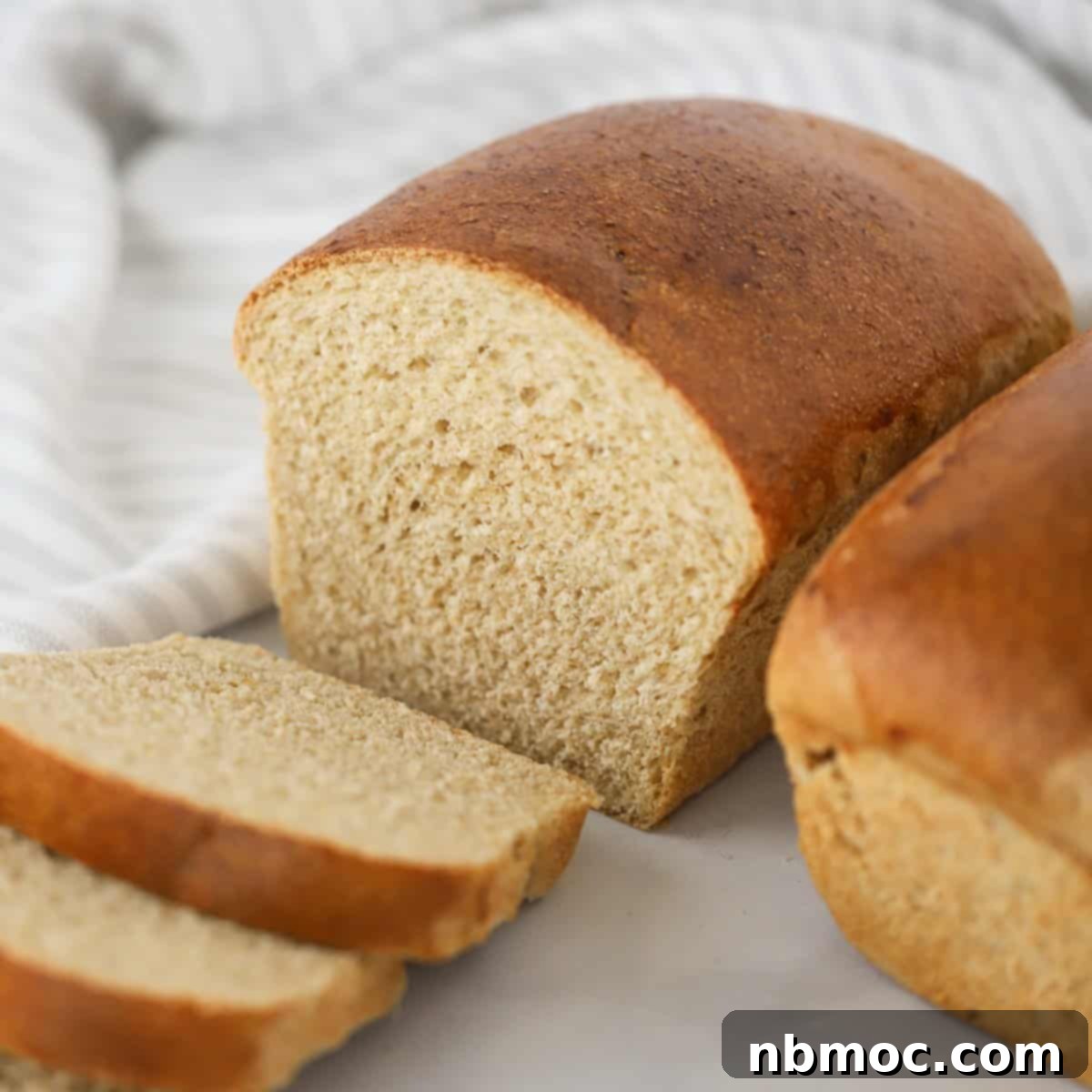
Welcome to the ultimate guide for creating a truly delightful and nutritious Homemade Whole Wheat Bread! This exceptional recipe celebrates the goodness of whole grains and the subtle sweetness of honey, resulting in a healthy, wholesome, and incredibly delicious loaf. Imagine a bread that is consistently soft, wonderfully tender, and bursting with rich flavor – perfect for crafting hearty sandwiches, toasting for a quick breakfast, or even savoring every last drop of your favorite sauce or soup. Baking bread at home is a rewarding experience, and this recipe makes it accessible for every skill level, from novice bakers to seasoned enthusiasts.
If you’re eager to explore more whole wheat creations, be sure to try our other beloved recipes:
- Fluffy Whole Wheat Dinner Rolls
- Crispy Whole Wheat Breadsticks
- Sweet Whole Wheat Cinnamon Rolls
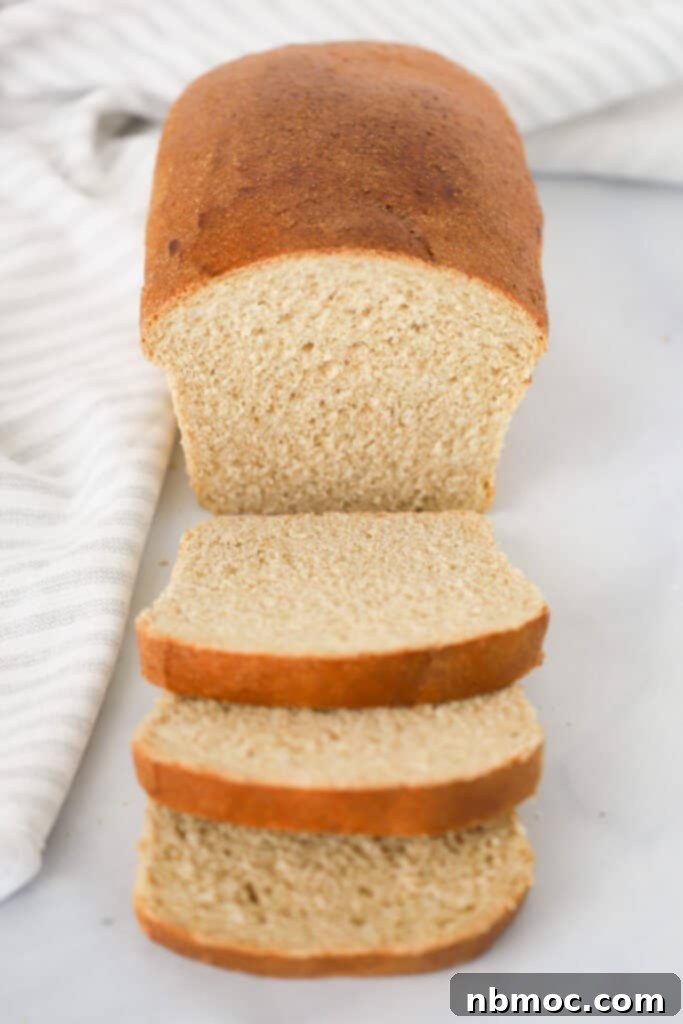
Mastering Homemade Whole Wheat Bread: An Easy Guide
There’s an undeniable magic in the aroma of freshly baked bread filling your home. One bite of a warm, homemade loaf and you’ll quickly realize that store-bought options simply can’t compare. Many aspiring bakers, however, find the idea of making bread from scratch a bit daunting. Thoughts of lengthy processes and complex techniques often deter them. If you’ve ever found yourself wishing you had the time and skill to bake your own bread, but felt intimidated by the commitment, this recipe is specifically designed for you. We believe that everyone deserves the joy of baking and enjoying wholesome, homemade bread.
Our classic recipe for soft and fluffy whole wheat bread incorporates all the qualities you desire in a perfect loaf, yet it’s surprisingly simple, making it ideal for beginners. It follows a similar approach to our popular Homemade White Bread, with the key distinction of using nutrient-rich whole wheat flour and a touch of golden honey for a naturally sweet and nutty flavor profile. This combination not only enhances the taste but also boosts the nutritional value, offering a more satisfying and healthful alternative to refined white bread.
By following our clear, step-by-step instructions, you’ll discover that with just a little planning and effort, truly delicious homemade whole wheat bread is within your reach. No need to spend your entire day in the kitchen; this recipe fits seamlessly into a busy schedule. Plus, this bread freezes beautifully, allowing you to bake a larger batch and store some loaves for future enjoyment. Imagine having fresh-tasting bread whenever a craving strikes, simply by thawing a frozen loaf.
The Nutritional Benefits of Whole Wheat
Choosing whole wheat bread over white bread offers a multitude of health advantages that extend beyond just taste. Whole wheat flour retains the entire wheat kernel – the bran, germ, and endosperm – unlike white flour, which primarily uses only the endosperm. This preservation of all parts means whole wheat bread is packed with essential nutrients that are often stripped away in refined grains.
One of the most significant benefits is the high fiber content. Dietary fiber is crucial for digestive health, helping to regulate bowel movements, prevent constipation, and support a healthy gut microbiome. Fiber also plays a vital role in blood sugar management, as it slows down the absorption of sugar into the bloodstream, preventing sharp spikes and crashes. This can be particularly beneficial for individuals managing diabetes or those looking to maintain steady energy levels throughout the day.
Beyond fiber, whole wheat is a rich source of vitamins and minerals. It provides B vitamins (like niacin, thiamine, and folate), which are essential for energy metabolism and nervous system function. You’ll also find important minerals such as iron, magnesium, and selenium. Iron is crucial for oxygen transport in the blood, magnesium supports muscle and nerve function, and selenium acts as a powerful antioxidant, protecting cells from damage. By incorporating whole wheat bread into your diet, you’re not just enjoying a tasty meal; you’re actively contributing to your overall well-being with every delicious bite.
Essential Ingredients for Your Whole Wheat Loaf
Creating the perfect whole wheat bread starts with understanding the role of each key ingredient. Here’s a closer look at what you’ll need and why it’s important:
- Warm Water: The temperature of your water is critical. It should be comfortably warm, ideally between 95-105 degrees F (35-40 degrees C). Water that’s too cold won’t activate the yeast, while water that’s too hot can kill it. Think of it as waking up the yeast gently.
- Sugar (or Honey): A small amount of sugar acts as food for the yeast, helping it to activate and produce carbon dioxide, which makes the bread rise. While granulated sugar works perfectly, you can easily substitute honey for a more complex sweetness and a distinct flavor that pairs beautifully with whole wheat.
- Active Dry Yeast: This recipe specifically calls for active dry yeast, which requires “proofing.” This means you’ll activate it in warm water with a little sugar before mixing it into the main dough. If you prefer using instant yeast, you can typically add it directly to the dry ingredients without proofing, saving a step. However, proofing is a good way to ensure your yeast is active before committing to the full recipe.
- Oil: We recommend avocado oil for its neutral flavor and high smoke point, but you have several excellent alternatives. Melted unsalted butter will impart a rich, dairy note, while coconut oil offers a subtle, pleasant aroma and tender texture. Oil contributes to the bread’s softness, moisture, and helps to extend its shelf life.
- Honey: Beyond just a sweetener, honey adds an incredible depth of flavor that complements the earthy, nutty notes of whole wheat flour beautifully. It also contributes to a lovely golden-brown crust and a slightly chewier texture.
- Whole Wheat Flour: The star of our recipe! The type of whole wheat flour you choose can influence the final texture and flavor of your bread. There’s a wide range of options available, from fine-ground to coarse-ground, and even different varieties of wheat. Don’t hesitate to experiment with different brands and types to discover your personal favorite. Keep in mind that whole wheat flour can absorb more liquid than white flour, so you might need slight adjustments depending on the brand.
- Salt: Essential for enhancing flavor and controlling yeast activity. Without salt, bread can taste bland and the yeast can work too quickly, resulting in an overly airy or crumbly texture.
Step-by-Step Guide to Baking Perfect Whole Wheat Bread
Follow these detailed instructions to create delicious whole wheat bread with confidence:
- Proof the Yeast: In the bowl of a stand mixer (or a large mixing bowl if kneading by hand), combine the warm water, sugar, and active dry yeast. Stir gently until the sugar dissolves and the yeast is distributed. Let this mixture sit undisturbed for 5-10 minutes. You’ll know your yeast is active and healthy when the surface becomes frothy and bubbly, indicating it’s alive and ready to work. If it doesn’t bubble, your yeast might be old or the water temperature was off; start again with fresh yeast.
- Mix and Knead the Dough: To the frothy yeast mixture, add the oil, honey, and salt. Then, incorporate about half of the whole wheat flour. Attach the dough hook to your stand mixer and mix on low speed for 1-2 minutes until these ingredients are just combined. Gradually add the remaining flour, one cup at a time, mixing on low speed after each addition. Continue mixing until the dough begins to pull away from the sides of the bowl and looks somewhat smooth. Once all the necessary flour is incorporated and the dough has formed, increase the mixer speed to medium and knead for approximately 3 minutes. The dough should become smooth, elastic, and slightly tacky but not sticky. If kneading by hand, turn the dough out onto a lightly floured surface and knead for 8-10 minutes until it’s smooth and elastic.
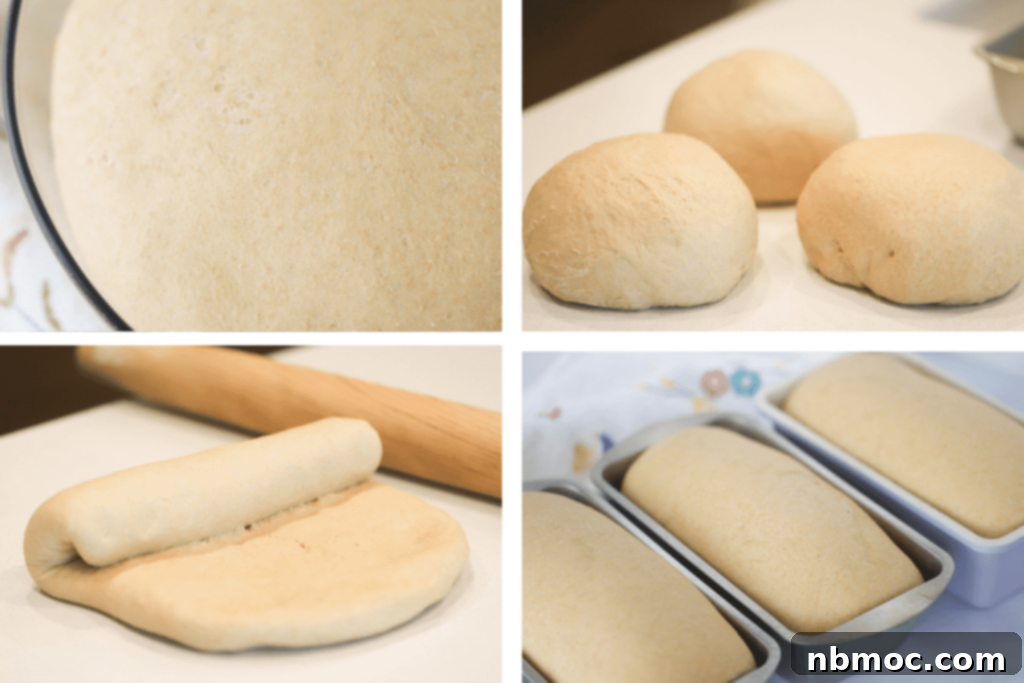
- First Rise (Bulk Fermentation): Lightly grease a large bowl with a little oil. Transfer the kneaded dough to this bowl, turning it once to coat all sides. Cover the bowl tightly with plastic wrap or a clean kitchen towel. Place it in a warm, draft-free spot. Allow the dough to rise until it has visibly doubled in size, which typically takes about 45-60 minutes, depending on the warmth of your environment. A good way to check if it’s ready is to gently poke the dough with two fingers; if the indentations remain, it’s risen enough.
- Shape the Loaves: Gently punch down the risen dough to release the air. Turn it out onto a lightly floured countertop. Divide the dough into three equal pieces. For each piece, sprinkle a little flour on your counter and use a rolling pin to roll it into an approximate 8″x12″ rectangle. Starting from one of the shorter ends, tightly roll up each rectangle into a log. Pinch the seam firmly to seal it completely. Tuck the ends of the log underneath to create a neat loaf shape. Place each shaped loaf, seam-side down, into a prepared 8.5″ x 4.5″ loaf pan (greased with butter or cooking spray). Repeat this process for the remaining two portions of dough.
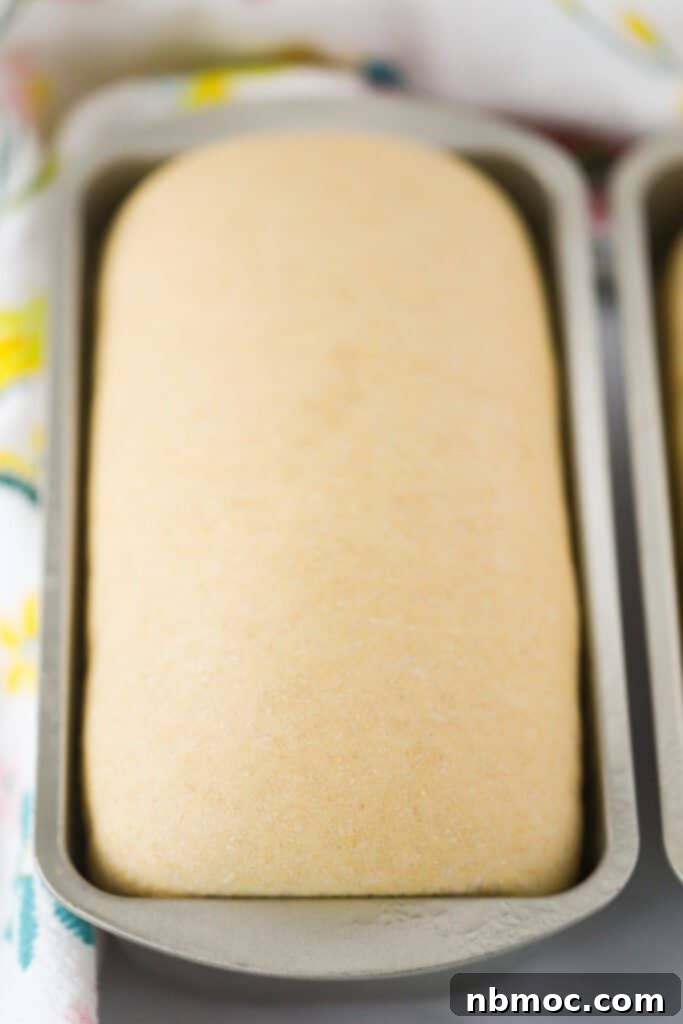
- Second Rise and Egg Wash: In a small bowl, whisk together the large egg and 1 tablespoon of water to create an egg wash. Using a pastry brush, gently apply a thin, even layer of this egg wash over the tops of each loaf. This will give your bread a beautiful golden crust and a slight sheen. Cover the loaf pans loosely with plastic wrap or a clean towel and let them rise again in a warm place until doubled in size, which usually takes another 30-45 minutes. They should be nicely domed and fill the pans.
- Bake to Golden Perfection: While the loaves are on their second rise, preheat your oven to 350 degrees F (175 degrees C). Once the loaves have doubled in size, carefully place all three pans into the preheated oven. Bake for 28-30 minutes, or until the tops are golden brown. To confirm doneness, an instant-read thermometer inserted into the center of a loaf should register between 190-195 degrees F (88-90 degrees C). This ensures the bread is thoroughly cooked inside.
- Cool and Finish: Immediately after removing the loaves from the oven, brush their tops with melted butter. This adds flavor, softens the crust, and gives it a beautiful shine. Allow the bread to cool in the pans for about 10-15 minutes. This cooling period helps the loaves set and makes them easier to remove without sticking. Then, carefully transfer them from the pans to a wire rack to cool completely. Slicing into hot bread can make it gummy, so patience is key for the best texture.
- Enjoy! Once cooled, slice and savor your incredible homemade whole wheat bread!
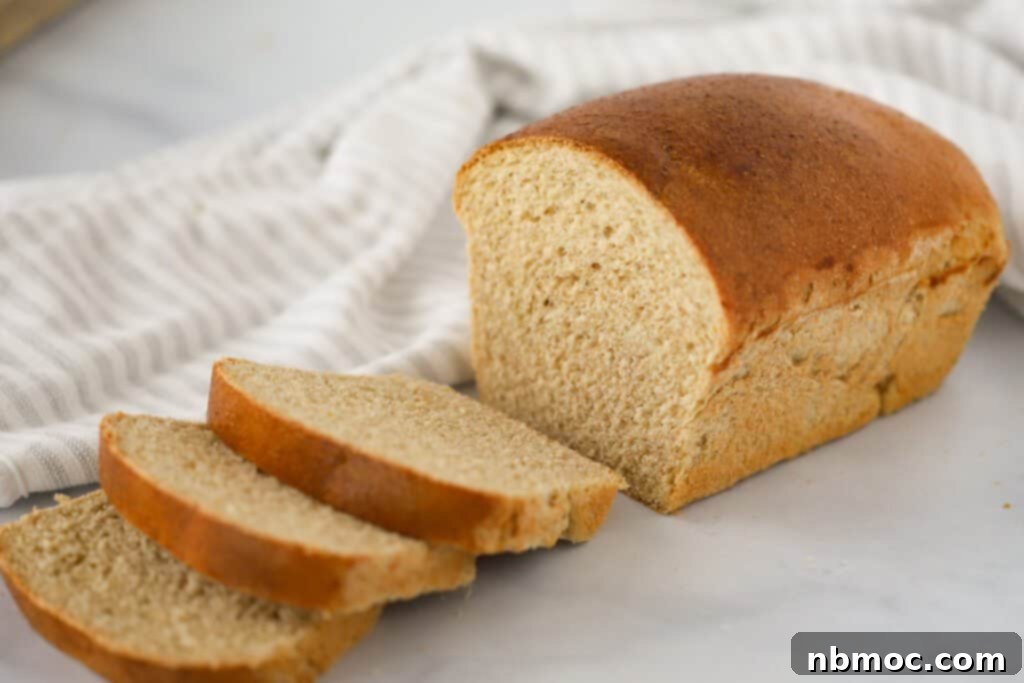
Expert Tips for Your Best Whole Wheat Bread
- Egg Allergy Alternative: If you or someone in your family has an egg allergy, you can easily substitute the egg wash. Brushing the tops of the loaves with milk (dairy or non-dairy) before baking will still give them a lovely golden color and a softer crust.
- Boost Fiber and Nutrients: For an extra nutritional punch and a slightly richer texture, consider adding a few tablespoons of wheat germ to the dough along with the flour. Wheat germ is packed with vitamins, minerals, and healthy fats.
- Oil Choices: While avocado oil is our preferred choice, melted butter will enrich the flavor, and coconut oil can add a subtle tropical note and contribute to a wonderfully tender crumb. Feel free to use the oil that best suits your taste and dietary needs.
- Choosing the Right Pan: For optimal baking and even browning, we highly recommend using metal or ceramic bread pans. These materials conduct heat efficiently, ensuring your bread bakes thoroughly and develops a perfect crust.
- For Extra Light and Fluffy Bread: To achieve an even lighter and fluffier texture, especially with whole wheat flour which can sometimes be dense, add 1/2 cup of vital wheat gluten to the dough when you’re incorporating the flour. Vital wheat gluten is concentrated protein from wheat that helps improve the elasticity and rise of whole grain breads.
- Accurate Measuring: For best results in baking, especially with bread, it’s highly recommended to weigh your flour using a kitchen scale rather than relying solely on volume measurements (cups). Flour can compact differently, leading to inconsistent results.
- The Warm Spot for Rising: If your kitchen is cool, finding a warm, draft-free place for your dough to rise is crucial. Ideas include a slightly warmed (but turned off!) oven, near a sunny window, or on top of your refrigerator.
Frequently Asked Questions About Whole Wheat Bread
The most accurate way to ensure your bread is perfectly baked through and to prevent a sunken loaf is to check its internal temperature using an instant-read digital thermometer. Insert the thermometer into the center of a loaf; once it registers between 190-195 degrees F (88-90 degrees C), your bread is fully cooked. Visual cues like a golden-brown crust and a hollow sound when tapped on the bottom are also good indicators, but temperature is the most reliable.
Absolutely! Bread freezes exceptionally well, making this recipe perfect for meal prepping or baking ahead. Once your bread has cooled completely, transfer it to a freezer-safe bag or wrap it tightly in plastic wrap followed by aluminum foil. It can be stored in the freezer for up to 2 months without compromising quality. When you’re ready to enjoy, simply thaw at room temperature or warm gently in the oven.
Yes, if you don’t have a stand mixer or prefer the convenience, a bread maker is an excellent tool for mixing and kneading your dough. Simply add all the dough ingredients to your bread machine, select the “dough” setting, and let it do the work according to your machine’s manual instructions. Once the dough cycle is complete, you can remove the dough and proceed with shaping, rising (second rise), and baking in your regular oven as outlined in the recipe.
If your yeast mixture doesn’t become frothy and bubbly after 5-10 minutes, it means your yeast is likely inactive or dead, or the water temperature was incorrect. Do not proceed with the recipe, as your bread won’t rise. Discard the mixture and try again with fresh yeast and ensure your water is between 95-105 degrees F (35-40 degrees C). Old yeast is a common culprit, so always check its expiry date.
Yes, you can certainly experiment with different sweeteners. While honey adds a unique flavor and moisture, you can substitute it with an equal amount of maple syrup for a different depth of sweetness, or even use brown sugar which will contribute a molasses-like richness that complements whole wheat beautifully. Keep in mind that different sweeteners might slightly alter the final flavor and texture of the bread.
Optimal Storage for Your Homemade Whole Wheat Bread
Proper storage is key to keeping your homemade whole wheat bread fresh and delicious for as long as possible. Here’s how to store it effectively:
- Room Temperature: For immediate consumption, your bread can be stored in an airtight plastic bag at room temperature for up to 3 days. The plastic bag is crucial for retaining moisture and keeping the loaves soft, much more so than a paper bag. Alternatively, a traditional bread box provides an excellent environment, protecting the bread from air exposure while allowing some circulation.
- Refrigerator: If you need to extend the shelf life beyond a few days, storing your bread in an airtight container or a sealed freezer bag in the refrigerator can keep it fresh for up to 1 week. Be aware that refrigeration can sometimes slightly alter the texture, making bread a bit firmer, but it’s effective for preservation.
- Freezer: For longer-term storage, the freezer is your best friend. If you’ve baked more loaves than you anticipate using within a few days, freezing them is highly recommended. Wrap individual loaves (or slices, if preferred) tightly in plastic wrap, then place them in freezer-safe bags. They will maintain their quality for up to 3 months. To enjoy, simply pull out a loaf or slices and thaw at room temperature, or warm gently in the oven for a “freshly baked” experience.
Homemade Whole Wheat Bread Recipe
Pin
Rate
Ingredients
Whole Wheat Dough
- 3 cups water, warm (95-110 degrees F)
- 1/4 cup sugar
- 1½ tablespoons active dry yeast
- 1/4 cup avocado oil
- 1/4 cup honey
- 1 tablespoon salt
- 7-8 cups whole wheat flour
To Top the Loaves
- 1 large egg
- 1 tablespoon water
- 2 tablespoons butter, melted
Instructions
Mix the Dough
- In the bowl of a stand mixer, combine the warm water, sugar, and yeast. Mix well, then let sit for 5-10 minutes, or until the yeast is frothy and bubbly.
- Add the oil, honey, salt, and half of the wheat flour into the yeast mixture and mix on low using the dough hook until combined—about 1-2 minutes.
- Continue adding one cup of flour at a time, then mixing on low speed, until the dough pulls away from the sides and looks smooth. Once you have added in all of the flour that you need, knead the dough on medium speed for about 3 minutes. The dough should be smooth and elastic.
- Cover the bowl with plastic wrap and let rise in a warm place until doubled in size, about 45-60 minutes.
Shape
- Grease three 8.5″ x 4.5″ bread pans with butter.
- Once your dough has doubled, divide into 3 even pieces. Sprinkle flour on your counter, then very gently roll each portion into a roughly 8″x12″ rectangle using a rolling pin (the shorter side of the rectangle should be about the length of your baking pans).
- Starting at the shorter end, roll each rectangle up tightly, then pinch the end to seal the seam. To shape dough, tuck each of the ends under and place seam-side down into one of your prepared loaf pans. Repeat with the other two portions.
- In a small bowl, add the egg and water and whisk. Brush a thin, even layer over the tops of each loaf of dough using a pastry brush, then let rise again until doubled in size, about 30-45 minutes.
Bake
- Preheat your oven to 350 degrees F. Once your loaves have doubled in size, bake all three at the same time for 28-30 minutes, or until golden brown (an instant-read thermometer should read 190-195 degrees F when inserted into the center of your loaves).
- Remove from the oven and brush melted butter over the top of each loaf of bread. Let cool for about 10-15 minutes, then remove from the baking pans and let cool completely on a wire rack before slicing. Enjoy!
Notes
Nutrition
Disclaimer: Nutritional values were calculated using a third-party tool and are provided as an estimation only.
Sharing this recipe with a link is both encouraged and appreciated. Copying/pasting and/or screenshots of full recipes to any social media is strictly prohibited. Content and photographs are copyright protected.
Did you make this?
Don’t forget to leave a rating below and make sure to follow on Pinterest, Instagram and Tiktok for more!
Serving Suggestions for Your Delicious Whole Wheat Bread
Your freshly baked homemade whole wheat bread is incredibly versatile and can elevate countless meals. Here are some ideas to inspire you:
- Perfect Sandwiches: Its sturdy yet soft texture makes it ideal for building robust sandwiches, from classic deli meats and cheeses to healthy veggie creations.
- Breakfast Toast: Slice it thick, toast it to golden perfection, and top with butter, jam, avocado, or a fried egg for a nutritious and satisfying start to your day.
- Sop Up Soups and Stews: The hearty crumb is fantastic for soaking up the last delicious drops of your favorite comfort foods like chili, beef stew, or a creamy tomato soup.
- Homemade Croutons: Cube stale bread, toss with olive oil and your favorite herbs, then bake until crispy. Perfect for salads or as a topping for French onion soup.
- French Toast: Day-old bread is excellent for making luxurious French toast. Its ability to absorb the custardy mixture without falling apart results in a delightful breakfast treat.
- Bread Crumbs: If you have any leftover bread that’s a bit past its prime for slicing, process it into fresh bread crumbs for use in meatballs, casseroles, or as a coating for fried foods.
- With Cheese and Wine: Serve slices with an assortment of cheeses, olives, and a glass of wine for a simple yet elegant appetizer.
Explore More of The Best Homemade Bread Recipes
The world of homemade bread is vast and rewarding. If you enjoyed baking this whole wheat loaf, we encourage you to try these other fantastic recipes from our kitchen:
- Ancient Grain Einkorn White Bread
- Classic Recipe for French Bread
- Buttery Homemade Crescent Rolls
- Fragrant Italian Herb Focaccia Bread
- Rustic Cheddar Cheese Bread Loaf
- Irresistible Garlic Pull Apart Bread
- Discover even more Delicious Bread Recipes
- Browse our collection of Easy Baked Goods
This soft and fluffy Homemade Whole Wheat Bread is truly a standout, offering everything you could want in a wholesome, delicious loaf, and it’s perfectly suited for any beginner baker. Whether you’re making sandwiches, enjoying it as toast, or using it to soak up your favorite sauces and soups, this bread is sure to become a staple in your home. Embrace the joy of baking and taste the difference of homemade goodness!