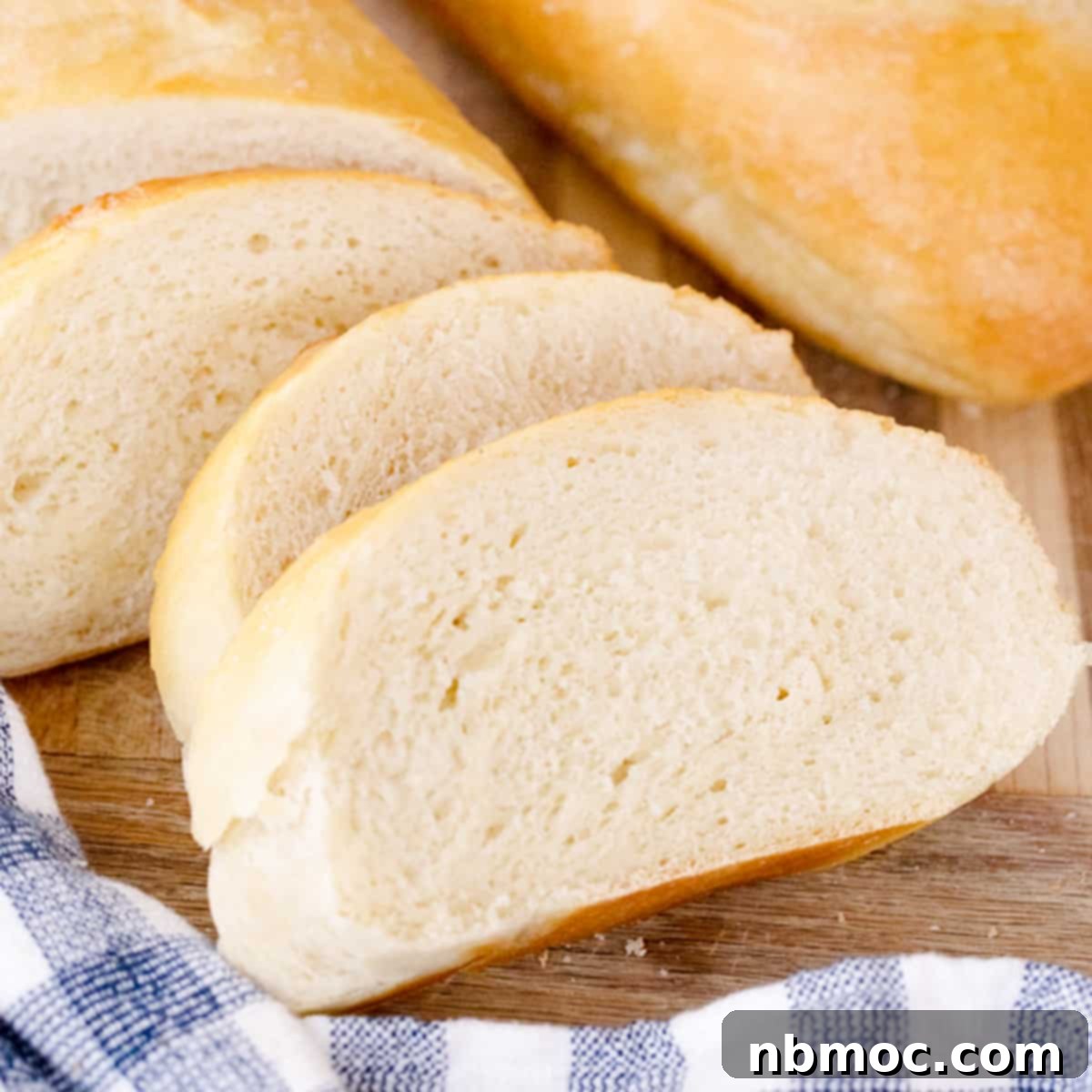
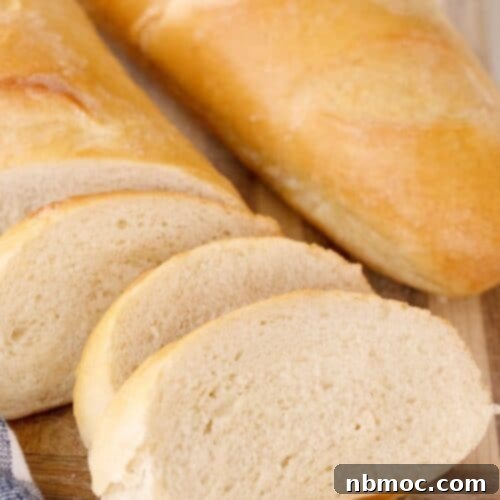
There’s an undeniable magic in the aroma of freshly baked bread filling your home. This **Classic French Bread recipe** promises to bring that bakery experience straight to your kitchen. Forget intimidating complex methods; this recipe is designed for every home baker, from eager beginners to seasoned pros. You’ll create loaves that are wonderfully soft and chewy on the inside, encased in a perfectly crisp, golden-brown crust – a true testament to the simple elegance of French baking.
Once you discover the joy of homemade bread, you might find yourself exploring more delicious recipes. Be sure to try our amazing Homemade White Bread for a versatile staple, our flavorful Focaccia Bread, the wholesome goodness of Honey Wheat Bread, and our comforting Rustic Cheddar Bread.
Crafting the Perfect Classic French Bread at Home
The quest for the perfect loaf of French bread often leads us to artisanal bakeries. However, the satisfaction of pulling two long, beautifully browned baguettes from your own oven is a culinary triumph unlike any other. This recipe demystifies the process, making it accessible and enjoyable. Each bite offers a delightful contrast: a tender, airy crumb yielding to a thin, crackly crust that sings with flavor. It’s not just bread; it’s an experience, a cornerstone for countless meals.
Imagine serving a warm slice alongside a hearty bowl of Baked Penne Pasta, transforming leftovers into a quick and easy French Bread Pizza, or even repurposing slightly stale bread for a decadent Best French Toast Bake. Beyond main meals, this versatile bread is exceptional with dips. Pair it with our aromatic Olive Oil Herb Dip, creamy Homemade Alfredo Sauce, or vibrant Homemade Pesto Sauce. Whichever way you choose to enjoy it, this homemade French bread is guaranteed to become a family favorite.
The Allure of Authentic French Bread
French bread, often synonymous with the iconic baguette, holds a revered place in culinary history. Its simplicity is its strength, typically made with just four core ingredients: flour, water, yeast, and salt. This humble combination, through precise technique and care, transforms into a loaf with a complex flavor profile and texture. The goal is a light, open crumb and that signature crisp crust – achievable right in your own kitchen.
Why Bake French Bread from Scratch?
While store-bought options are convenient, nothing compares to the quality and flavor of homemade French bread. Beyond the incredible aroma that fills your home, baking your own bread offers several distinct advantages:
- Unmatched Freshness and Flavor: Straight from the oven, homemade bread boasts a warmth and taste that simply can’t be replicated.
- Control Over Ingredients: You know exactly what goes into your bread, ensuring no unwanted additives or preservatives.
- A Rewarding Experience: The process of transforming basic ingredients into beautiful loaves is incredibly satisfying and therapeutic.
- Cost-Effective: Baking bread at home is often far more economical than buying it regularly from a bakery.
Homemade French Bread Video Tutorial
Key Ingredients for Authentic French Bread
Mastering this classic French bread begins with understanding the role of each ingredient. Simple yet essential, they combine to create culinary magic:
- Water – The temperature of your water is crucial for activating the yeast. Aim for a range between 95-105 degrees F (35-40 degrees C), which is comfortably warm to the touch but not hot. Water that’s too cold won’t activate the yeast, and water that’s too hot can kill it.
- Sugar – A small amount of sugar acts as food for the yeast, helping it to become active and bubbly. This initial boost ensures a good rise and contributes to the bread’s golden crust. You can also substitute an equal amount of honey if preferred.
- Yeast – For this recipe, **active dry yeast** is the preferred choice. It needs to be proofed (activated in warm water and sugar) before being mixed with the other ingredients, confirming its vitality.
- Oil – We recommend olive oil for its subtle flavor and to help tenderize the crumb, but any neutral cooking oil can be used. It also contributes to a richer crust.
- Flour – **Unbleached all-purpose flour** is ideal for Classic French Bread. Its moderate gluten content creates a tender yet chewy interior without being overly dense. While bread flour can be used, you may need to adjust the amount slightly due to its higher protein content, which absorbs more liquid.
- Eggs – For that beautiful, glossy, golden-brown crust, we use a simple egg wash made with a whole egg. The protein in the egg contributes to the shine and helps develop a darker, more appealing color during baking.
- Water (for Egg Wash) – A tablespoon of water mixed with the egg helps to thin out the egg wash, making it easier to brush evenly over the loaves and preventing a thick, rubbery coating.
How to Make This French Bread Recipe: A Step-by-Step Guide
Baking French bread might seem daunting, but by following these clear steps, you’ll achieve impressive results every time:
- Proof the Yeast. In the bowl of your standing mixer, combine the warm water (remember, 95-105°F is key), sugar, and active dry yeast. Give it a gentle stir and let it rest for about 5-10 minutes. You’re looking for a frothy, foamy layer to appear on the surface – this indicates your yeast is active and ready to work!
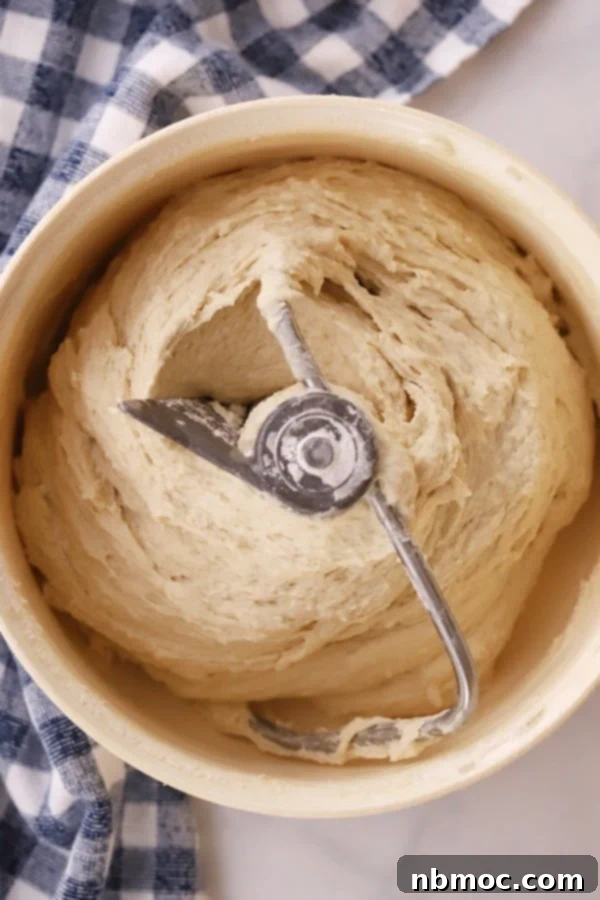
- Mix the French Bread Dough. To the proofed yeast mixture, add the olive oil, salt, and about half of the total all-purpose flour. Attach the dough hook to your mixer and mix on a low speed for 1-2 minutes, or until all the flour is fully incorporated and no dry spots remain. Continue mixing on low, gradually adding the remaining flour, about ½ cup at a time. Watch the dough carefully; it should start to pull away cleanly from the sides of the bowl. Once it does, continue to mix on low speed for an additional 2 minutes to develop the gluten. The dough should feel soft but no longer sticky to the touch. If it’s still too sticky, add a very small amount of flour, a tablespoon at a time, until it reaches the desired consistency.
- First Rise (Bulk Fermentation). Turn off your mixer. Cover the bowl with a clean kitchen towel or plastic wrap. Place the dough in a warm, draft-free spot (such as a slightly warm oven that’s been turned off, or near a sunny window) and let it rest for approximately 30 minutes. This initial rise allows the dough to begin developing flavor and structure.
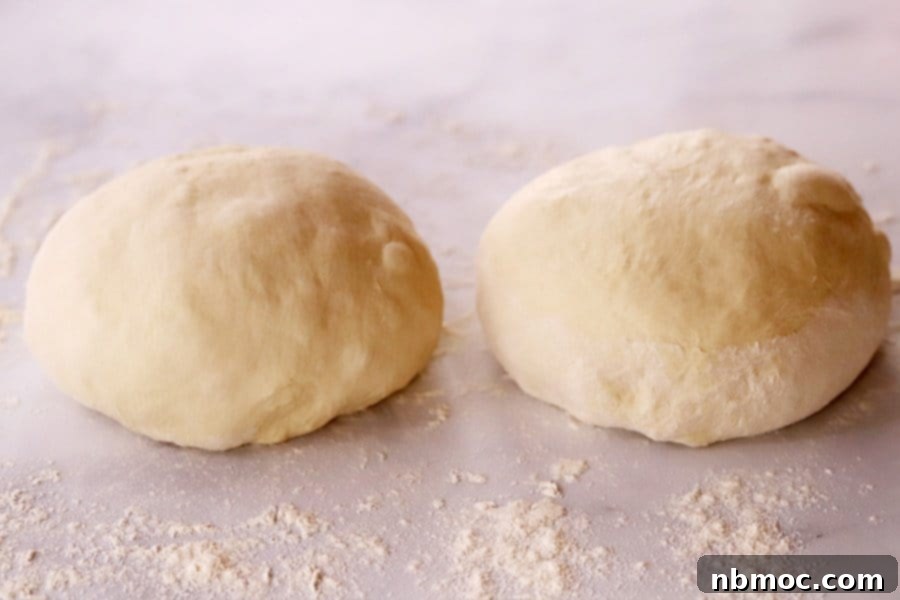
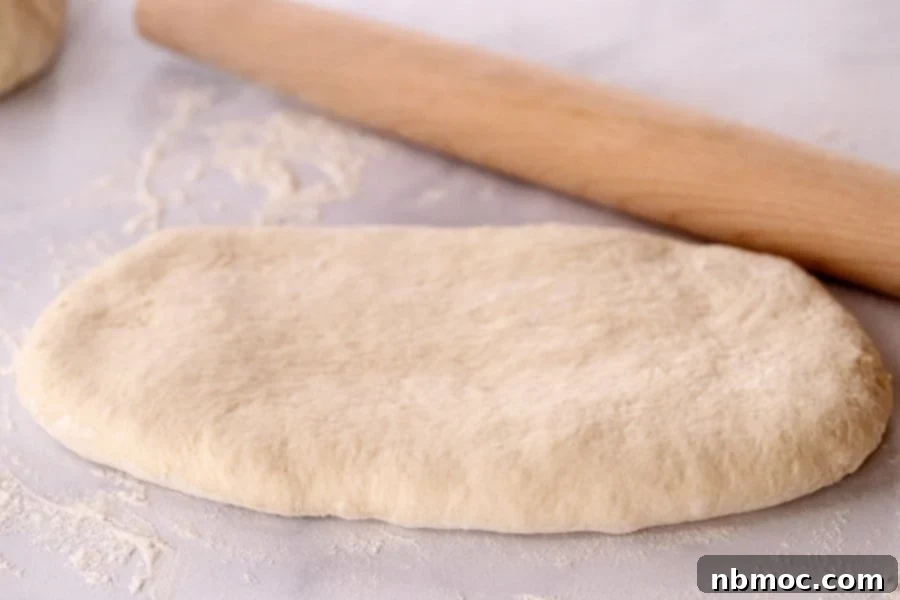
- Shape the Loaves. Gently remove the rested dough from the bowl onto a lightly floured surface. Divide the dough into two equal pieces. Using a rolling pin, gently roll each piece into a rectangular shape, roughly 14 inches long by 8 inches wide. Starting from one of the longer edges, carefully roll the rectangle up tightly, pressing out any large air bubbles with the heel of your hand as you go. Pinch the seam closed firmly to create two long, narrow loaves.
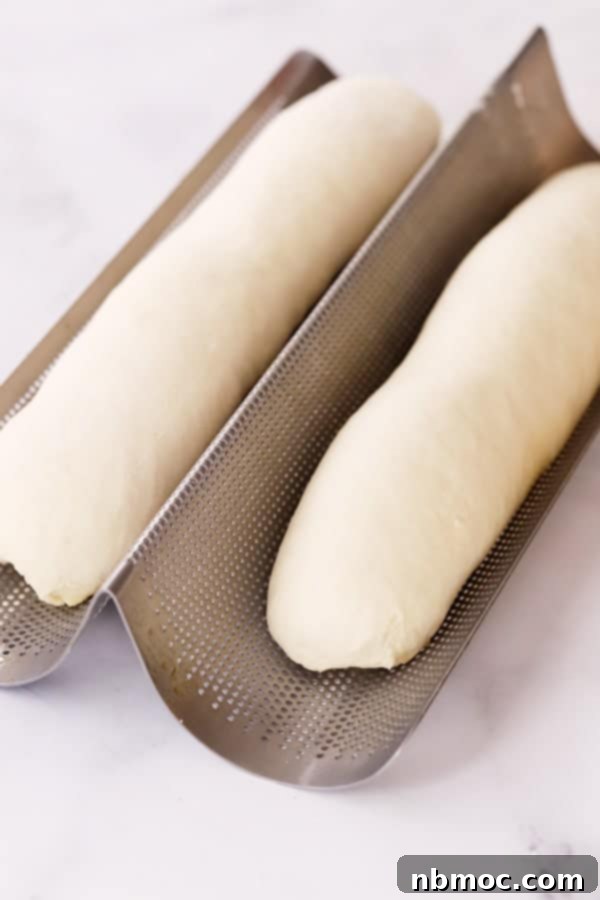
- Second Rise (Proofing). Lightly grease two baking pans or French bread/baguette pans. Carefully transfer your shaped loaves to the prepared pans, ensuring the seam side is facing down. Cover them again with a kitchen towel and let them rise in a warm spot for another 30-40 minutes, or until the dough has visibly doubled in size. This final rise is crucial for a light and airy crumb.
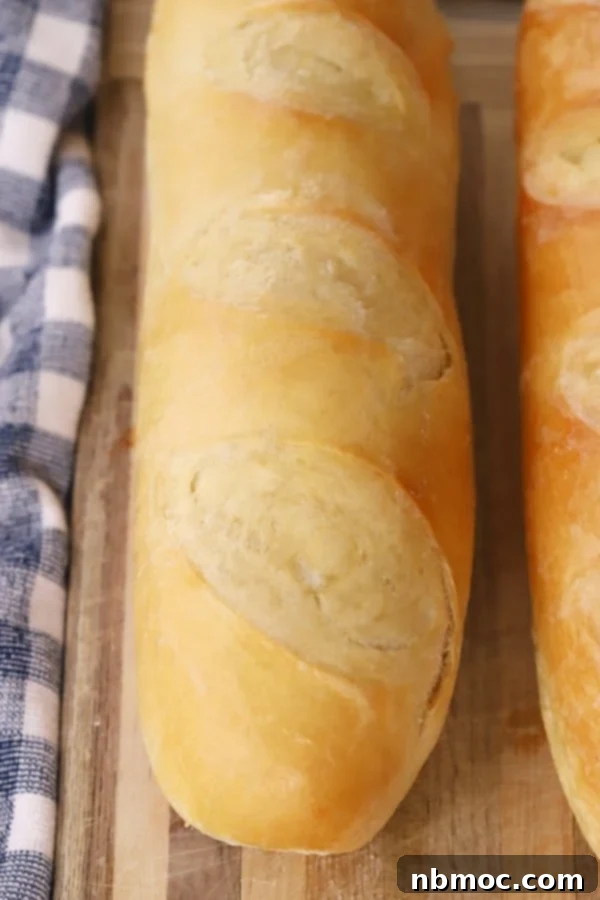
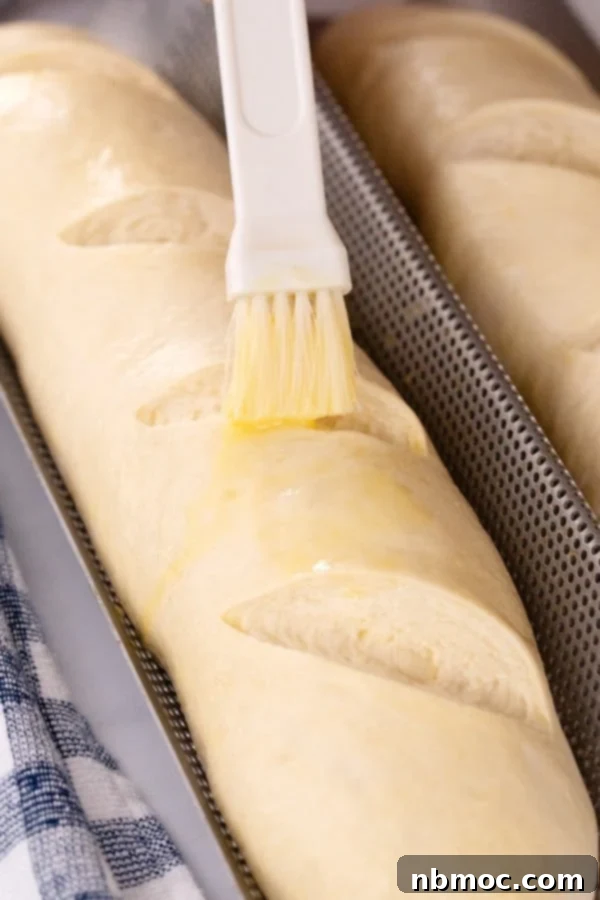
- Prepare and Score the Loaves. While your bread is completing its second rise, preheat your oven to 375 degrees F (190 degrees C). In a small bowl, whisk together the large egg and 1 tablespoon of water to create the egg wash. Once your loaves have doubled, gently remove the towel. Using a pastry brush, liberally brush the egg wash all over the surface of each loaf, ensuring even coverage for a uniform golden crust. Now, it’s time to score! With a baker’s lame or a very sharp razor blade, make about four angled slashes across the top of each loaf. These slashes aren’t just for aesthetics; they allow the bread to expand properly in the oven, preventing uncontrolled tearing.
- Bake with Steam. Carefully place your baking pan(s) into the preheated oven. For that quintessential crusty exterior, quickly and carefully place 5-6 ice cubes directly onto the bottom of the oven (or in a preheated roasting pan, as detailed in our “Tips for a Crusty French Bread” section below), then immediately shut the oven door. The melting ice cubes will create steam, which is essential for a crisp crust. Bake for 20-25 minutes, or until the bread is beautifully golden brown and sounds hollow when tapped on the bottom.
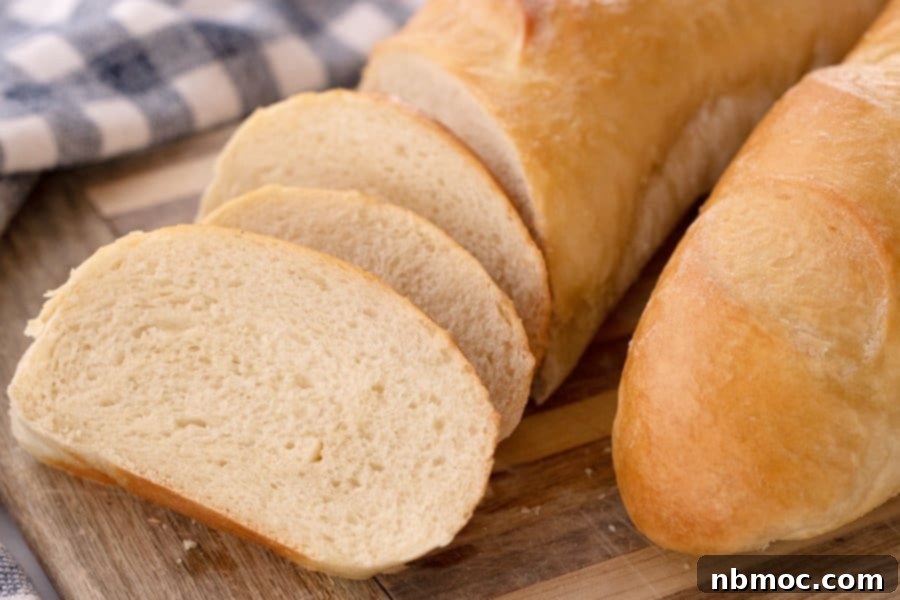
- Cool and Serve. Once baked, remove the loaves from the oven and transfer them to a wire rack to cool completely before slicing. This cooling process is vital; slicing hot bread can lead to a gummy texture. Enjoy your perfectly homemade Classic French Bread!
The Art of Scoring French Bread Loaf
Scoring, also known as “slashing” or “lame-ing,” is much more than just a decorative step; it’s a critical technique in bread baking. When your yeast dough enters a hot oven, it experiences a rapid expansion known as “oven spring.” Without controlled slashes, the dough will burst unpredictably, leading to an uneven shape and tearing. Scoring directs this expansion, allowing the bread to rise beautifully and creating those characteristic patterns. It can feel a little intimidating at first, but with a few pointers, you’ll master it:
- Timing is Everything: Always score your bread dough just before it goes into the hot oven. This ensures the cuts are fresh and effective for oven spring.
- Be Quick and Decisive: Use a swift, confident motion. Hesitation can lead to ragged cuts that don’t open as cleanly.
- Depth and Angle: Your cuts should be relatively shallow, about ¼” – ½” deep. For French bread, aim for a 30-45 degree angle. This angle helps create the “ear” or lip on the crust that is highly prized in artisanal loaves.
- French Bread Specifics: For classic French loaves, cuts are typically longer and run almost parallel to the length of the loaf, often slightly overlapping or staggered.
The best tool for scoring is a **baker’s lame** (pronounced “lahm,” French for “blade”). This specialized tool features an extremely sharp, curved blade designed to make thin, precise, and shallow cuts in dough. Lames are an excellent investment if you plan to bake bread frequently, usually available online for under $20. In a pinch, a very sharp razor blade or even a sharp filet knife can work, but exercise extreme caution due to their sharpness and lack of a proper handle.
Tips on How to Get Crusty French Bread
That signature crisp, crackly crust is one of the hallmarks of authentic French bread. The secret? **Steam.** Professional bakeries achieve this with specialized steam injection ovens. But don’t worry, you can replicate this effect in your home oven with a couple of clever tricks:
- The Ice Cube Method: This is arguably the simplest and most effective trick. As soon as you place your bread into the hot oven, carefully toss 5-6 ice cubes onto the bottom of the oven (not directly on the baking pan). Then, quickly shut the oven door. The ice will instantly melt and create a burst of steam, which prevents the crust from setting too quickly, allowing the bread to expand fully and creating a thinner, crispier crust.
- The Roasting Pan Method: A slightly more involved but equally effective method is to preheat a roasting pan with about 1-2 inches of boiling water in the bottom of your oven for a few minutes before adding your loaves. The hot water will generate consistent steam. When you’re ready to add your bread, open the oven door **very carefully** to avoid the hot steam hitting your face.
Both methods achieve the same goal: providing a humid environment during the initial phase of baking. This allows the crust to remain pliable longer, promoting greater oven spring and a more delicate, crisp texture.
Frequently Asked Questions About French Bread
For this Classic French Bread recipe, we highly recommend using **unbleached all-purpose flour**. It typically has a moderate gluten content, ranging between 9-11%, which is perfect for achieving the signature soft, chewy crumb and open texture characteristic of French bread. While you can certainly experiment with bread flour, which has a higher protein content (and thus more gluten), be aware that you might need to adjust the liquid amount slightly as it absorbs more water.
You have a couple of excellent options when it comes to baking pans for your French bread loaves:
Baking Sheet: A regular, sturdy baking sheet, lightly greased, will work perfectly fine. If you only have one, you can bake one loaf at a time or fit two on a large sheet, ensuring they have enough space.
French Bread or Baguette Pan: These specialized pans are designed with perforated grooves that cradle the dough, helping it maintain its shape and encouraging even browning and a crispier bottom crust. Many are non-stick, but a light spray with baking spray is still a good idea for easy release. These are a great investment for frequent French bread bakers and are relatively inexpensive online.
To keep your freshly baked French bread at its best, wrap it loosely in plastic wrap or place it in a paper bag (to preserve the crust’s crispness) and store it at room temperature for up to 3 days. For longer storage, French bread freezes beautifully! Wrap the entire cooled loaf tightly in plastic wrap, then place it in a freezer bag or aluminum foil, and store it in the freezer for up to 3 months. When ready to enjoy, the bread will thaw quickly at room temperature. If you’re in a hurry, you can pop the frozen loaf into a 350°F (175°C) oven for a few minutes until warmed through.
If your French bread has become a little harder than you’d prefer, a simple trick can revive its tenderness. Lightly spritz your loaf with a small amount of fresh water, then wrap it securely in aluminum foil. Place it in a preheated oven at about 300°F (150°C) for 10-20 minutes, or until it feels warmed and softened. Remove it from the oven and let it cool for a few minutes while still wrapped in the foil. The steam trapped inside will rehydrate the crust and crumb, bringing it back to life.
While both Italian and French breads are beloved for their crusty exteriors and soft interiors, they typically differ in a few key aspects. One of the most obvious differences is their shape: French bread (like a baguette) is usually long, thin, and often pointed, while Italian bread tends to be wider, flatter, and rounder, sometimes with a more rustic appearance. Texturally, French bread often boasts a slightly lighter, airier crumb with larger, irregular holes, whereas Italian bread can be denser and more compact, offering a heartier chew. These differences largely stem from variations in flour types, hydration levels, and baking techniques used in their traditional preparations.
What to Make with Leftover French Bread
Don’t let any leftover French bread go to waste! Its sturdy texture and delightful flavor make it perfect for a variety of dishes:
- French Toast Bakes: The slightly stale bread absorbs custardy mixtures beautifully. Try our Caramel Cinnamon Rolls (using bread for the base), Blueberry French Toast Bake, or the exotic Coconut French Toast Bake.
- The Best French Toast: Perfect for revitalizing slightly stale French bread into a delicious breakfast.
- French Bread Pizza: A quick and incredibly easy appetizer or dinner solution that’s always a crowd-pleaser.
- Croutons: Cube and toast for homemade croutons to elevate salads and soups.
- Garlic Bread: Slice, spread with garlic butter, and bake for a classic side dish.
- Breadcrumbs: Process in a food processor for fresh breadcrumbs to use in various recipes.
Homemade French Bread Recipe
Pin
Rate
Video
Ingredients
- 2½ cups water, warm (95-105 degrees F)
- 2 tablespoons sugar
- 1 tablespoon active dry yeast
- 2 tablespoons olive oil
- 3/4 tablespoon salt
- 5½ cups all-purpose flour
Egg Wash
- 1 large egg
- 1 tablespoon water
Instructions
- In the bowl of a standing mixer, add warm water (between 95-105 degrees Fahrenheit), sugar, and yeast. Stir, and let sit for about 10 minutes, or until frothy.
- Add the oil, salt, and about half of the flour. Using the dough hook, mix on low for 1-2 minutes, or until all the flour is mixed in. Continue to mix on low and add flour 1/2 cup at a time until the dough pulls away from the sides of the bowl. You may need up to 1/2 cup of additional flour.
- Once the dough pulls away from the sides, mix on low for about 2 minutes. If the dough feels sticky, add a little more flour, until the dough is no longer sticky but is still soft.
- Turn the mixer off, cover the bowl with a towel, and let the dough rise for about 30 minutes.
- Meanwhile, lightly spray a large baking sheet or French bread loaf pans.
- Once your dough has risen, remove it from the bowl onto a lightly floured surface. Separate the dough into 2 equal pieces.
- Gently roll each piece of dough into a rectangle using a rolling pin, about 14″ x 8″. Using your hands, roll each rectangle up, starting from the longer edge and gently pressing out large air bubbles with the heel of your hand until you have 2 long narrow loaves.
- Carefully place the dough onto your prepared baking pans with the seam sides down. Cover with a kitchen towel, and let the dough rise in a warm place for 30-40 minutes, or until the dough has doubled.
- Preheat your oven to 375 degrees F.
- While the bread is rising, make your egg wash by beating the egg and water together in a small bowl. Once your bread has doubled in size, remove the towel and brush your egg wash all over the loaves using a pastry brush. Make sure you get all along each side.
- Score each loaf by making about 4 angled slashes with a bakers lame (or a razor blade).
- Put your baking pan in the hot oven and carefully place 5-6 ice cubes in the bottom of the oven, then quickly shut the oven door.
- Bake for 20-25 minutes, or until the bread is golden brown and baked through.
- Remove from the oven and let cool before slicing. Enjoy!
Video
Notes
Freezing: For longer enjoyment, wrap the cooled loaves tightly in plastic wrap, or a freezer bag if it will fit, and store them in the freezer for up to 3 months.
Nutrition
Disclaimer: Nutritional values were calculated using a third-party tool and are provided as an estimation only.
Sharing this recipe with a link is both encouraged and appreciated. Copying/pasting and/or screenshots of full recipes to any social media is strictly prohibited. Content and photographs are copyright protected.
Did you make this?
Don’t forget to leave a rating below and make sure to follow on Pinterest, Instagram and Tiktok for more!
Troubleshooting Common French Bread Baking Issues
Even experienced bakers encounter challenges. Here are solutions to common problems you might face while making French bread:
- Dough Not Rising: If your dough isn’t rising, the most common culprits are inactive yeast or incorrect water temperature. Ensure your water is between 95-105°F (35-40°C). If your yeast doesn’t become frothy after 5-10 minutes, it’s likely dead and needs to be replaced. Also, ensure your rising environment is warm and draft-free.
- Dense or Gummy Bread: This often results from either too much flour, insufficient kneading, or cutting the bread before it has fully cooled. Over-flouring makes the dough stiff, hindering rise. Proper kneading develops gluten for an airy texture. Always let bread cool completely on a wire rack before slicing.
- Crust Not Crispy Enough: The key to a crispy crust is steam during the initial bake. Review the ice cube or roasting pan methods outlined above. Insufficient steam or opening the oven door too frequently can allow steam to escape prematurely.
- Loaves Spreading Too Much: This can happen if the dough is too wet or if it’s over-proofed. Ensure you’re measuring flour accurately and adding just enough to achieve a soft, non-sticky dough. Over-proofed dough loses its structure and can deflate in the oven.
More Delightful Homemade Bread Recipes
The journey of baking bread is incredibly rewarding. If you’ve enjoyed making this Classic French Bread, consider expanding your baking repertoire with these other fantastic homemade bread recipes:
- Caramel Cinnamon Rolls
- Quick Dinner Rolls
- Classic Parker House Rolls
- Garlic Pull-Apart Bread
- Three-Cheese Pesto Flatbread
- Simple Flatbread
- Copycat Olive Garden Breadsticks
- Homemade Cheesy Breadsticks
- Pizza Monkey Bread
- Explore even more Bread Recipes for endless inspiration!
Baking French Bread: A Rewarding Culinary Journey
There’s a unique satisfaction that comes from mastering the art of bread baking, and this Classic French Bread recipe is an excellent starting point. From the initial proofing of the yeast to the final golden-brown loaves emerging from your oven, each step builds towards a truly exquisite result. You’ll be rewarded with a bread that is soft and chewy on the inside, offering an irresistible crunch with every bite of its perfectly crisp crust. Whether you’re sharing it with family and friends or simply enjoying a slice with butter, this homemade French bread is a simple luxury that elevates any meal. Embrace the journey, and enjoy the delicious fruits of your labor!