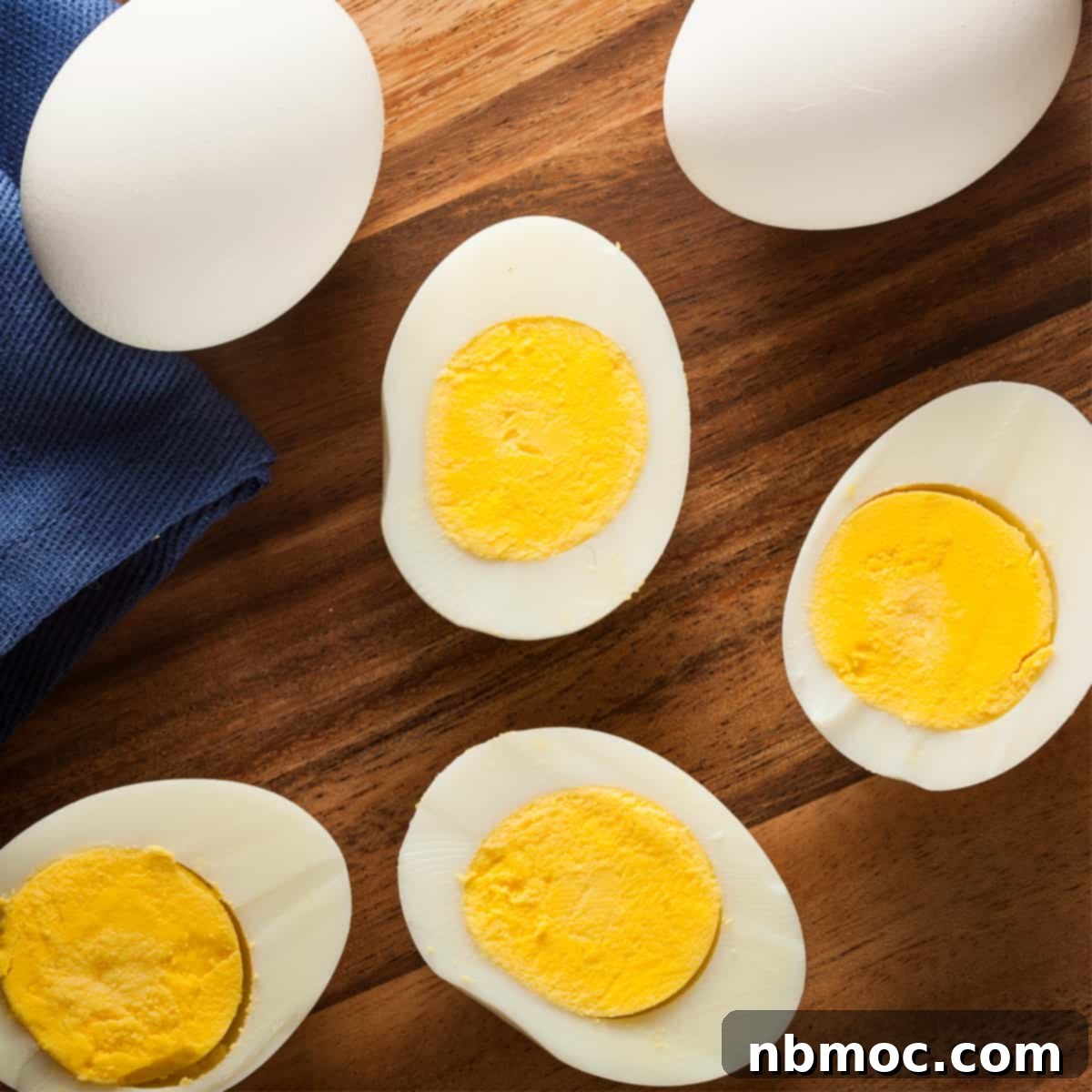
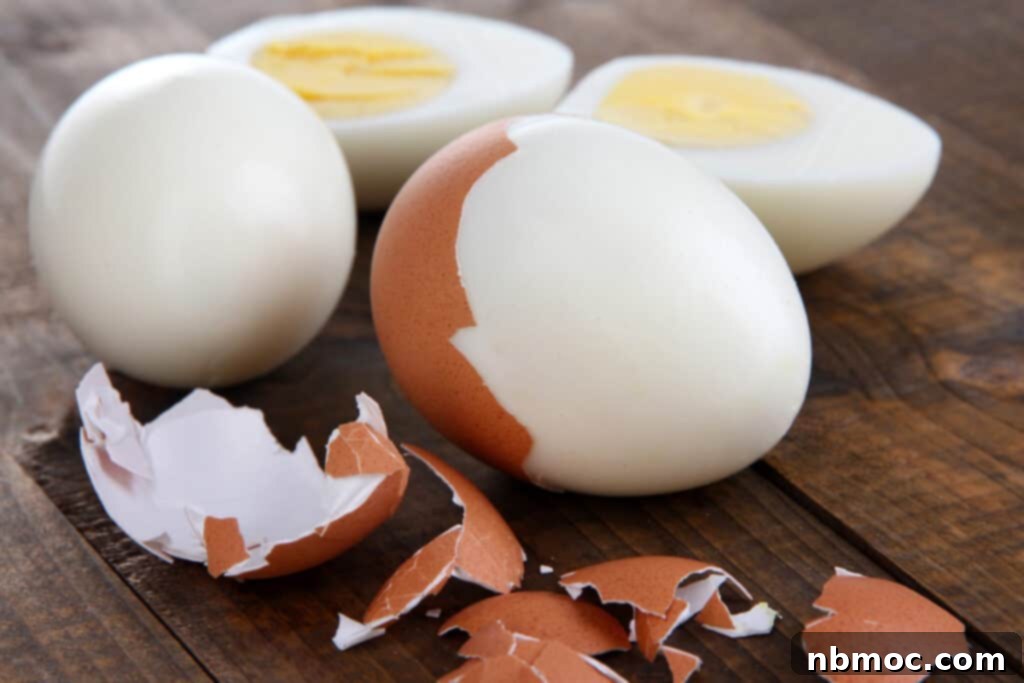
Unlock the secret to consistently perfect, easy-to-peel Hard Boiled Eggs every single time! Whether you’re preparing a festive batch of Deviled Eggs for a potluck, crafting creamy Egg Salad Sandwiches for lunch, or simply dyeing vibrant Easter Eggs, this foolproof method using a touch of baking soda will revolutionize your egg-boiling experience. Say goodbye to frustrating, stuck shells and unevenly cooked yolks. We’ll guide you through a gentle, heat-off cooking technique that ensures tender whites and perfectly set yolks, making peeling an absolute breeze.
The key to our method lies in two simple yet powerful tricks: a gentle cooking process where the eggs are cooked off the heat, and the inclusion of a common pantry staple—baking soda—in the boiling water. This combination creates an ideal environment for perfectly cooked eggs that practically slide out of their shells. No more chipped whites or tedious peeling!
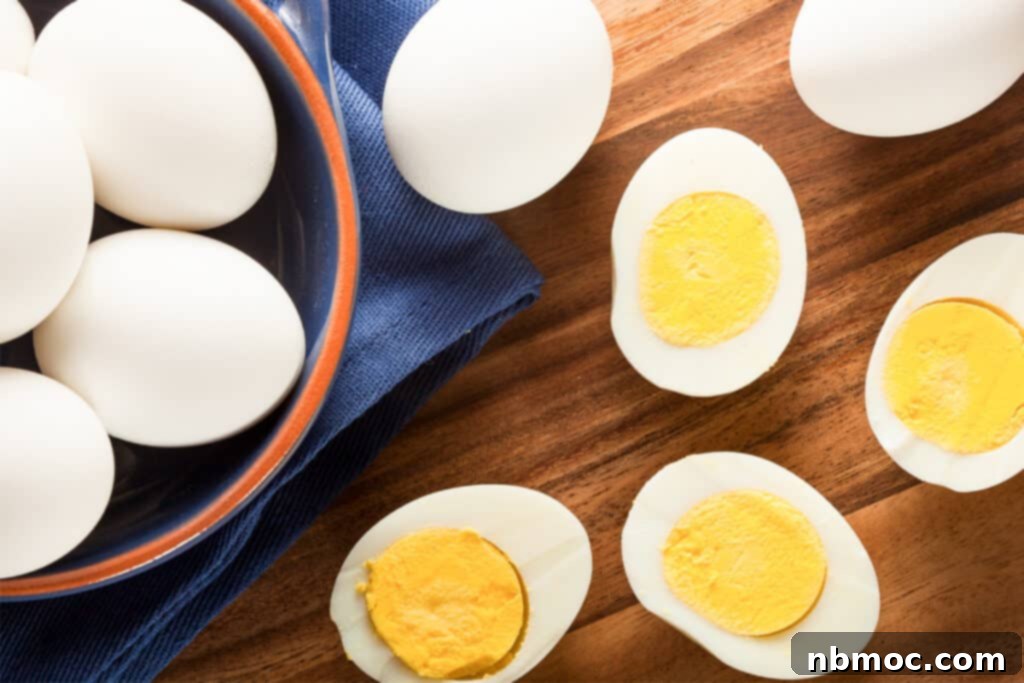
Achieving Perfect Baking Soda Hard Boiled Eggs
Mastering the art of cooking hard-boiled eggs is simpler than you might think, especially with our proven approach. Forget the traditional method of vigorously boiling eggs in harsh, bubbling water, which often leads to rubbery whites and green-tinged yolks. Our technique involves bringing the water to a boil, then immediately removing the pot from the heat and allowing the residual warmth to gently cook the eggs to perfection. This ‘heat-off’ method ensures a more even cooking temperature, preventing overcooking and yielding a beautifully tender texture every time.
The secret ingredient, baking soda, plays a crucial role in making these the easiest hard-boiled eggs you’ll ever peel. It subtly alters the pH level of the water, which in turn helps to loosen the membrane between the egg white and the shell, allowing the shell to practically glide off. Once cooked to your desired doneness—which you’ll easily time with a simple timer—a quick plunge into an ice bath stops the cooking process instantly, further aiding in effortless peeling and preventing that unsightly green ring around the yolk.
Beyond their role in classic recipes, hard-boiled eggs are incredibly versatile. They make a fantastic high-protein snack, a convenient addition to green salads, a delightful topping for a hearty bowl of ramen, or the canvas for your creative Easter egg designs. All you truly need are fresh or slightly older eggs, a pinch of baking soda, plenty of ice, and a timer to unlock consistently excellent results.
Essential Ingredients for Easy Peel Hard Boiled Eggs
Gathering the right components is the first step to success. Here’s what you’ll need:
- Eggs: The star of our recipe! While you can use any type of eggs, we highly recommend opting for eggs that are at least a few days old rather than super fresh ones. Older eggs have had more time for moisture to evaporate through their porous shells, which naturally creates a larger air pocket and a slightly higher pH, making them significantly easier to peel. If you plan on decorating your eggs, white-shelled eggs provide a brighter canvas for dyes.
- Baking Soda: This unassuming pantry item is your secret weapon for effortlessly peeled eggs. Adding baking soda to the cooking water helps to raise the pH level of the water and, consequently, the egg whites. This slight alkalinity causes the albumen (egg white) to shrink away from the inner shell membrane, leading to shells that practically fall off. Don’t worry, you won’t taste it in the finished eggs!
- Ice: Crucial for the ice bath. An ice bath serves two vital purposes: it rapidly stops the cooking process, preventing overcooked yolks (which can turn green), and it causes the egg to contract, further separating the white from the shell. If you find yourself without ice, a metal bowl placed in the sink with a continuous stream of very cold running water can serve as an emergency substitute, though an actual ice bath is always preferred for optimal results.
- Water: Plain tap water is all you need to cover your eggs in the pot.
- Large Pot or Dutch Oven with a Lid: Essential for cooking your eggs. The lid is critical for retaining heat once the pot is removed from the stove.
- Slotted Spoon: For safely transferring the hot eggs to the ice bath.
- Timer: Absolutely necessary for precise cooking times, ensuring your eggs reach your desired level of doneness, whether soft-boiled, medium-boiled, or perfectly hard-boiled.
How To Cook Perfect Hard Boiled Eggs with Baking Soda: Step-by-Step Guide
Follow these simple steps for flawless hard-boiled eggs every single time:
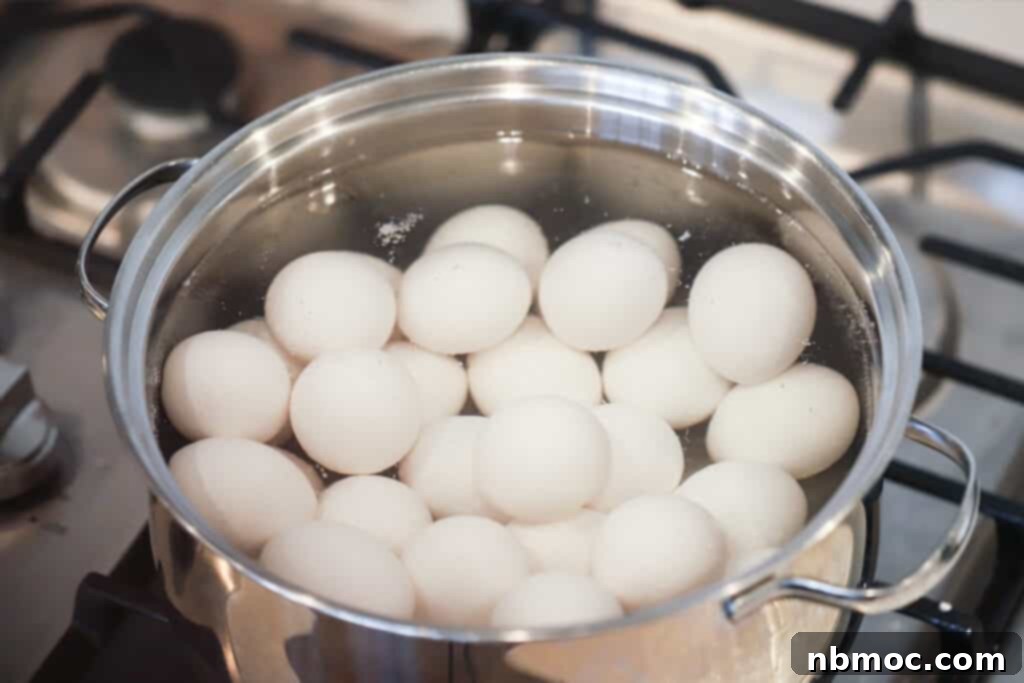
- Prepare the Pot: Carefully place your raw eggs in a large Dutch oven or pot. Arrange them in a single layer at the bottom of the pot to ensure even cooking and prevent cracking. Avoid stacking them. Once the eggs are in, cover them with cold water by at least 1 inch. This ensures all eggs are fully submerged and cook evenly. Add the recommended amount of baking soda to the water.
- Bring to a Gentle Boil: Place the pot on high heat and bring the water to a rapid, rolling boil. As soon as the water reaches this point—meaning there are plenty of large, vigorous bubbles breaking the surface—immediately remove the pot from the heat source. Do not let the eggs continue to boil actively on the stove. Cover the pot tightly with its lid. This traps the heat, allowing the eggs to cook gently and evenly in the hot water.
- Allow Eggs to Cook Off-Heat: Let the covered pot sit undisturbed for your desired cooking time. This passive cooking method is key to preventing rubbery whites and ensuring creamy yolks.
- For perfectly set but still tender hard-boiled eggs with a firm, bright yellow yolk: allow them to sit for 9-12 minutes.
- For slightly softer, creamier yolks (medium-boiled): reduce the time to 7-8 minutes.
- For luscious, runny yolks (soft-boiled eggs): aim for 4-6 minutes.
- Prepare the Ice Bath: While the eggs are resting in the hot water, prepare a large bowl filled with a generous amount of ice and cold water. This ice bath is essential for rapidly cooling the eggs and stopping the cooking process, which is vital for both preventing the green ring and making the shells easy to peel.
- Transfer and Chill: Once the desired resting time has elapsed, use a slotted spoon to carefully remove each egg from the hot water. Gently place them into the prepared ice bath. Ensure they are fully submerged. Let the eggs sit in the ice water for at least 5 minutes, or until they are completely cool to the touch. This step is non-negotiable for achieving easily peelable eggs.
- Dry and Use: After chilling, remove the eggs from the ice bath and place them on a clean towel to dry. Once dry, they are ready for peeling, decorating, or immediate use in your favorite recipes. Crack them gently, and you’ll be amazed at how easily the shells come off!
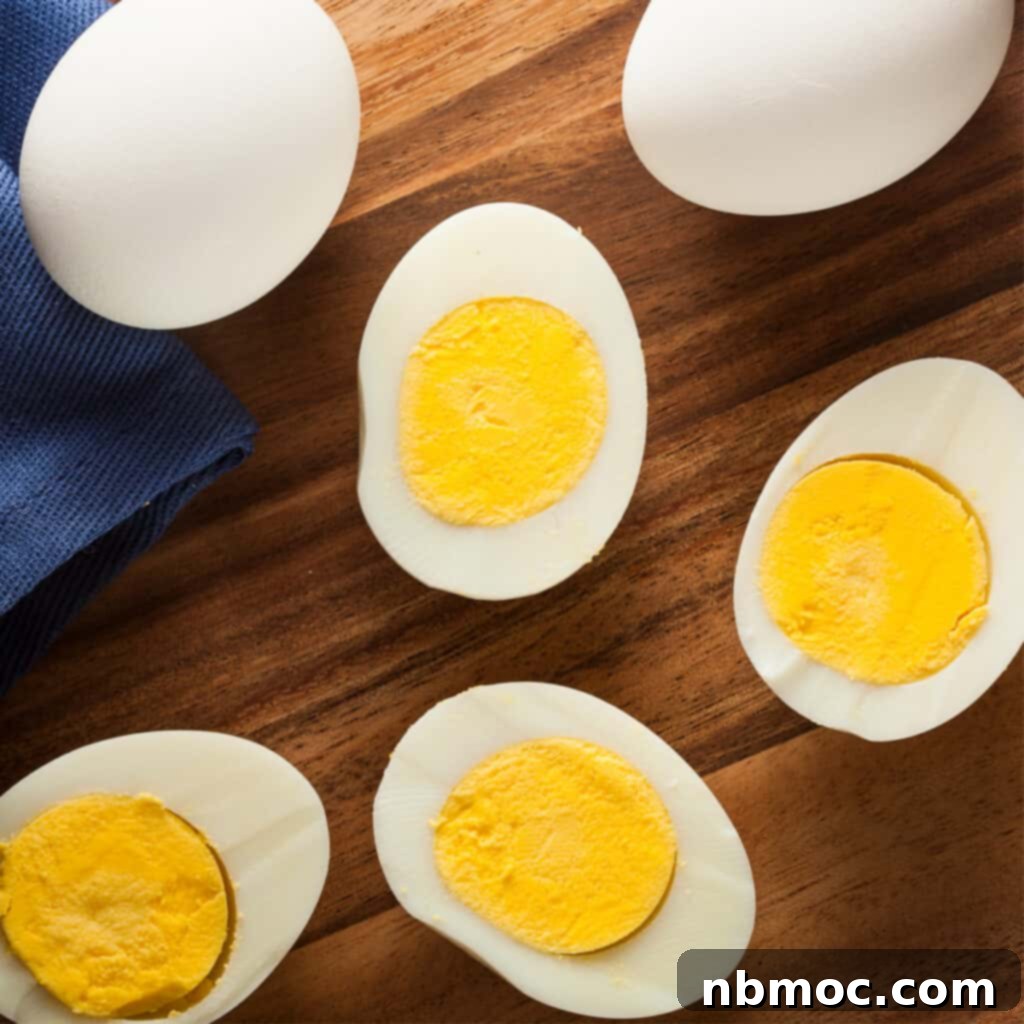
Advanced Tips for Consistently Perfect Hard Boiled Eggs
To further ensure your success in making absolutely perfect Hard Boiled Eggs every single time, consider these additional expert tips:
- Prioritize Older Eggs: We can’t stress this enough! Eggs that are at least a few days old (up to a week or two past their purchase date, but well within their expiration) are inherently easier to peel than very fresh eggs. The reason lies in the pH of the egg white, which increases over time, and the development of a larger air cell, both of which reduce adhesion to the shell.
- Single Layer Rule: Always place your eggs in a single layer at the bottom of your saucepan or Dutch oven. Overcrowding can lead to uneven cooking, and eggs can bump into each other and crack during the boiling process, especially if not using the gentle heat-off method.
- Adequate Water Coverage: Ensure the eggs are covered by at least one inch of cold water. This guarantees that all eggs are fully submerged and cooked evenly. Too little water, and some eggs may be exposed to air, leading to inconsistent cooking.
- The Power of the Ice Bath: An immediate and thorough ice bath is a game-changer. As soon as the cooking time is up, transfer the eggs to a large bowl filled with cold water and plenty of ice. The sudden temperature change halts the cooking process, preventing overcooked yolks, and causes the egg white to shrink slightly, pulling away from the shell for a cleaner peel. Allow the eggs to sit in the ice bath for at least 5 minutes, or until completely chilled.
- Peel Under Running Water: For maximum ease and to remove any stubborn shell fragments, try peeling your hard-boiled eggs under a gentle stream of cool running water. The water helps to wash away small pieces of shell and can make the peeling process even smoother.
- Crack with Care: Gently tap the wide end of the egg on a hard surface to create a small crack, then roll the egg between your hands to create a network of fine cracks all over the shell. This makes it easier to get under the membrane and peel efficiently.
- Don’t Overcook: Overcooking is the primary culprit behind the dreaded green-gray ring around the yolk. Stick to the recommended cooking times for the desired doneness, and always use an ice bath to stop the cooking.
Frequently Asked Questions About Hard Boiled Eggs
Adding baking soda to your boiling water is a simple yet effective trick to ensure easy-peel hard-boiled eggs. It subtly increases the pH level of the water, which in turn slightly raises the pH of the egg white. This alkalinity helps to loosen the bond between the egg white and the inner shell membrane, making the shell much easier to remove. Rest assured, you will not taste any baking soda in your perfectly cooked eggs. While not strictly necessary for cooking the egg itself, it’s a game-changer if you’re preparing a large batch or simply want to avoid the frustration of stuck shells.
Our method for perfect hard-boiled eggs doesn’t rely on continuous boiling. Instead, we bring the water to a rapid boil and then immediately remove the pot from the heat, covering it with a lid. The “cook time” is actually the resting time in this hot water. The ideal duration depends entirely on your desired doneness:
- Soft-boiled eggs (runny yolk): 4-6 minutes
- Medium-boiled eggs (creamy, set yolk): 7-8 minutes
- Hard-boiled eggs (firm, fully set yolk): 9-12 minutes
For super hard-boiled eggs that are extra firm, you might extend it to 12-13 minutes, but be cautious to avoid overcooking. Regardless of your preferred doneness, always plunge the eggs into an ice bath immediately after the resting time to halt the cooking process.
No, it’s generally best to start your eggs in cold water. Adding eggs directly into already boiling water can shock them, often leading to cracked shells as the sudden temperature change causes the shell to expand too quickly. This can result in egg white leaking out into the water. By placing the eggs in the pot with cold water and bringing both up to temperature together, the eggs heat more gradually, significantly reducing the risk of cracking and ensuring a gentle, even cook inside the shell.
That green-gray ring you sometimes see around the yolk of a hard-boiled egg is a tell-tale sign of overcooking. It occurs when sulfur in the egg white reacts with iron in the yolk, forming ferrous sulfide, which has a greenish hue. While harmless to eat, it indicates the egg has been cooked too long. To prevent this, always stick to the recommended cooking times in this recipe and ensure you immediately transfer the eggs to an ice bath once they are done to stop the cooking process effectively.
Absolutely! Hard-boiled eggs are a powerhouse of nutrition. They are an excellent source of high-quality protein, which helps with muscle repair and satiety. They also provide essential vitamins and minerals, including Vitamin D, Vitamin B12, selenium, and choline, which is vital for brain health. With relatively few calories and carbohydrates, they make a fantastic addition to almost any diet.
Storing Hard Boiled Eggs for Freshness
Proper storage is crucial for maintaining the freshness and safety of your hard-boiled eggs. Here’s how to keep them at their best:
- How to Store Unpeeled Eggs: Once your hard-boiled eggs are completely cooled in the ice bath, gently pat them dry. Store them in their shells in an airtight container or simply back in their original egg carton in the refrigerator. Unpeeled hard-boiled eggs will stay fresh for up to 1 week. Keeping them in their shells helps to protect them from absorbing odors from other foods in the fridge and maintains their moisture.
- How to Store Peeled Eggs: If you’ve already peeled your hard-boiled eggs, they need a bit more care. Place the peeled eggs in an airtight container and cover them with enough cold water to fully submerge them. Storing them in water helps prevent them from drying out and absorbing fridge odors. Change the cold water daily to ensure maximum freshness. Peeled hard-boiled eggs stored this way will last for up to 3 days in the refrigerator.
- Freezing Hard Boiled Eggs: While you can technically freeze hard-boiled egg yolks, the whites become rubbery and watery upon thawing, making them generally unsuitable for freezing. If you have leftover yolks, they can be frozen in an airtight container for up to 3 months for use in recipes like deviled eggs, but for best quality, fresh is always preferred.
How to Make Hard Boiled Eggs with Baking Soda
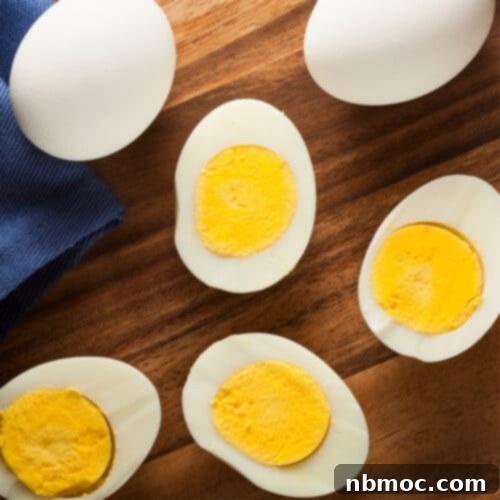
This recipe will teach you how to make perfect, easy-peel baking soda hard boiled eggs every single time. We’ll show you our simple, foolproof method that you can use whether you are decorating eggs for Easter or using them to make your favorite deviled eggs or egg salad sandwiches.
Author: The Carefree Kitchen
Print Recipe |
Pin Recipe
Prep Time: 5 mins
Cook Time: 15 mins
Total Time: 20 mins
Yields: 18 eggs
Ingredients
- 18 large eggs
- 1/2 gallon water
- 1/2 teaspoon baking soda
- 8 cups ice
Instructions
- Place your raw eggs in a large Dutch oven or pot and cover them with water by about 1 inch. Add the baking soda.
- Bring the water to a rapid boil over medium-high heat. Once the water has reached a rapid boil, remove the pot from the heat and cover with a lid. Let the eggs sit for 9-12 minutes, depending on how “done” you want your eggs. (For soft-boiled eggs, 4-6 minutes is enough).
- While the eggs cook, prepare a large bowl of ice water. After the desired resting time, use a slotted spoon to remove the eggs from the hot water and place them in the ice water to stop the cooking and cool completely.
- Let the eggs sit in the ice water for about 5 minutes, then remove and place on a towel to dry.
- Crack, peel, decorate, or prepare as desired. Enjoy your perfect hard-boiled eggs!
Notes
- Storing unpeeled eggs: Store in an airtight container for up to 1 week in the refrigerator.
- Storing peeled eggs: Place peeled eggs in an airtight container with enough cold water to cover them. Store in the refrigerator for up to 3 days, making sure to replace the cold water each day.
- For soft-boiled eggs: 4-6 minutes is enough resting time in the hot water for a runny yolk.
Nutrition
Disclaimer: Nutritional values were calculated using a third-party tool and are provided as an estimation only.
- Calories: 72 kcal
- Carbohydrates: 0.4g
- Protein: 6g
- Fat: 5g
- Saturated Fat: 2g
- Polyunsaturated Fat: 1g
- Monounsaturated Fat: 2g
- Trans Fat: 0.02g
- Cholesterol: 186mg
- Sodium: 107mg
- Potassium: 69mg
- Sugar: 0.2g
- Vitamin A: 270 IU
- Calcium: 31mg
- Iron: 1mg
Course: Appetizer, Breakfast, Condiments, Meal Prep, Snack
Cuisine: American
Sharing this recipe with a link is both encouraged and appreciated. Copying/pasting and/or screenshots of full recipes to any social media is strictly prohibited. Content and photographs are copyright protected.
Did you make this?
Don’t forget to leave a rating below and make sure to follow on Pinterest, Instagram and Tiktok for more!
Explore More Delicious Egg Recipes
Once you’ve mastered how to make hard-boiled eggs with baking soda, you’ll find countless ways to incorporate them into your meals and snacks. If you’re looking for more inspiration or want to dive into other fantastic egg-centric dishes, explore these delightful recipes:
- Homemade Egg Noodles
- How to Make Fluffy Scrambled Eggs
- Easy Sausage Egg Biscuit Casserole
- Decadent 3 Cheese and Pesto Quiche
- Delightful Mini Cheese Quiches
- Customizable Breakfast Pizza
- Hearty Baked Denver Omelet
- Nutritious Vegetable Quiche
- Savory Turkey Bacon Avocado Chaffle Sandwich
- More convenient Meal Prep Ideas
- And don’t miss our Condiment Recipes that pair perfectly with eggs!
With this comprehensive guide, you now possess all the knowledge and tips to create consistently perfect hard-boiled eggs with unmatched ease of peeling. Embrace the simplicity of this method, and enjoy delicious, versatile eggs whenever you desire. Happy cooking!