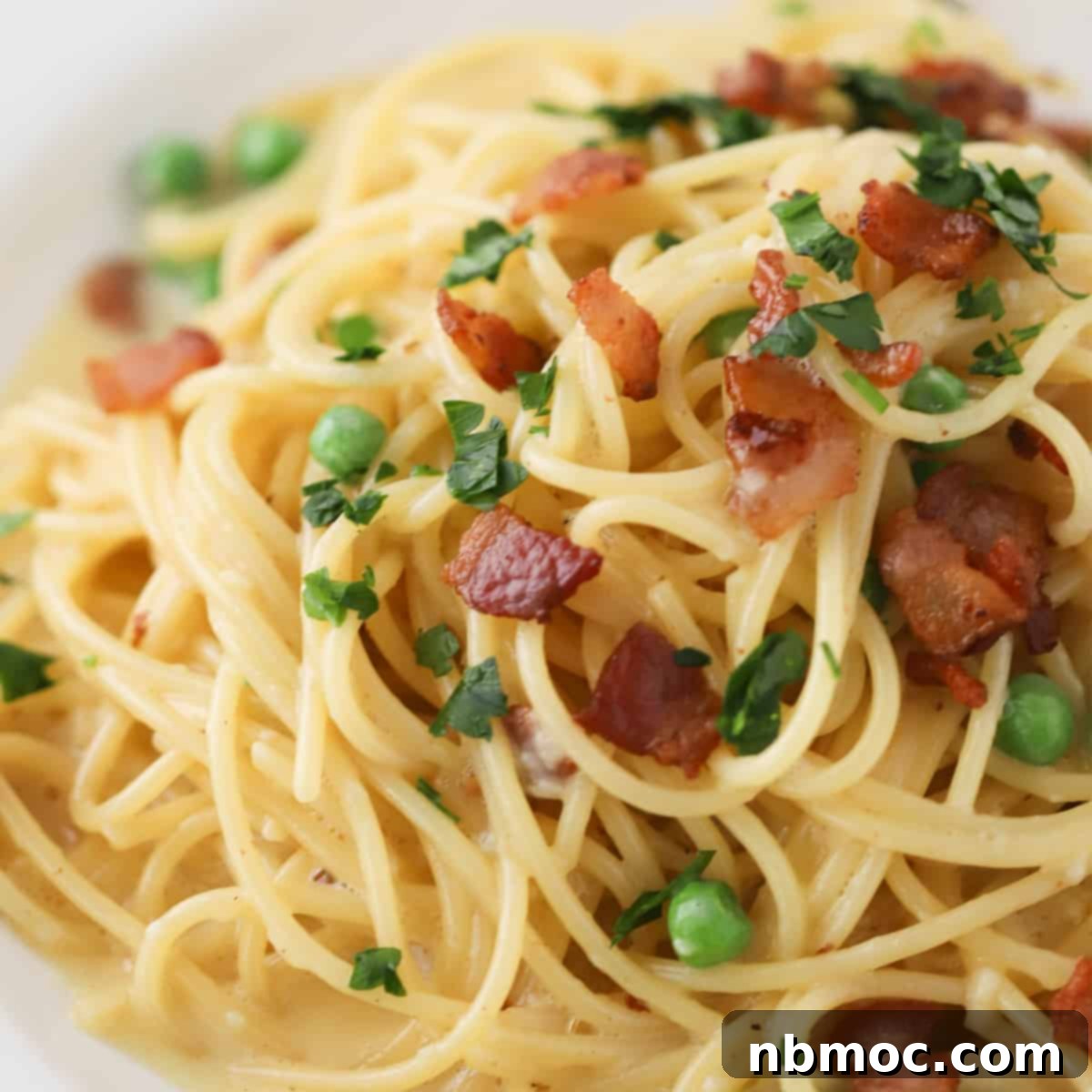
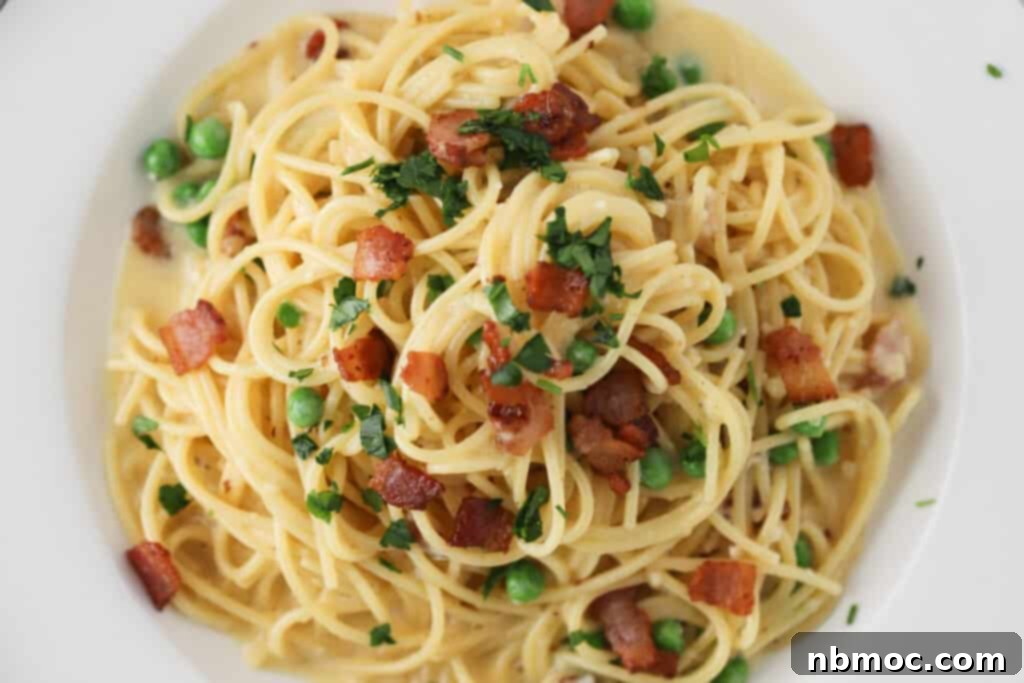
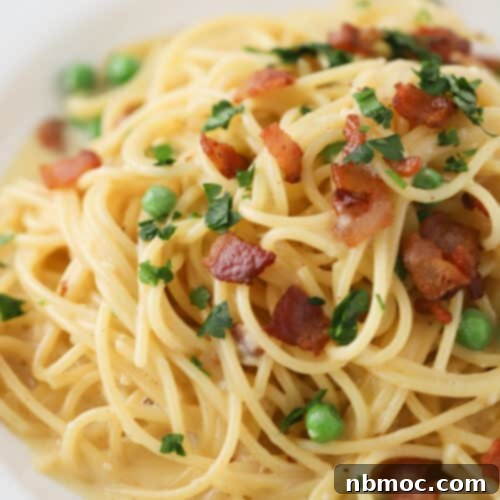
Craving an authentic Italian classic that’s both incredibly satisfying and surprisingly simple to prepare? Look no further than this **Easy Spaghetti Carbonara Recipe**. This beloved Roman pasta dish is the epitome of comfort food, offering a rich, creamy sauce, perfectly al dente spaghetti, and savory crispy bacon (or traditional guanciale) in a dish that comes together in roughly 20 minutes.
Spaghetti Carbonara isn’t just a meal; it’s an experience. Forget heavy cream or complicated techniques; the magic lies in a harmonious blend of humble ingredients: eggs, hard Italian cheese, cured pork, and freshly ground black pepper, all emulsified with starchy pasta water. The result is a velvety, glossy sauce that clings beautifully to every strand of spaghetti, creating a truly unforgettable flavor profile.
If you’re a fan of luscious pasta dishes, you might also enjoy exploring other creamy delights like our Asiago Fettuccine Alfredo, the bright and savory Lemon Thyme Chicken Pasta, or this vibrant Creamy Broccoli Pasta. But for now, let’s dive into the timeless appeal of Carbonara.
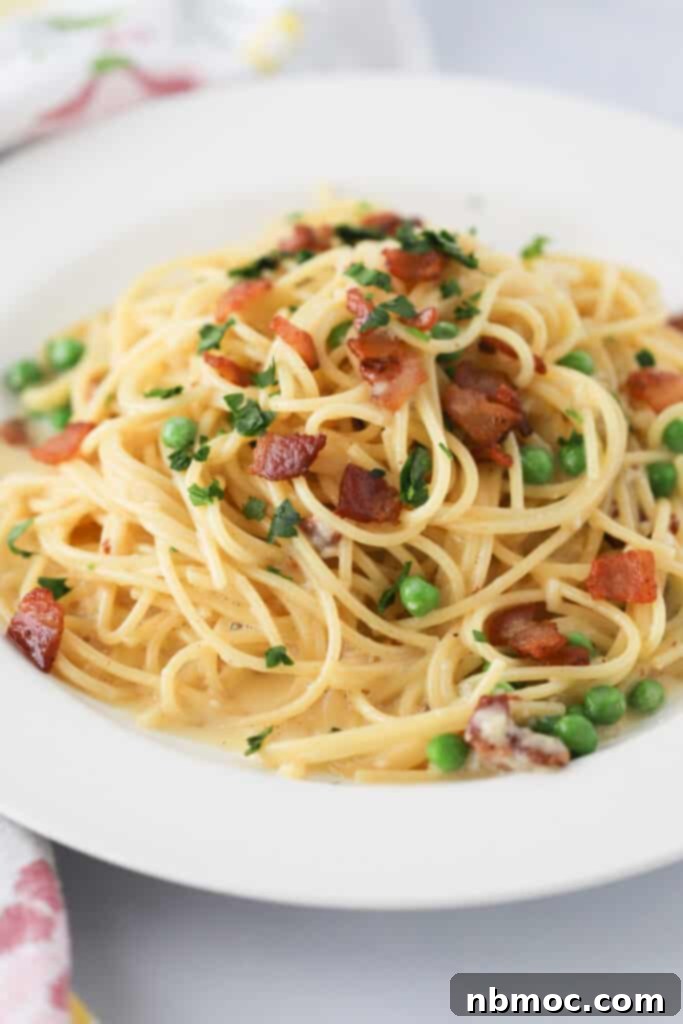
Mastering the Art of Easy Spaghetti Carbonara
Many people are intimidated by making Spaghetti Carbonara from scratch, fearing scrambled eggs or a clumpy sauce. However, this recipe breaks down the process into simple, foolproof steps, ensuring a perfect, restaurant-quality dish every single time. The key is understanding the role of each ingredient and the technique of tempering the egg yolks with hot pasta water – a trick that creates the sauce’s signature lusciousness without cooking the eggs into an omelet.
While traditional Carbonara famously features guanciale (cured pork jowl), this recipe often uses readily available bacon for ease, and includes peas for an optional touch of sweetness and color. These simple additions make this version incredibly accessible without sacrificing its authentic Roman soul. Beyond peas, feel free to experiment with other quick-cooking vegetables like blanched broccoli florets or sautéed mushrooms. For more weeknight pasta inspiration, explore our Lemon Garlic Cream Sauce, the viral Tomato Feta Pasta, or a hearty Homemade Lasagna.
The Roman Legacy of Carbonara
Spaghetti Carbonara is a cornerstone of Roman cuisine, a dish steeped in history and culinary debate. While its exact origins are shrouded in legend, many food historians trace its rise in popularity to post-World War II Italy. It’s believed that American soldiers, who had access to eggs and bacon, might have influenced its creation, combining these ingredients with local pasta and cheese. Regardless of its precise beginning, Carbonara quickly became a beloved staple, celebrated for its minimal ingredients and maximal flavor. The true essence of Carbonara lies in its simplicity and the masterful technique of creating a rich, creamy sauce through emulsion rather than the addition of actual cream. This recipe honors that tradition, bringing the authentic taste of Rome right to your kitchen.
Unlocking Flavor: Essential Ingredients for Carbonara
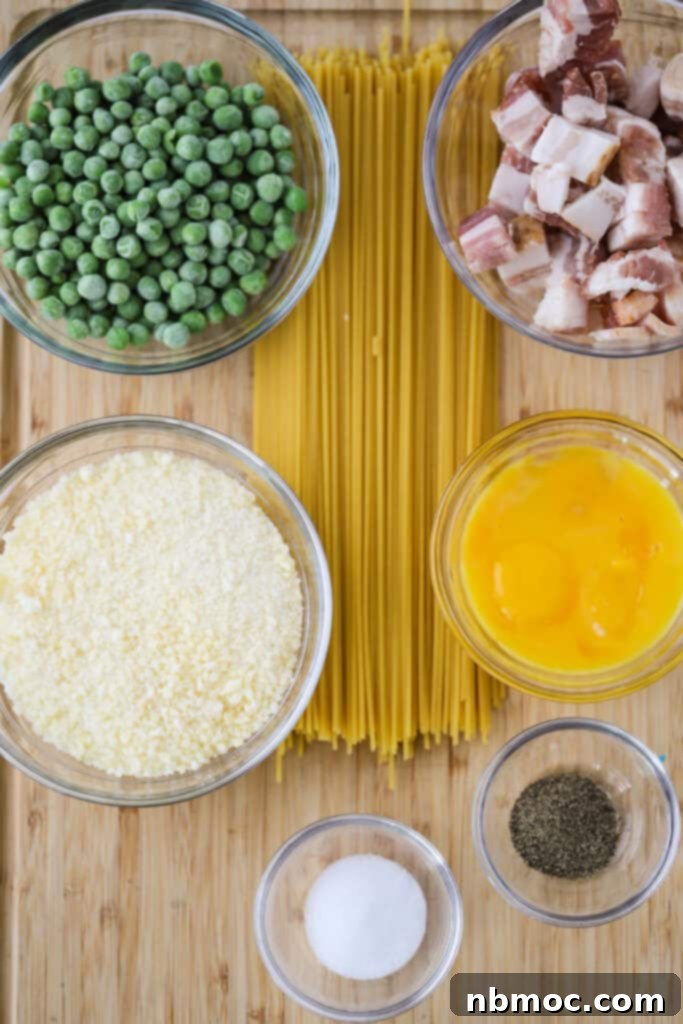
Creating an incredible Spaghetti Carbonara starts with quality ingredients. Each component plays a vital role in achieving that perfect balance of salty, savory, and creamy. Here’s a detailed look at what you’ll need and why each element is crucial:
- Spaghetti: As the name suggests, spaghetti is the quintessential pasta for Carbonara. Its long, slender strands are ideal for coating with the luscious sauce. When cooking, aim for a perfect “al dente” texture—firm to the bite, not mushy. This ensures the pasta holds its shape and provides a satisfying mouthfeel. If spaghetti isn’t available, linguine or fettuccine are excellent long pasta alternatives. Remember the golden rule: always reserve at least 1 cup of the starchy pasta water before draining. This liquid gold is essential for creating the creamy sauce.
- Cured Pork (Bacon, Pancetta, or Guanciale): For this recipe, readily available thick-cut bacon works wonderfully, providing crispy bits and flavorful fat. You’ll need about 10 slices or ½ pound, cut into small, even pieces for uniform crisping. The rendered fat is paramount, as it forms the flavorful base of the sauce. If you want to lean into more traditional Italian flavors, consider using pancetta (Italian cured pork belly) or guanciale (cured pork jowl), which offer a deeper, richer pork flavor and a more tender texture when rendered. No matter your choice, ensure you reserve all the delicious rendered grease.
- Egg Yolks: The true heart of Carbonara, egg yolks are responsible for the sauce’s signature silky-smooth, emulsified texture. Using only yolks (typically 3 large ones for this recipe) results in a richer, more vibrant yellow sauce and minimizes the risk of scrambling, compared to using whole eggs. Reserve the egg whites for another culinary adventure or discard them.
- Parmesan Cheese (Parmigiano-Reggiano): A high-quality, freshly grated or shaved Parmigiano-Reggiano is non-negotiable for authentic Carbonara. Pre-grated cheeses often contain anti-caking agents that can prevent proper emulsification and lack the depth of flavor of a true Parmesan. Its salty, umami-rich profile is fundamental to the sauce’s overall taste.
- Frozen Peas (Optional): While not strictly traditional, frozen peas are a fantastic, convenient addition to this version of Carbonara. They add a pop of color, a hint of sweetness, and a touch of freshness that complements the rich sauce beautifully. Make sure they are thawed and drained before adding. Fresh peas, when in season, are also an excellent choice. Other vegetable options include steamed asparagus tips or finely chopped sautéed mushrooms.
- Freshly Ground Black Pepper: Don’t underestimate the power of freshly ground black pepper. It adds a crucial layer of spice and aromatic depth that cuts through the richness of the sauce. Avoid pre-ground pepper, which often lacks the potent aroma and flavor of freshly cracked peppercorns. A generous amount is key for an authentic Carbonara experience.
- Salt: Essential for seasoning both the pasta water and the sauce. Remember that bacon and Parmesan cheese are inherently salty, so adjust your seasoning accordingly.
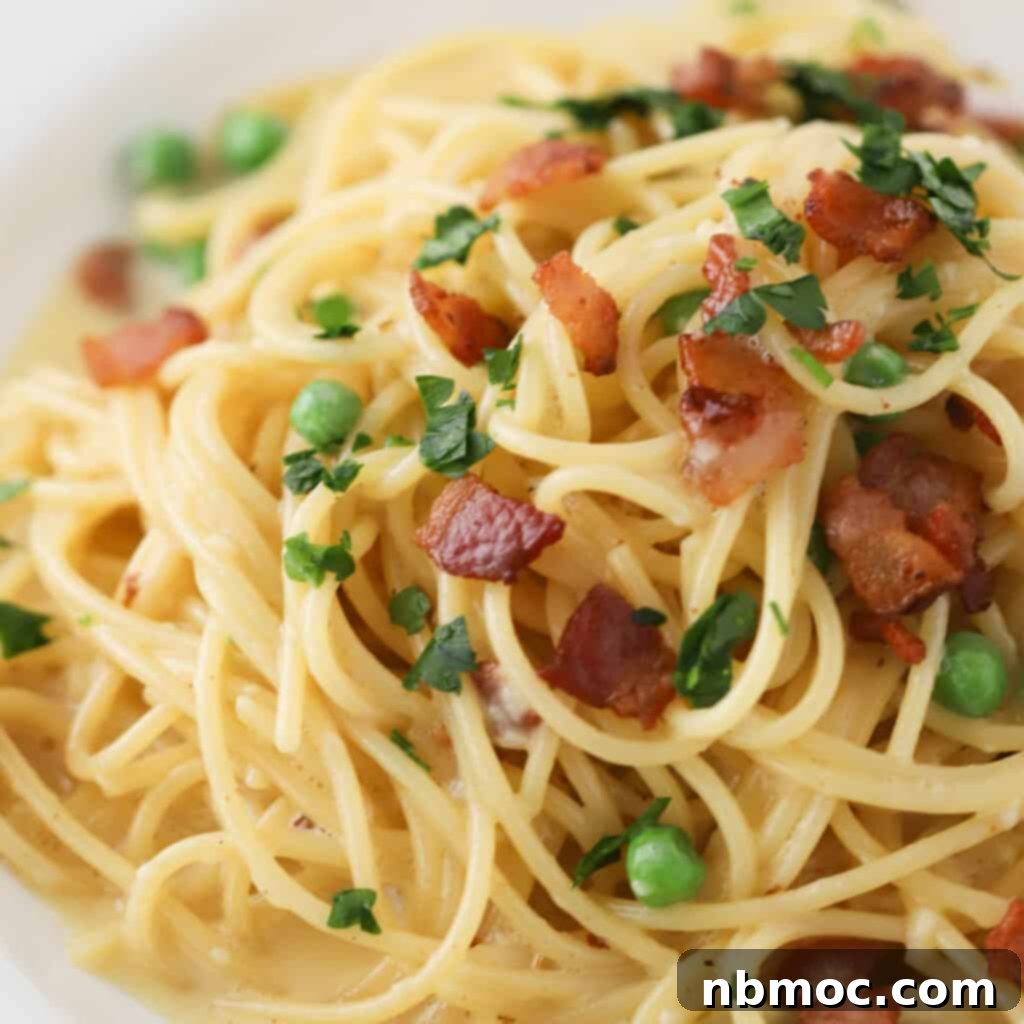
Step-by-Step Guide to Perfect Spaghetti Carbonara
Follow these straightforward steps to create a truly irresistible Spaghetti Carbonara:
- Prepare the Pasta: Bring a large pot of generously salted water to a rolling boil (about 1 tablespoon of salt for every half-gallon of water). Add the spaghetti and cook according to package directions until it is perfectly al dente. This means it should be firm to the bite, with a slight resistance. Before draining, make sure to reserve about 1 cup of the starchy pasta water. This water is critical for emulsifying your sauce.
- Cook the Cured Pork: While the pasta cooks, heat a large skillet (preferably non-stick or cast iron) over medium heat. Add the chopped bacon, pancetta, or guanciale and cook until it’s wonderfully crisp and golden brown. Using a slotted spoon, transfer the crispy bits to a paper towel-lined plate to drain, but leave all the rendered fat in the skillet. This flavorful grease will form the foundation of your sauce.
- Combine Pasta and Pork Fat: Once the pasta is cooked and drained (but still hot!), immediately add it to the skillet with the reserved bacon grease. Toss the spaghetti with tongs, ensuring every strand is coated in the savory fat. This step adds immense flavor and helps prevent the pasta from sticking together.
- Create the Egg Mixture: In a medium-sized bowl, whisk together the egg yolks, salt, and freshly ground black pepper until well combined and slightly frothy. This is where the magic of tempering happens: gradually add about ½ cup of the hot reserved pasta water to the egg mixture in a steady stream, whisking continuously. This slow addition of hot water gently warms the egg yolks without scrambling them, preparing them for the sauce.
- Form the Creamy Sauce: Pour the tempered egg mixture over the hot pasta in the skillet. Immediately and continuously toss the pasta with tongs. The residual heat from the pasta and the skillet, combined with the starchy pasta water, will gently cook the egg yolks and emulsify with the pork fat and cheese to create a rich, creamy sauce that coats the spaghetti beautifully.
- Add the Cheese and Adjust Consistency: Sprinkle in the Parmesan cheese and continue to toss vigorously. The cheese will melt into the sauce, further enhancing its creaminess and flavor. If the sauce appears too thick or sticky, gradually add more of the reserved pasta water, 1-2 tablespoons at a time, continuing to toss until it reaches the desired consistency of heavy cream.
- Serve Immediately: Stir in the thawed peas last, if using, for a fresh pop of flavor. Portion the Carbonara into warm bowls and top generously with the reserved crispy bacon bits and an extra sprinkle of black pepper. Serve immediately and enjoy the exquisite flavors of this classic Roman dish!
Tips for Carbonara Perfection
Achieving a perfect Carbonara requires a few key techniques. Keep these tips in mind to avoid common pitfalls and ensure a spectacular dish:
- Work Quickly: Carbonara is a dish that demands speed. Have all your ingredients prepped and ready before you start cooking the pasta. The sauce comes together very rapidly once the pasta is cooked.
- Mind the Temperature: The most crucial aspect is managing heat. The pasta should be hot, but the skillet should be off the heat (or on very low residual heat) when you add the egg mixture. This prevents the eggs from scrambling. The tempering step with hot pasta water is vital for gently cooking the yolks.
- Emulsify, Emulsify, Emulsify: The creamy texture comes from the emulsification of egg yolks, pork fat, and starchy pasta water. Constant tossing is key to creating this smooth, homogenous sauce. Don’t stop tossing until the sauce is velvety and coats the pasta.
- Don’t Skimp on Black Pepper: Freshly ground black pepper is a signature flavor of Carbonara. Grind it fresh and use it generously.
- Taste and Adjust: Always taste your sauce before serving. Since Parmesan and bacon are salty, you might need less added salt than you think. Adjust to your preference.
Frequently Asked Questions About Carbonara
No – the egg yolks in this recipe for Spaghetti Carbonara are very gently cooked by tempering them into hot pasta water, then adding them back to a hot skillet with hot cooked pasta. Egg yolks only need to reach roughly 150 degrees F (65 degrees C) to be considered cooked, which happens gently during this emulsification process. The heat from the pasta and the skillet, combined with continuous tossing, ensures the eggs are safely cooked into a luscious sauce, not left raw.
While both Carbonara and Alfredo sauce are rich and creamy, they are distinctly different. Alfredo sauce is primarily made from butter, Parmesan cheese, and heavy cream. Carbonara, on the other hand, achieves its creaminess through a delicate emulsion of egg yolks, hard Italian cheese (like Pecorino Romano or Parmesan), cured pork fat (guanciale or bacon grease), and starchy pasta water. Traditional Carbonara famously contains no cream at all, relying on technique for its velvety texture.
This is one of those recipes that truly shines when made and served immediately. Carbonara Spaghetti should ideally be enjoyed fresh. The delicate emulsion of the sauce will begin to break down if left to sit, and it will never be as creamy and silky as when it is freshly prepared. For the best experience, plan to serve it straight from the pan.
Traditionally, long pasta noodles like spaghetti are preferred for Carbonara because their surface area allows the sauce to coat every last inch beautifully. Fettuccine Carbonara and linguine Carbonara are two other excellent long pasta alternatives that work wonderfully. However, almost any pasta shape will honestly work great, especially if you love a particular texture. Many also enjoy tortellini Carbonara for a delightful twist.
Reheating Carbonara can be tricky because the cooked egg yolks in the sauce don’t easily melt back down once set, risking a dry or scrambled texture. If you must reheat leftovers, do so very slowly over low heat in a skillet. To help revive the sauce, I recommend adding a splash of heavy cream, milk, or broth to the pasta while gently stirring. This can help rehydrate the sauce and bring back some of its creaminess.
While some Carbonara recipes use a mix of whole eggs and yolks, using only egg yolks typically results in a richer, silkier, and more vibrant yellow sauce. It also reduces the risk of the eggs scrambling. If you do use whole eggs, be extra vigilant with the heat and tossing to prevent them from overcooking.
Storing and Reheating Your Carbonara
As mentioned, Carbonara is best enjoyed immediately. However, if you do find yourself with leftovers, here’s how to handle them:
- Refrigerator Storage: Any leftover pasta can be stored in an airtight container in the refrigerator for up to 2 days. Beyond this, the quality will significantly diminish.
- Reheating Carbonara: Reheating Carbonara successfully is a challenge due to the delicate egg-based sauce. To mitigate dryness, reheat it very slowly in a pan over medium-low heat. Stir in a touch of heavy cream, milk, or chicken broth while reheating. This adds moisture and helps to re-emulsify the sauce, bringing back some of its creamy texture. Avoid high heat, as this will almost certainly scramble the eggs.
Rated 5 out of 5 stars from 2 votes
Easy Spaghetti Carbonara Recipe
Author The Carefree Kitchen
This easy spaghetti carbonara is a simple pasta dish that takes just about 20 minutes to make and always hits the spot. It combines perfectly cooked noodles, crispy bacon, and a rich and creamy carbonara sauce made with eggs, Parmesan cheese, and freshly ground black pepper.
Pin Recipe
Rate This Recipe
Yields 6 people
Ingredients
- 1 pound spaghetti pasta
- ½ pound bacon, cut into small pieces.
- 3 large egg yolks
- 1 cup Parmesan cheese, freshly grated or shaved
- ⅔ cup frozen peas, thawed
- ½ teaspoon salt
- ¼ teaspoon black pepper, freshly ground
Instructions
Cook the pasta in generously salted water (about 1 tablespoon for a half-gallon of water) until al dente according to package directions. Reserve 1 cup of pasta water before straining the pasta.
Meanwhile, heat a large skillet over medium heat. Add the bacon and cook until crisp and golden brown. Remove from the heat and transfer the bacon bits to a paper towel-lined plate using a slotted spoon. Reserve all the bacon grease in the pan.
When the pasta is cooked and drained, add it to the skillet with the bacon grease and toss with tongs, ensuring the pasta is well coated.
In a medium-sized bowl, whisk together the egg yolks, salt, and pepper until combined. Continue to whisk while adding a steady stream of about ½ cup of the hot reserved pasta water to the beaten eggs. This tempers the eggs.
Add the tempered egg mixture to the hot pasta in the skillet (off the heat) while stirring and tossing vigorously with tongs. Continue to toss until the pasta is completely coated and the sauce is creamy.
Add the Parmesan cheese and continue to toss until the sauce is creamy and glossy. If the sauce seems a little too thick, add up to ½ cup more of the reserved pasta water, tablespoon by tablespoon, until the sauce has the consistency of heavy cream.
Stir in the thawed peas last, then top with the crispy bacon bits just before serving. Enjoy this delightful dish immediately!
Notes
Storing instructions: You can store any leftover pasta in an airtight container in the refrigerator for up to 2 days.
Reheating: While Spaghetti Carbonara doesn’t reheat very well, you don’t have to toss out leftovers. Try adding a touch of heavy cream, milk, or broth to the pasta while you reheat it very slowly in a pan over medium-low heat. Stir gently to help re-emulsify the sauce.
Nutrition
Calories: 539kcal | Carbohydrates: 60g | Protein: 23g | Fat: 22g | Saturated Fat: 9g | Polyunsaturated Fat: 3g | Monounsaturated Fat: 9g | Trans Fat: 0.05g | Cholesterol: 127mg | Sodium: 713mg | Potassium: 306mg | Fiber: 3g | Sugar: 3g | Vitamin A: 390IU | Vitamin C: 6mg | Calcium: 231mg | Iron: 2mg
Disclaimer: Nutritional values were calculated using a third-party tool and are provided as an estimation only.
Course Main Course
Cuisine Italian
Sharing this recipe with a link is both encouraged and appreciated. Copying/pasting and/or screenshots of full recipes to any social media is strictly prohibited. Content and photographs are copyright protected.
Did you make this?
Don’t forget to leave a rating below and make sure to follow on Pinterest, Instagram and Tiktok for more!
More Quick and Easy Pasta Recipes
If you love the simplicity and flavor of this Easy Spaghetti Carbonara, you’re in for a treat! Our collection of pasta recipes is designed for busy weeknights and satisfying family meals. From hearty baked dishes to quick stovetop options, there’s something for every pasta lover. Explore these other fantastic options:
- Baked Penne Pasta with Italian Meatballs: A classic comfort food that’s perfect for feeding a crowd.
- Slow Cooker Tortellini Pasta Bake: Effortless and delicious, letting your slow cooker do all the hard work.
- Easy Crockpot Lasagna with Ravioli: A genius shortcut to homemade lasagna flavor.
- 4 Cheese Stuffed Pasta Shells: An indulgent and creamy dish that’s a family favorite.
- Sun Dried Tomatoes Baked Chicken Penne Pasta: A vibrant and flavorful dish with Mediterranean notes.
- Easy Baked Ziti: Layers of pasta, sauce, and cheese baked to golden perfection.
- Baked Mac and Cheese: The ultimate cheesy indulgence, crispy on top, creamy inside.
- Stovetop Mac and Cheese: Quick, creamy, and wonderfully satisfying on the stove.
- Buffalo Chicken Pasta: A spicy and flavorful twist on pasta night.
- Discover even more Easy Weeknight Dinner Ideas to simplify your meal planning.
- Browse our full collection of Pasta Dishes for endless culinary inspiration.
This Easy Spaghetti Carbonara recipe is not just quick and simple; it’s a culinary journey to Rome, delivering deeply satisfying flavors and a truly authentic experience. With just a few staple ingredients and a straightforward technique, you can create a lusciously smooth, rich, and creamy Carbonara sauce that will impress everyone at your table. Enjoy the tradition, the taste, and the ease of this timeless Italian classic.