
Welcome to the ultimate guide for making the most exquisite Homemade Naan Bread right in your kitchen! This incredibly easy recipe promises to deliver naan that is wonderfully soft, perfectly pillowy, and delightfully chewy – just like what you’d find at your favorite Indian restaurant. Brushed generously with aromatic garlic butter, this authentic Indian flatbread serves as a sensational side dish, elevating any meal from ordinary to extraordinary. Whether you’re pairing it with rich curries, savory stews, or using it to scoop up creamy hummus, this naan recipe is guaranteed to become a household favorite.
Beyond being a perfect accompaniment to traditional Indian cuisine, homemade naan offers incredible versatility. Enjoy it as a standalone snack, create delectable open-faced sandwiches, or transform it into mini naan pizzas for a fun, quick meal. It disappears fast, so we highly recommend making a double batch! The good news is, homemade naan freezes beautifully, allowing you to stock up and enjoy its fresh taste whenever a craving strikes.

Mastering Homemade Naan: Soft, Bubbly, and Delicious
There’s nothing quite like the taste and texture of fresh, warm naan, straight from the pan. This recipe simplifies the traditional process, bringing the flavors of India directly to your home. Our method ensures soft, pillowy Garlic Naan Bread every time, thanks to a key ingredient: yogurt. Including yogurt in the yeasted dough is the secret to achieving that irresistible tenderness and signature slight tang, making this bread truly addictive.
While authentic naan is typically baked in a scorching hot tandoor oven, our homemade version brilliantly adapts to a hot skillet. This accessible technique allows you to achieve similar results with ease, yielding beautifully golden brown, bubbly flatbreads. Once cooked, each piece is generously brushed with a fragrant garlic butter, making it an ideal companion for classics like Chicken Tikka Masala, a rich curry, or any of your cherished Indian dishes. Preparing this easy naan recipe at home means you’ll enjoy a fresh, warm, and flavorful bread that far surpasses any store-bought alternative.
Why Make Naan at Home? The Benefits of Homemade Perfection
Opting for homemade naan offers several distinct advantages over store-bought varieties. Firstly, the freshness is unparalleled. You control the ingredients, ensuring no artificial preservatives or unnecessary additives. The aroma of fresh yeast and baking bread filling your kitchen is an experience in itself. Secondly, homemade naan achieves a superior texture – the perfect balance of soft, chewy, and slightly crisp edges that are difficult to replicate in mass-produced versions. Plus, it’s incredibly cost-effective to make at home, especially when you consider how quickly a batch disappears. This recipe is designed to be straightforward and rewarding, making the process enjoyable even for novice bakers.
Essential Ingredients for Perfect Naan
Crafting the perfect homemade naan begins with a handful of simple, readily available ingredients. Each component plays a vital role in achieving the desired taste and texture of this beloved Indian flatbread. Understanding their functions will help you confidently create delicious naan every time.
Main Dough Ingredients
- Warm Water: The foundation of any yeasted dough. The water should be lukewarm, ideally between 95-110°F (35-43°C). This temperature range is crucial for “waking up” and activating the yeast, ensuring your naan rises beautifully. Water that is too hot can kill the yeast, while water that is too cold won’t activate it effectively.
- Active Dry Yeast: This recipe utilizes active dry yeast, which requires a brief “proofing” period with warm water and a touch of sugar. This step confirms the yeast is alive and ready to work, giving your naan its characteristic airy, bubbly texture.
- Sugar (or Honey): A small amount of sugar acts as food for the yeast, helping it to activate and multiply, leading to a more vigorous rise. You can easily substitute honey for sugar if preferred, which can add a subtle depth of flavor to the bread.
- Plain Yogurt: This is the secret ingredient for truly tender and soft naan. Greek yogurt or any plain, full-fat yogurt works best. The fat content and acidity in yogurt tenderize the gluten in the flour, resulting in a remarkably soft, pliable dough and a moist, chewy final product. Avoid fat-free yogurts if possible, as they won’t yield the same rich results.
- Salt: Essential for enhancing the flavor of the naan. Sea salt is an excellent choice, providing a clean, balanced taste that complements the other ingredients.
- All-Purpose Flour: The primary structural component of the dough. While some recipes suggest bread flour for higher protein, all-purpose flour works perfectly for this recipe, yielding a tender yet chewy naan. Ensure your flour is fresh for optimal results.
- Olive Oil: Used during the cooking process to prevent sticking and aid in browning the naan on the skillet. Avocado oil or another high smoke-point vegetable cooking oil can be substituted.
Garlic Butter Perfection
The garlic butter is the finishing touch that elevates this homemade naan to another level of deliciousness. It adds an irresistible aromatic and savory kick.
- Butter: You can use either salted or unsalted butter. If using salted butter, you might want to slightly reduce the additional salt in the garlic butter mixture. Melting the butter gently ensures it can be easily brushed onto the warm naan.
- Garlic Powder: Provides a robust garlic flavor without the texture of minced fresh garlic pieces, which some prefer for a smoother finish. However, for an even bolder flavor, feel free to substitute with 1-2 cloves of finely minced fresh garlic.
- Salt: A pinch of sea salt enhances the savory notes of the garlic butter.
- Fresh Parsley: Finely chopped fresh parsley adds a vibrant burst of color and a fresh, herbaceous aroma that beautifully complements the garlic. Dried parsley can be used in a pinch, but fresh is highly recommended for the best flavor and visual appeal.
Step-by-Step Guide: How to Make Naan Bread
Follow these detailed steps to create perfectly soft and chewy homemade naan bread.
- Activate the Yeast: In a medium-sized mixing bowl, combine the warm water (95-110°F), active dry yeast, and sugar. Stir gently and let the mixture sit undisturbed for about five minutes. You’ll know the yeast is active when the mixture becomes foamy and bubbly, indicating the yeast is alive and ready to make your naan rise. If it doesn’t foam, your yeast might be old, or your water temperature was off; start again with fresh yeast.
- Prepare the Dough: To the activated yeast mixture, add the plain yogurt, salt, and 1 cup of all-purpose flour. Stir everything together with a wooden spoon or spatula until the mixture is smooth and well combined. Gradually add the remaining flour, about 1/4 cup at a time, mixing until a soft, shaggy dough forms. You might not need all 2 cups of flour, or you might need a tiny bit more; the goal is a dough that is soft and no longer overly sticky to the touch. Once the dough comes together, lightly knead it a few times directly in the bowl until it feels smooth and elastic.
- First Rise (Resting Period): Remove the dough from the bowl, lightly grease the inside of the bowl with a little olive oil or cooking spray, then return the dough to the bowl. Cover the bowl tightly with plastic wrap or a clean kitchen towel. Place it in a warm spot in your kitchen and let it rise for about 10 minutes. This short rise allows the gluten to relax and the yeast to begin its work.
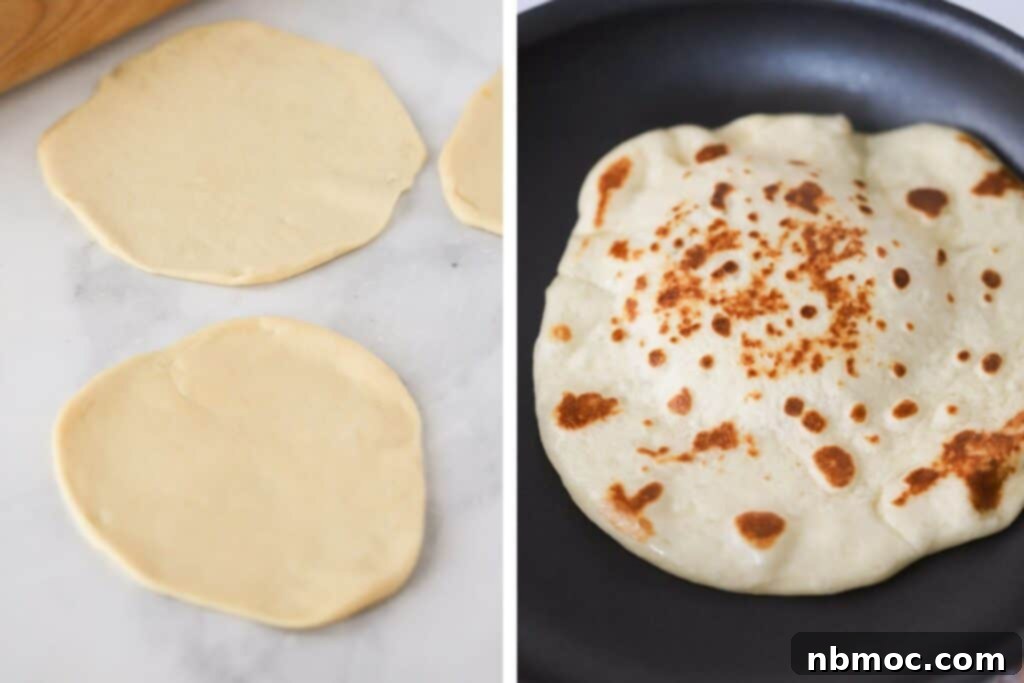
- Shape the Naan: Once the dough has rested and slightly risen, turn it out onto a lightly floured surface. Divide the dough into 12 equal pieces. For even-sized naan, you can weigh them. Using a rolling pin, roll each piece of dough into an oval or round shape, about 6-8 inches in diameter and roughly 1/8 to 1/4 inch thick. Don’t worry if they’re not perfectly shaped; rustic is charming! Cover the rolled dough pieces gently with a kitchen towel or plastic wrap and let them rest for another 10 minutes. During this second rest, the dough will puff up slightly, and you should see small bubbles beginning to form on the surface, indicating proper leavening.
- Cook the Naan: While the dough rests, heat a large nonstick or cast-iron skillet over medium-high heat. Add 1-2 teaspoons of olive oil to the hot pan and swirl to coat the bottom. Carefully place one rolled naan dough circle into the skillet. Cook for 2-3 minutes on the first side, or until you see large bubbles forming on the surface and the bottom is golden brown with some charred spots. Flip the naan over and cook for another 2-3 minutes, or until the second side is also golden brown and cooked through. Repeat this process with the remaining dough, adding more oil as needed between each naan. Stack the cooked naan on a plate and cover loosely with foil to keep them warm while you prepare the garlic butter.
- Prepare Garlic Butter: In a small saucepan, melt the butter over medium heat. Once melted, remove from heat and stir in the garlic powder, salt, and freshly chopped parsley. Mix well to combine all the flavors.
- Serve and Enjoy: Immediately after cooking, or just before serving, brush the bubbly, golden side of each warm naan generously with the melted garlic butter. Serve your delicious homemade naan bread hot and fresh!
Expert Tips for Your Best Naan Ever
Achieving restaurant-quality homemade naan is simpler than you think with these expert tips:
- Quality Flour Matters: While all-purpose flour works well, using a good quality all-purpose or even bread flour with a slightly higher protein content can make a noticeable difference in the texture of your naan. Higher protein contributes to better gluten development, resulting in a chewier, more elastic bread.
- Proofing the Yeast is Key: Never skip the yeast proofing step. Combining warm water (not hot, not cold!), a touch of sugar, and yeast allows you to confirm the yeast is active. If your mixture doesn’t bubble or foam within 5-10 minutes, your yeast might be expired or inactive, and it’s best to start with a fresh packet.
- Knead Thoroughly for Texture: Don’t underestimate the power of kneading. Even a few minutes of good kneading, as instructed, is crucial for developing the gluten structure in the dough. This development is what gives naan its characteristic soft, stretchy, and chewy texture. A well-kneaded dough will feel smooth and elastic.
- Allow for Adequate Rest: The resting periods are as important as kneading. Allowing the dough to rest not only lets the yeast work its magic, creating air pockets and flavor, but also relaxes the gluten. Relaxed gluten makes the dough easier to roll out and contributes to a tender final product.
- Roll Thin for Best Results: Aim to roll your naan dough thinly, ideally to about 1/8 to 1/4 inch thick. This thinness is key to achieving that perfect balance of a slightly crispy exterior and a soft, chewy interior. Thicker naan might be too doughy.
- High Heat is Essential for Bubbles: Cook your naan on a hot skillet over medium-high heat. High heat creates steam within the dough, causing those signature bubbles to form rapidly and giving the naan its delightful puffiness. Ensure your skillet is adequately preheated before adding the dough.
- Don’t Overcrowd the Pan: Cook naan one at a time, or at most two if your skillet is very large. Overcrowding lowers the pan’s temperature, preventing proper browning and bubble formation.
- Generous Garlic Butter Brush: Brush the naan with butter or ghee (clarified butter) immediately after cooking. The warm bread absorbs the butter beautifully, infusing it with rich flavor and giving it a glossy, appetizing sheen.
- Serve Immediately: Naan is best enjoyed fresh off the skillet when it’s still warm, soft, and fragrant. Time your cooking so that the naan can be served immediately with your meal. If you must hold it, stack the cooked naan and cover it loosely with a clean towel to retain warmth and moisture.

Serving Suggestions and Variations
Homemade naan bread is incredibly versatile, making it a fantastic addition to various meals and snacks. While it’s a staple with Indian curries and stews, don’t limit its potential!
- Classic Pairing: Serve with Chicken Tikka Masala, Lamb Curry, Dal Makhani, or any other Indian-inspired dish. It’s perfect for scooping up rich sauces.
- Dips and Spreads: Enjoy it with hummus, baba ghanoush, or a cooling raita (yogurt dip).
- Naan Pizzas: Use naan as a quick and easy base for mini pizzas. Top with tomato sauce, cheese, and your favorite toppings, then bake until bubbly.
- Wraps and Sandwiches: Naan makes an excellent substitute for tortillas or sandwich bread. Fill it with grilled chicken, falafel, fresh vegetables, and a drizzle of tzatziki or hot sauce.
- Breakfast Treat: Lightly toast leftover naan and serve with eggs or a smear of cream cheese and jam.
- Flavor Variations: Experiment with different toppings. Before cooking, sprinkle the rolled dough with nigella seeds, sesame seeds, fresh cilantro, or minced garlic for added flavor. For a cheesy twist, add shredded mozzarella or paneer before folding and rolling the dough.
Storing and Freezing Your Homemade Naan
One of the best things about this homemade naan recipe is how well it stores, allowing you to enjoy fresh-tasting bread whenever you like. You can store both cooked naan and uncooked dough for future use.
- Cooked Naan (Refrigerator): Store leftover cooked naan in an airtight container or a freezer bag in the refrigerator for up to 1 week.
- Cooked Naan (Room Temperature): For shorter periods, cooked naan can be kept in an airtight container or a freezer bag at room temperature for up to 4 days. While still delicious, it will start to lose its freshness after a couple of days.
- Cooked Naan (Freezer): To freeze cooked naan, ensure it has completely cooled. Wrap each piece individually in foil, then place the foil-wrapped naan into a large freezer bag. It can be stored in the freezer for up to 2 months. To reheat, simply warm it in a preheated oven, on a warm skillet, or in the microwave until soft and heated through.
- Naan Dough (Refrigerator): You can prepare the naan dough in advance. After the first rise, cover the bowl tightly with plastic wrap and store it in the refrigerator overnight. This allows you to finish shaping and cooking the naan the next day, making meal prep a breeze. Let it come to room temperature for about 30 minutes before shaping.
- Naan Dough (Freezer): Yes, you can freeze naan dough too! Shape the dough into individual balls or one large piece. Place them in freezer bags, ensuring all excess air is removed. Freeze for up to 1 month. To use, thaw the dough in the refrigerator overnight, then bring it to room temperature before shaping and cooking as directed in the recipe.
Frequently Asked Questions About Naan
Here are some common questions about making and enjoying naan bread:
What’s the difference between Naan bread and pita bread?
While both naan and pita are types of flatbreads, they have key differences. Naan is typically softer, thicker, and more pliable, largely because it’s made with yogurt or milk, which tenderizes the dough. It also often incorporates yeast, creating a slightly puffy, bubbly texture. Pita bread, on the other hand, is usually thinner, less soft, and often forms a pocket when cooked, traditionally used for stuffing. Naan is also often larger and flavored with ingredients like garlic, herbs, or nigella seeds.
What’s the best pan to cook Naan with?
For homemade naan, a heavy-bottomed nonstick skillet or a cast iron skillet works best. A cast iron skillet is an excellent choice because it retains and distributes heat very evenly, which is crucial for getting that beautiful golden-brown color and puffy texture on your naan. Just ensure your chosen pan is large enough to comfortably cook one naan at a time without overcrowding.
Can you freeze cooked Naan Bread?
Absolutely! Freezing cooked naan bread is a fantastic way to always have it on hand. After cooking, let the naan cool completely. Then, wrap each piece in aluminum foil and place them in a freezer-safe bag. They will keep well in the freezer for up to 2 months. When ready to enjoy, you can reheat them directly from frozen in a warm oven, on a skillet, or briefly in the microwave for a few seconds until soft and warm.
Can you freeze Naan dough?
Yes, you can also freeze naan dough. After preparing the dough and letting it complete its first rise, you can divide it into individual balls or keep it as one large piece. Place the dough in freezer bags, pressing out as much air as possible, then store it in the freezer for up to 1 month. To use, thaw the dough in the refrigerator overnight. Once thawed, let it come to room temperature for about 30-60 minutes before shaping and cooking as per the recipe instructions.
The Ultimate Homemade Naan Bread Recipe

Author: The Carefree Kitchen
This homemade Naan recipe is soft, bubbly, and so easy to make. Brush with a little garlic butter and serve as a delicious side to all of your favorite Indian-style recipes.
Time Estimates:
- Prep Time: 30 minutes
- Cook Time: 30 minutes
- Total Time: 1 hour
Yields: 12 servings
Ingredients:
For the Naan Dough:
- 3/4 cup water, warm (95-110 degrees F)
- 1 teaspoon active dry yeast
- 1/4 cup sugar
- 1/4 cup plain yogurt (full-fat recommended)
- 1 teaspoon salt
- 2 cups all-purpose flour (plus more for dusting)
- 2 tablespoons olive oil (for cooking)
For the Garlic Butter:
- 1/4 cup butter, melted
- 1 teaspoon garlic powder (or 1-2 cloves fresh minced garlic)
- 1/4 teaspoon salt
- 1 tablespoon fresh parsley, chopped
Instructions:
- Proof the Yeast: In a medium-sized mixing bowl, combine the warm water, yeast, and sugar. Let it sit for about five minutes, or until bubbly and foamy.
- Mix the Dough: Add the yogurt, salt, and 1 cup of flour to the yeast mixture, then stir until smooth. Gradually add up to 1 more cup of flour, using enough to form a soft dough that is no longer sticky. Knead the dough a few times in the bowl until it feels smooth.
- First Rise: Remove the dough, lightly grease the bowl, then place the dough back in. Cover the bowl and let the dough rise in a warm place for about 10 minutes.
- Shape the Naan: After the dough has rested, transfer it to a lightly floured surface and divide it into 12 equal pieces. Use a rolling pin to roll each dough ball into a 6-8 inch round or oval shape. Cover the rolled dough gently with a kitchen towel or plastic wrap and allow it to rest for about 10 more minutes. During this time, the dough should rise slightly, and small bubbles should begin to form.
- Cook the Naan: Meanwhile, heat a large skillet (nonstick or cast iron) over medium-high heat. Add 1-2 teaspoons of olive oil to the hot skillet. Place one rolled naan dough circle into the skillet. Cook for 2-3 minutes, or until the surface is bubbly and the bottom is golden brown with some char marks. Flip the naan over and cook for another 2-3 minutes, or until golden and cooked through. Continue this process with the remaining dough, adding more olive oil as needed. Set the cooked naan aside and cover loosely to keep warm while you prepare the garlic butter.
- Make the Garlic Butter: In a small pan, melt the butter over medium heat. Once melted, remove from heat and stir in the garlic powder, salt, and chopped parsley until well combined.
- Serve: Just before serving, brush the warm, bubbly side of each naan generously with the melted garlic butter. Serve immediately and enjoy your delicious homemade naan!
Notes:
- Storing Leftovers: Store cooked naan in an airtight container or freezer bag in the fridge for up to 1 week, or in the freezer for up to 2 months.
- Reheating: Warm frozen or refrigerated naan in a preheated oven, on a warm skillet, or briefly in the microwave until heated through.
- Make-Ahead Tips: The naan dough can be prepared, covered, and stored in the fridge overnight after the first rise. Let it come to room temperature before shaping and cooking the next day.
Nutrition Information:
(Please note: Nutritional values are estimations and can vary based on ingredients and preparation methods.)
- Calories: 151 kcal
- Carbohydrates: 21g
- Protein: 3g
- Fat: 7g
- Saturated Fat: 3g
- Polyunsaturated Fat: 0.5g
- Monounsaturated Fat: 3g
- Trans Fat: 0.2g
- Cholesterol: 11mg
- Sodium: 231mg
- Potassium: 39mg
- Fiber: 1g
- Sugar: 4g
- Vitamin A: 151 IU
- Vitamin C: 0.5mg
- Calcium: 12mg
- Iron: 1mg
Disclaimer: Nutritional values were calculated using a third-party tool and are provided as an estimation only.
Course & Cuisine:
- Course: Bread, Side Dish, Snack
- Cuisine: Indian
Sharing this recipe with a link is both encouraged and appreciated. Copying/pasting and/or screenshots of full recipes to any social media is strictly prohibited. Content and photographs are copyright protected.
Did you make this?
If you tried this recipe, we’d love to hear from you! Don’t forget to leave a rating and comment on this post. Your feedback helps us and other readers. For more delicious recipes and kitchen tips, follow us on Pinterest, Instagram, and TikTok!
Discover More Easy Homemade Bread Recipes
If you loved making this homemade naan, you’ll surely enjoy exploring our other simple and delicious bread recipes:
- Puffy Pull-Apart Flatbread
- Classic Parker House Rolls
- Homemade Flaky Biscuits
- Quick Dinner Rolls
- Homemade Crescent Rolls
- Irresistible Garlic Knots
- Soft Potato Rolls
- Fragrant Herb Focaccia Bread
- Explore more of our Delicious Bread Recipes
- Find more Easy Side Dish Recipes
Your feedback is invaluable! If you’ve tried this recipe, please rate it and leave a comment. We genuinely appreciate hearing from you, as it helps both us and other readers. If you’re a fan of Pinterest, feel free to share a comment and a photo there too. Don’t forget to use the hashtag #thecarefreekitchen on Instagram and tag us @thecarefreekitchen so we can see your wonderful creations and share some love. You can also connect with us on Facebook at The Carefree Kitchen. Thank you for your support!
This soft, tender, and utterly addicting naan recipe, generously coated in garlic butter, is a culinary delight. Serve it alongside your favorite Indian cuisine, pair it with creamy hummus, or even use it as a flavorful base for a homemade pizza. Enjoy the taste of authentic Indian flatbread, made with love in your own kitchen!