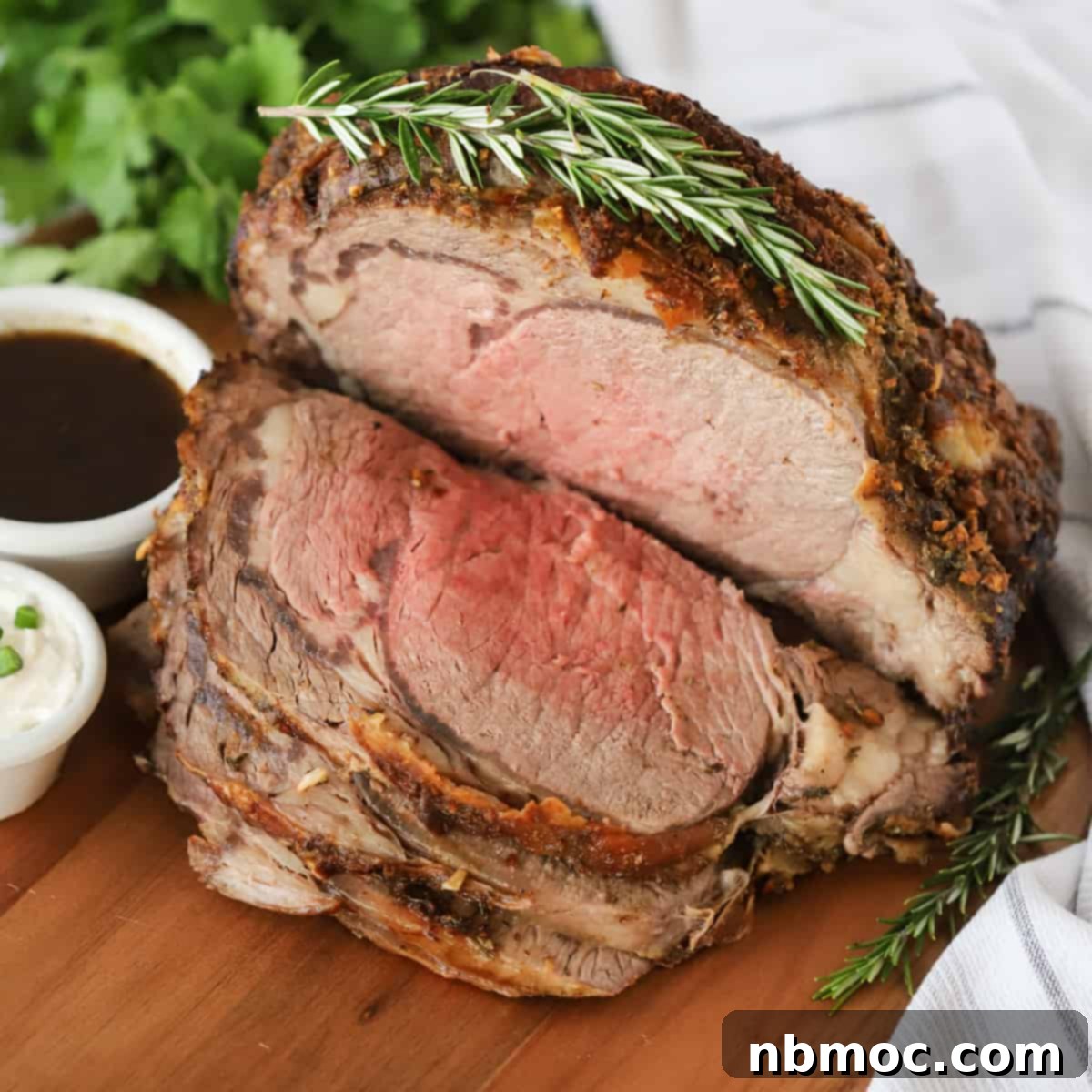
Prepare to impress your guests and elevate your holiday dining experience with this sensational Prime Rib roast recipe. Often considered the crown jewel of festive meals, this dish combines luxurious decadence with surprising ease of preparation right in your home kitchen. We’ll guide you through cooking a prime rib that’s not just perfectly tender and juicy, but also boasts an aromatic, herb-crusted exterior. Served alongside a rich, savory au jus gravy and a vibrant, zesty horseradish sauce, this recipe promises an unforgettable culinary masterpiece.
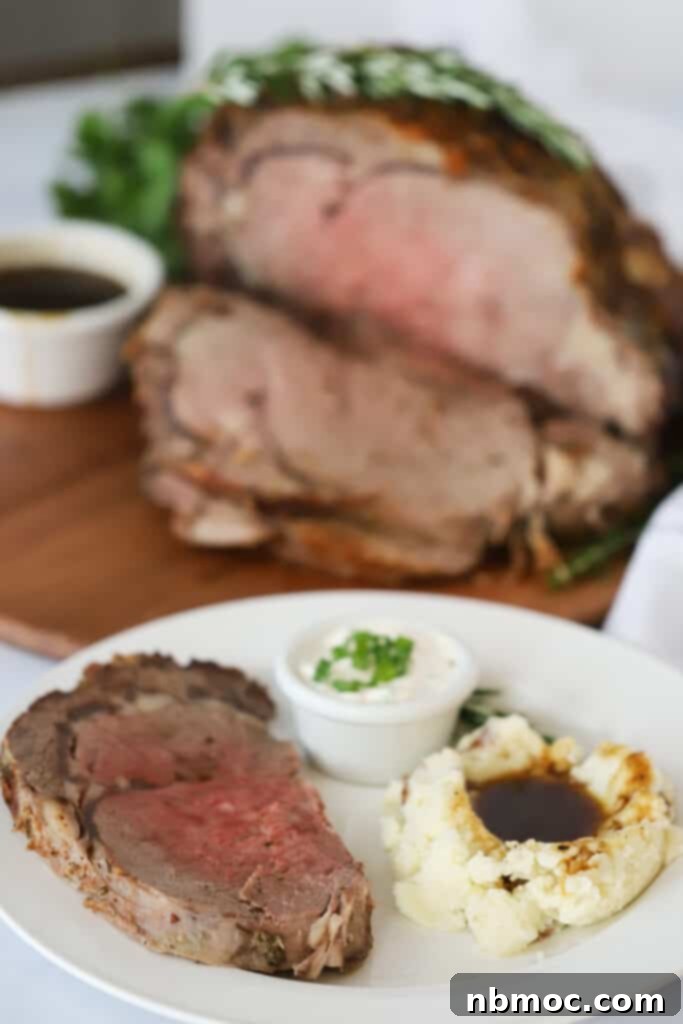
The Ultimate Herb-Crusted Prime Rib Roast for Your Holiday Table
The classic prime rib roast, also known as a standing rib roast, is undeniably one of the most iconic and cherished centerpieces for any special occasion, especially during the holidays. While it represents a more premium investment compared to other beef cuts, the unparalleled flavor and melt-in-your-mouth tenderness it delivers make it absolutely worth every penny. A perfectly cooked prime rib roast is a culinary marvel – a visually stunning dish that’s incredibly flavorful and capable of feeding a large gathering with ease and elegance.
This comprehensive guide will equip you with all the knowledge needed to cook a prime rib roast to absolute perfection, every single time. Beyond the main event, you’ll also learn how to craft a savory, homemade au jus gravy from the pan drippings and a wonderfully tangy horseradish sauce to complement the rich beef. Enhance your holiday spread by pairing this magnificent roast with beloved side dishes such as Garlic Parmesan Mashed Potatoes, vibrant Lemon Garlic Roasted Green Beans, or these wonderfully soft and fluffy Potato Rolls. This entire meal creates a symphony of flavors and textures that your family and friends will rave about for years to come.
Expert Tips for Choosing the Best Prime Rib Roast
The journey to a magnificent prime rib begins with selecting the right cut of meat. This foundational step is crucial for achieving that mouthwatering tenderness and rich flavor profile you desire. Your local butcher is often the best resource for purchasing prime rib (or standing rib roast), as they typically offer higher quality cuts and can provide personalized preparation services. However, most well-stocked grocery stores also carry USDA choice-grade Prime Rib, which can still yield excellent results.
When selecting your roast, you’ll generally encounter two options: boneless Prime Rib or bone-in Prime Rib. Each has its advantages. Many chefs prefer bone-in for the added flavor the bones impart during roasting and how they act as a natural rack in your roasting pan, allowing for even heat circulation. If you opt for bone-in, a skilled butcher can be invaluable. Ask them to cut the bone off and then tie it back to the roast. This crucial step makes carving significantly easier after cooking, while still allowing the bones to infuse flavor and act as a built-in roasting rack. Should you choose a boneless Prime Rib, remember to place a small roasting rack or even some chopped vegetables (like carrots and celery) at the bottom of your pan to elevate the meat, ensuring even cooking and preventing the bottom from steaming.
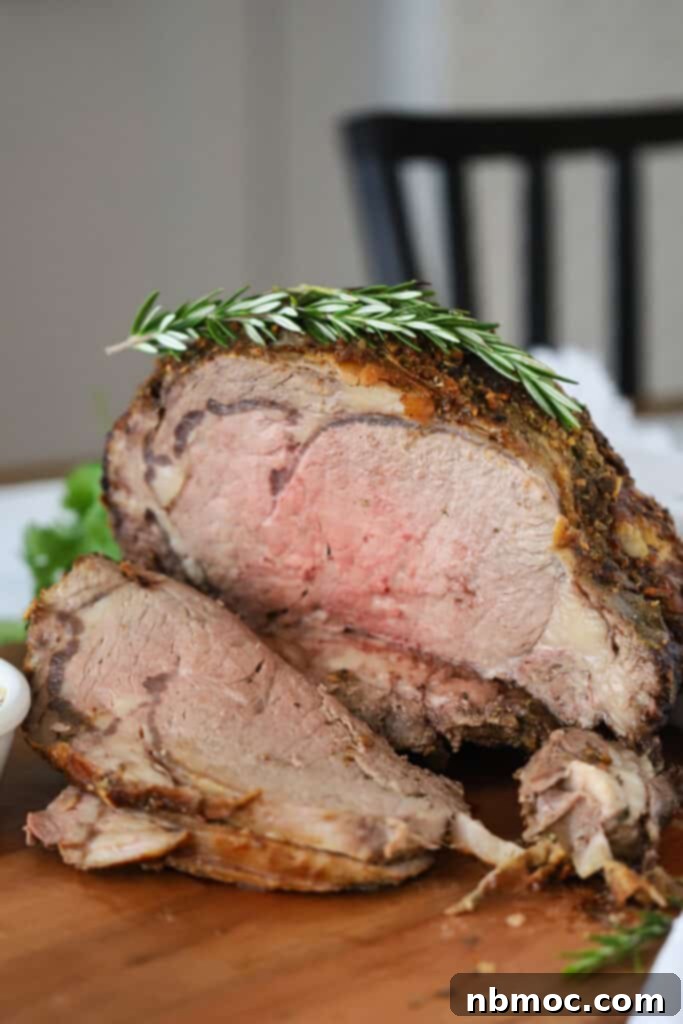
Essential Ingredients You Will Need for a Flavorful Prime Rib Feast
Crafting the perfect herb-crusted prime rib, along with its delectable accompaniments, relies on a selection of quality ingredients. Here’s a breakdown of what you’ll need and why each component is vital:
- Butter: This forms the base of our luscious herb butter crust. You can use either salted or unsalted butter, but ensure it’s at room temperature for easy mixing and spreading. It contributes richness and helps create that beautiful browned exterior.
- Garlic: Freshly minced garlic is highly recommended for its pungent, aromatic depth, infusing the roast with irresistible flavor. Garlic powder can be a substitute in a pinch, but fresh is always superior.
- Fresh Herbs: This recipe highlights the classic combination of fresh minced thyme and rosemary. These herbs offer a fragrant, earthy, and slightly peppery profile that perfectly complements beef.
- Dry Mustard: Don’t underestimate the power of dry mustard powder. It adds a subtle tang, a hint of spice, and a wonderful complexity that enhances the fresh herbs and other ingredients in the butter mixture, creating a more dynamic crust.
- Beef Broth: Any high-quality beef broth or stock will work wonders for developing the rich au jus gravy, combining beautifully with the savory pan drippings.
- Cornstarch: This simple ingredient is key to thickening your au jus, ensuring it reaches that perfect silky consistency without becoming too heavy.
- Worcestershire Sauce: A splash of Worcestershire sauce is crucial for adding a deep, classic savory, umami flavor to your au jus, enhancing its richness and depth.
- Sour Cream: For the horseradish sauce, full-fat sour cream is preferred for its creamy texture and tangy balance. Lite sour cream can be used for a lighter option, but may result in a slightly less rich sauce.
- Mayonnaise: Just like the sour cream, a full-fat mayonnaise provides a rich, smooth base for the horseradish sauce, contributing to its luxurious mouthfeel.
- Horseradish: To achieve that signature pungent kick, use prepared horseradish, ideally the kind packed in vinegar. This offers the best flavor and texture for the sauce.
- Dijon Mustard: Opt for Dijon mustard, or another robust brown mustard, over yellow mustard. Dijon brings a sophisticated sharpness and a slightly spicy note that elevates the horseradish sauce.
- White Wine Vinegar: This adds a crucial tanginess and brightness to the horseradish sauce, cutting through the richness and balancing the flavors. Apple cider vinegar can be a suitable alternative.
Mastering the Art: How to Cook Prime Rib Perfectly
Achieving a perfectly cooked prime rib is a culinary feat that is surprisingly accessible with the right technique. Follow these steps to ensure a tender, flavorful, and unforgettable roast.
- Prepare the Prime Rib for Optimal Cooking: This is a critical first step. Two to three hours before you plan to bake, remove your prime rib roast from the refrigerator and set it on the kitchen counter. This allows the meat to gradually come to room temperature, ensuring more even cooking from edge to center. If your butcher hasn’t already done so, carefully cut the bone away from the roast using a sharp carving knife. Then, using butcher’s twine, securely tie the bones back onto the roast. This method allows the bones to impart flavor and act as a natural roasting rack, while also making the roast much easier to carve once cooked. Finally, pat the entire roast thoroughly dry with paper towels – this step is essential for achieving a beautiful, crisp, herb-crusted exterior. Generously season all sides of the roast with salt and freshly ground black pepper.
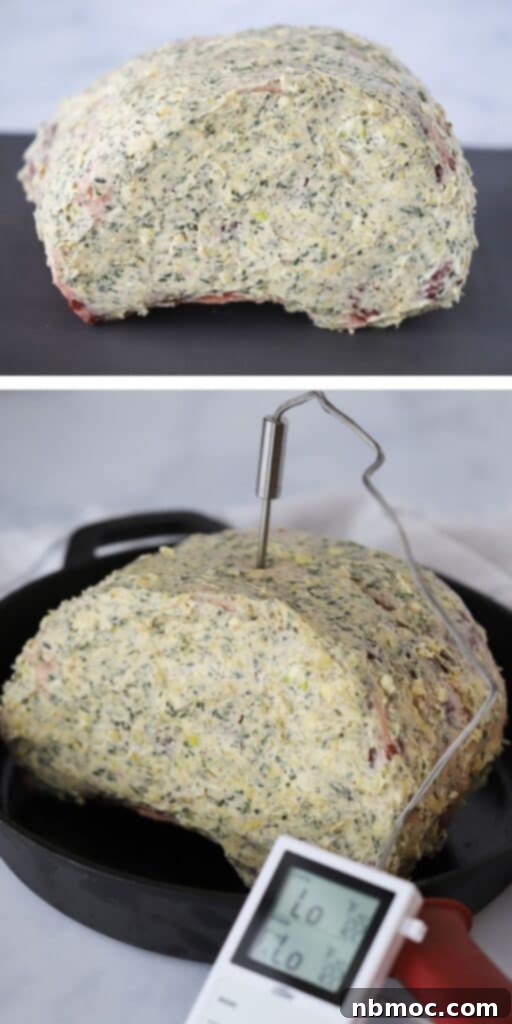
- Craft the Aromatic Herb Butter: In a small mixing bowl, combine the softened, room-temperature butter with the finely minced garlic, fresh thyme, fresh rosemary, onion powder, and dry mustard. Use a fork to vigorously mash and combine all the ingredients until you have a smooth, well-incorporated paste. This herb butter is the secret to an incredibly flavorful crust. With the back of a spoon or your hands, spread this fragrant butter mixture evenly over the top and sides of the prepared prime rib roast, ensuring every surface is generously coated.
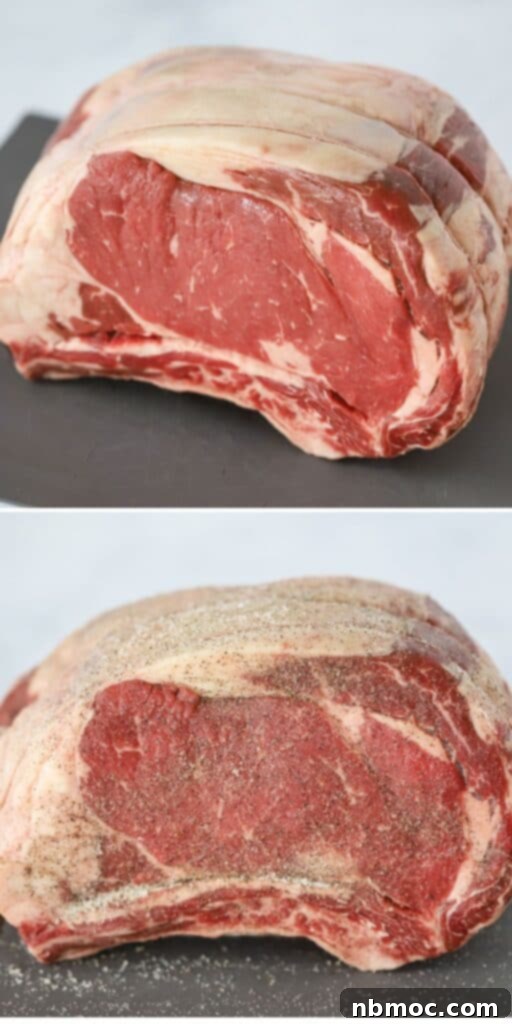
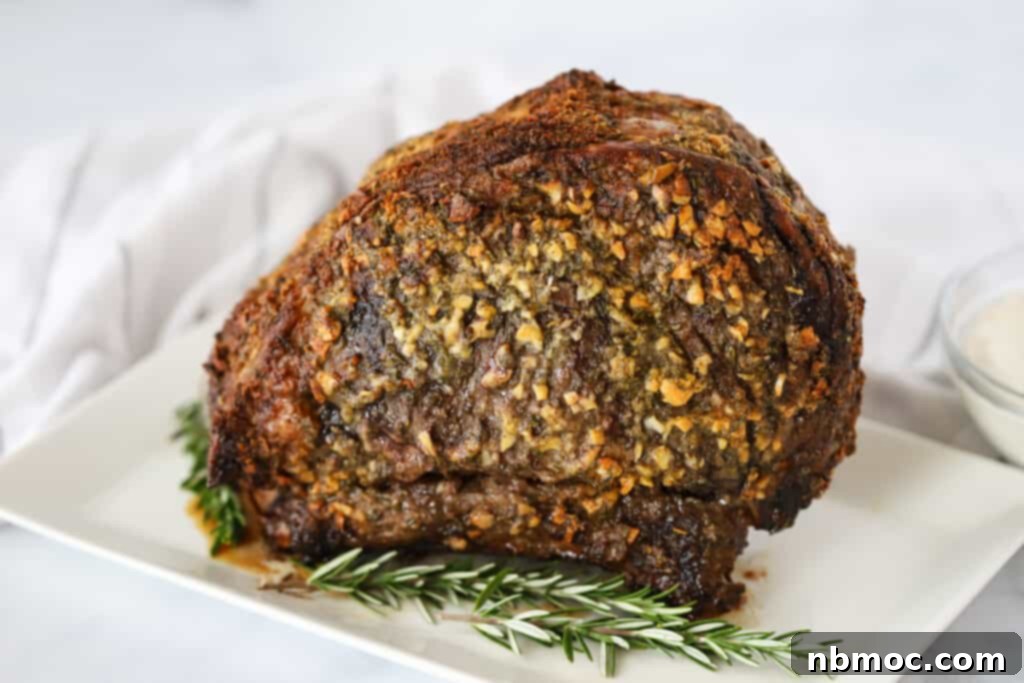
- Roast the Prime Rib to Perfection: Preheat your oven to 350 degrees F (175 degrees C). Place the prepared roast, rib side down, into a sturdy cast iron pan or a heavy-duty roasting pan. The attached ribs will naturally elevate the meat, acting as a convenient rack. Insert an instant-read meat thermometer into the thickest part of the roast, being careful not to touch the bone. Transfer the pan to your preheated oven. Cook the prime rib for approximately 15 minutes per pound of roast, or until the internal temperature reaches 125 degrees F (52 degrees C) for a perfect medium-rare doneness. Remember that the temperature will rise by 5-10 degrees while resting due to carryover cooking. (Chef’s Note: If you notice the herb crust browning too quickly during roasting, loosely tent the roast with aluminum foil to prevent over-darkening while it finishes cooking.)
- Allow the Meat to Rest: This is a crucial, non-negotiable step for a juicy prime rib. Once the roast reaches your desired internal temperature, remove it from the oven and immediately tent it loosely with aluminum foil. Let the roast rest undisturbed for at least 30 minutes (and up to 45 minutes for larger roasts) before slicing. This resting period allows the muscle fibers to relax and the internal juices to redistribute throughout the meat, resulting in an incredibly moist and tender final product. While the roast rests, it’s the perfect time to prepare your homemade au jus and horseradish sauce.
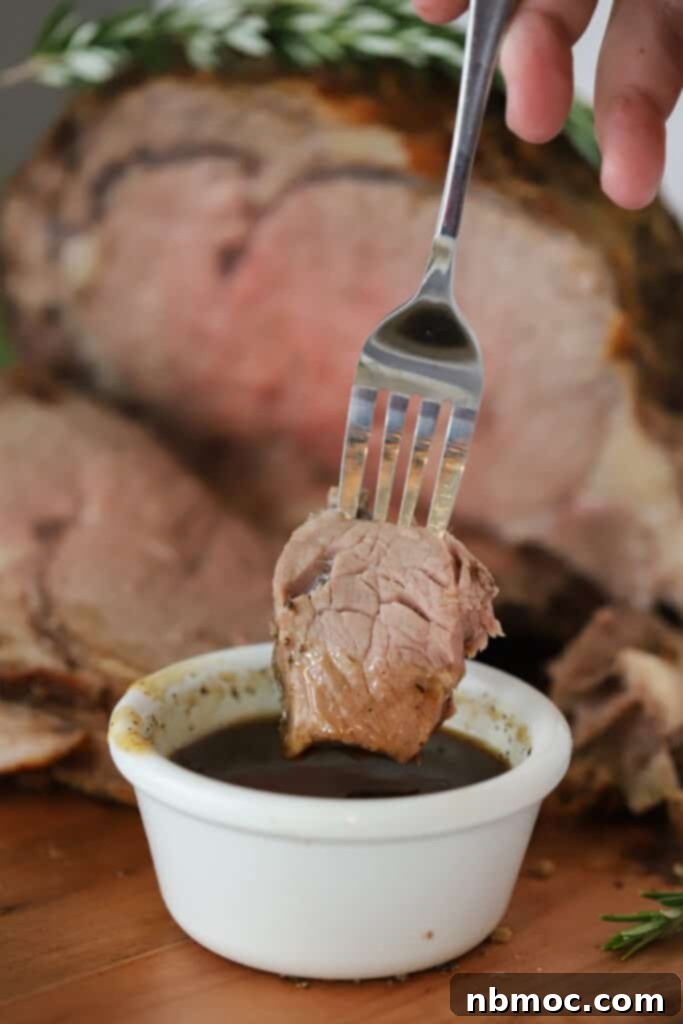
- Prepare the Rich Au Jus Gravy: Carefully pour all the savory pan drippings from the roasting pan into a large glass measuring cup. Allow the drippings to settle for a few minutes, which will cause the fat to separate and rise to the top. Using a spoon or a fat separator, skim off and discard as much of the excess fat as possible, leaving behind the concentrated, flavorful juices. Return the remaining defatted drippings along with the beef broth to the cast iron skillet (or a saucepan). Use a whisk to gently scrape and loosen any browned bits (fond) from the bottom of the pan – these bits are packed with flavor! Add the Worcestershire sauce, whisk again, and bring the mixture to a gentle boil over medium heat. In a small separate bowl, whisk together 1 tablespoon of cornstarch with 2 tablespoons of cold water until a smooth slurry forms. Slowly pour the cornstarch slurry into the boiling broth mixture while continuously whisking. Continue heating and whisking until the au jus thickens to your desired consistency – a light, flavorful gravy that perfectly complements the prime rib.
- Whip Up the Zesty Horseradish Sauce: In a small mixing bowl, combine the sour cream, mayonnaise, finely chopped green onion, prepared horseradish, Dijon mustard, white wine vinegar, and a pinch of salt. Stir all the ingredients together thoroughly until they are well combined and smooth. Taste and adjust seasoning if necessary, adding more horseradish for extra kick or a touch more salt. This creamy, tangy sauce provides a delightful contrast to the rich prime rib.
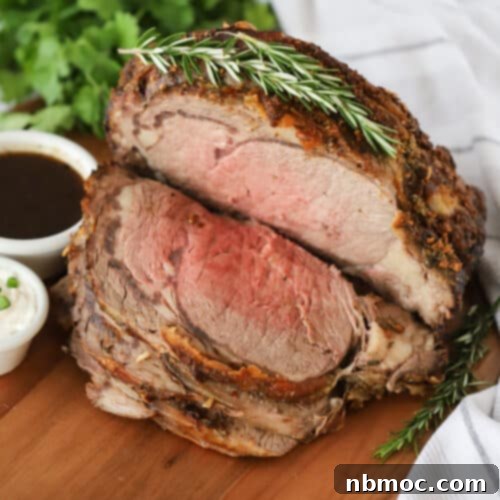
- Serve and Savor! Once the roast has rested, carefully remove the butcher’s twine and separate the bones (if they were tied back on). Slice the prime rib into thick, generous slabs or carve thin slices directly off the bone, as preferred. Serve immediately with generous spoonfuls of the warm au jus gravy and a dollop of the homemade horseradish sauce. Enjoy the magnificent flavors you’ve created!
Frequently Asked Questions About Cooking Prime Rib
Cooking a prime rib can sometimes feel daunting, but with a few answers to common questions, you’ll feel confident in no time.
The cooking time for prime rib in the oven depends primarily on the size (weight) of your roast and your desired level of doneness. A good general guideline for a medium-rare prime rib roast at 350 degrees F is approximately 15 minutes per pound of meat. However, this is just an estimate. Factors like the initial temperature of the roast, the accuracy of your oven, and how often you open the oven door can influence the actual cooking time. Always rely on an instant-read meat thermometer to gauge doneness accurately. Setting an alarm to check the temperature every 30-45 minutes (after the first hour) is a smart practice. For precision, a probe thermometer that stays in the roast and gives continuous readings is ideal, allowing you to monitor without opening the oven.
I find that roasting prime rib at 350 degrees F (175 degrees C) consistently yields excellent results. This moderate temperature allows the roast to cook evenly throughout without overcooking or drying out the exterior while the interior is still rare. For those who desire a more pronounced, crisp sear on the outside, you can begin by roasting at a higher temperature, such as 450-500 degrees F (230-260 degrees C), for just 15-20 minutes. This creates a beautiful crust. After this initial high-heat blast, immediately reduce the oven temperature to 350 degrees F (175 degrees C) for the remainder of the cooking time. It’s crucial to set a timer and remember to lower the temperature to prevent burning.
Absolutely, yes! It is highly recommended to remove your prime rib from the refrigerator 2-3 hours prior to roasting. This process, known as “tempering” the meat, allows the internal temperature of the roast to rise gradually and more evenly. When the meat starts at a closer-to-room temperature, it cooks more uniformly, preventing the outer layers from cooking much faster than the center. The result is an incredibly moist, juicy, and evenly cooked roast from edge to edge. If you skip this step and roast the prime rib cold, the exterior will likely be overcooked and dry by the time the interior reaches your desired doneness, leading to an unevenly cooked and less desirable outcome.
The best way to determine doneness is by using an instant-read meat thermometer inserted into the thickest part of the roast, avoiding the bone. Remember that the temperature will rise by 5-10 degrees F during the resting period (carryover cooking). Here are the target temperatures to pull the roast from the oven:
- Rare: 120-125°F (49-52°C)
- Medium-Rare: 125-130°F (52-54°C) – This is often considered ideal for prime rib.
- Medium: 130-135°F (54-57°C)
- Medium-Well: 135-140°F (57-60°C)
- Well-Done: 140-145°F (60-63°C) – Generally not recommended for prime rib due to potential dryness.
Always err on the side of undercooking slightly, as you can always cook it a bit longer, but you can’t reverse an overcooked roast.
Storing and Reheating Your Precious Prime Rib Leftovers
Don’t let any of your magnificent prime rib go to waste! Proper storage and reheating techniques are key to enjoying your leftovers almost as much as the fresh roast.
- Refrigerator Storage: Any leftover prime rib should be wrapped tightly with plastic wrap or stored in an airtight container. It will keep beautifully in the refrigerator for up to 5 days, making it perfect for quick meals throughout the week.
- Freezer Storage: For longer storage, you can freeze leftover prime rib. Wrap individual slices or larger portions tightly in plastic wrap, then place them in a freezer-safe bag or container. Frozen prime rib will maintain its quality for up to 2 months. Thaw overnight in the refrigerator before reheating.
- To Reheat Prime Rib: The best way to reheat prime rib without drying it out is a slow and gentle method. Place the leftover slices in a shallow roasting pan or baking dish. Add a splash of extra au jus or beef broth to the bottom of the pan to keep the meat moist. Cover the dish tightly with aluminum foil and reheat slowly in a 300 degree F (150 degrees C) oven until just warmed through. Avoid high heat or microwave reheating, which can toughen the meat.
- Au Jus Storage: Leftover au jus can be stored in an airtight container in the fridge for up to 1 week. It also freezes well for up to 2 months; simply thaw and gently reheat on the stovetop.
- Horseradish Sauce Storage: Your homemade horseradish sauce will keep fresh in an airtight container in the refrigerator for up to 4 days. Give it a good stir before serving again.
Herb-Crusted Prime Rib Recipe
Pin Recipe
Rate This Recipe
Prep: 15 mins | Cook: 1 hr 30 mins | Resting Time: 30 mins | Total: 2 hrs 15 mins
Yields: 12 people
Ingredients
Herb-Crusted Prime Rib
- 6 pound Prime Rib Roast, bone cut off and tied
- 2 teaspoons salt
- 1/2 teaspoon black pepper
- 1/2 cup butter, room temperature
- 8 cloves garlic, finely minced
- 1 tablespoon thyme, fresh, minced
- 1 tablespoon rosemary, fresh, minced
- 2 teaspoons onion powder
- 1 tablespoon dry mustard
Au Jus
- 2 cups beef broth
- 1 tablespoon cornstarch
- 2 tablespoons water, cold
- 2 tablespoons Worcestershire sauce
Horseradish Sauce
- 1/2 cup sour cream
- 1/4 cup mayonnaise
- 1 tablespoon green onion, finely chopped
- 1 teaspoon horseradish, in vinegar
- 1 teaspoon Dijon mustard
- 1 teaspoon white wine vinegar
- 1/4 teaspoon salt
Instructions
- Preheat oven to 350 degrees F (175 C).
- Set the roast on the counter for 2-3 hours before baking so it can come up to room temperature. If your butcher hasn’t already done this, cut the bone away using a sharp knife then use butcher string to tie the bones back onto the roast. Pat it dry using paper towels and season with salt and pepper on all sides.
- In a small bowl, combine the room temperature butter, garlic, thyme, rosemary, onion powder, and dry mustard. Use a fork to mash and combine all of the ingredients until smooth. Using the back of a spoon, spread this butter mixture evenly over the top and sides of the roast.
How to Cook Prime Rib
- Set the roast, rib side down, in a cast iron pan. Place an instant-read thermometer into the roast and put into your preheated oven. Cook for approximately 15 minutes per pound of roast, or until the roast reaches an internal temperature of 125 degrees F (52 C) for medium rare.
- Remove the roast from the oven and tent with aluminum foil for about 30 minutes before slicing into large slabs or off the bone entirely and slicing into thin pieces. Make the au jus and horseradish sauce while the roast rests.
How to Make Au Jus
- Pour pan drippings into a large glass measuring cup. Let it for a few minutes, then use a spoon to ladle and discard the fat that rises to the top. Add the remaining drippings and beef broth to the cast iron skillet. Use a whisk to loosen any crust brown bits from the bottom of the pan. Add the Worcestershire sauce, whisk, and bring to a boil.
- In a small bowl, add 1 tablespoon of cornstarch to 2 tablespoons of cold water, stirring until combined and smooth. Slowly whisk the cornstarch slurry into the broth mixture while heating and constantly whisking until the au jus thickens.
How to Make Horseradish Sauce
- In a small mixing bowl, combine the sour cream, mayo, chopped green onion, horseradish, mustard, vinegar, and salt. Stir until combined.
Notes
Storing instructions: Wrap leftovers tightly with plastic wrap and store for up to 5 days in the fridge, or up to 2 months in the freezer.
Reheating: The best way to reheat prime rib is to place it in a roasting pan or baking dish with a little extra au jus, cover with foil, and reheat slowly in a 300 degree F (150 C) oven until warmed through.
If the roast gets too dark on the top, cover loosely with aluminum foil until it finishes roasting.
Nutrition
Calories: 811kcal | Carbohydrates: 3g | Protein: 32g | Fat: 74g | Saturated Fat: 32g | Polyunsaturated Fat: 5g | Monounsaturated Fat: 30g | Trans Fat: 0.3g | Cholesterol: 165mg | Sodium: 823mg | Potassium: 585mg | Fiber: 0.4g | Sugar: 1g | Vitamin A: 340IU | Vitamin C: 2mg | Calcium: 47mg | Iron: 4mg
Disclaimer: Nutritional values were calculated using a third-party tool and are provided as an estimation only.
Course: Main Course | Cuisine: American
Sharing this recipe with a link is both encouraged and appreciated. Copying/pasting and/or screenshots of full recipes to any social media is strictly prohibited. Content and photographs are copyright protected.
Explore More Holiday Dinner Delights
- Slow Cooker Venison Roast
- Oven-Roasted Chicken and Potatoes
- Herb-Roasted Turkey
- Oven-Roasted Turkey Breast
- Easy Honey Glazed Ham
- Smoked Turkey
- How to Cook a Spiral Ham
Discover More Irresistible Beef Recipes
- Bacon Wrapped Filet Mignon
- Herb-Crusted Top Round Roast
- Best Pot Roast
- More Beef Recipes from The Carefree Kitchen
- Even more Dinner Ideas
We absolutely love hearing from you! If you’ve tried this incredible Prime Rib recipe, please take a moment to rate it and leave a comment below sharing your experience. Your feedback helps us and other home cooks too! For those who adore Pinterest, feel free to leave a comment and even share a photo there. And if you’re sharing your culinary creations on social media, use the hashtag #thecarefreekitchen on Instagram and tag me @thecarefreekitchen so I can find your beautiful posts and show them some love. You can also connect with us on Facebook at The Carefree Kitchen. Thank you for being a part of our cooking community!
This comprehensive Prime Rib recipe demonstrates precisely how to achieve a perfectly cooked Prime Rib every single time. It includes an irresistibly flavorful herb butter crust, a rich homemade au jus gravy, and a zesty horseradish sauce, ensuring a complete and unforgettable holiday dining experience.