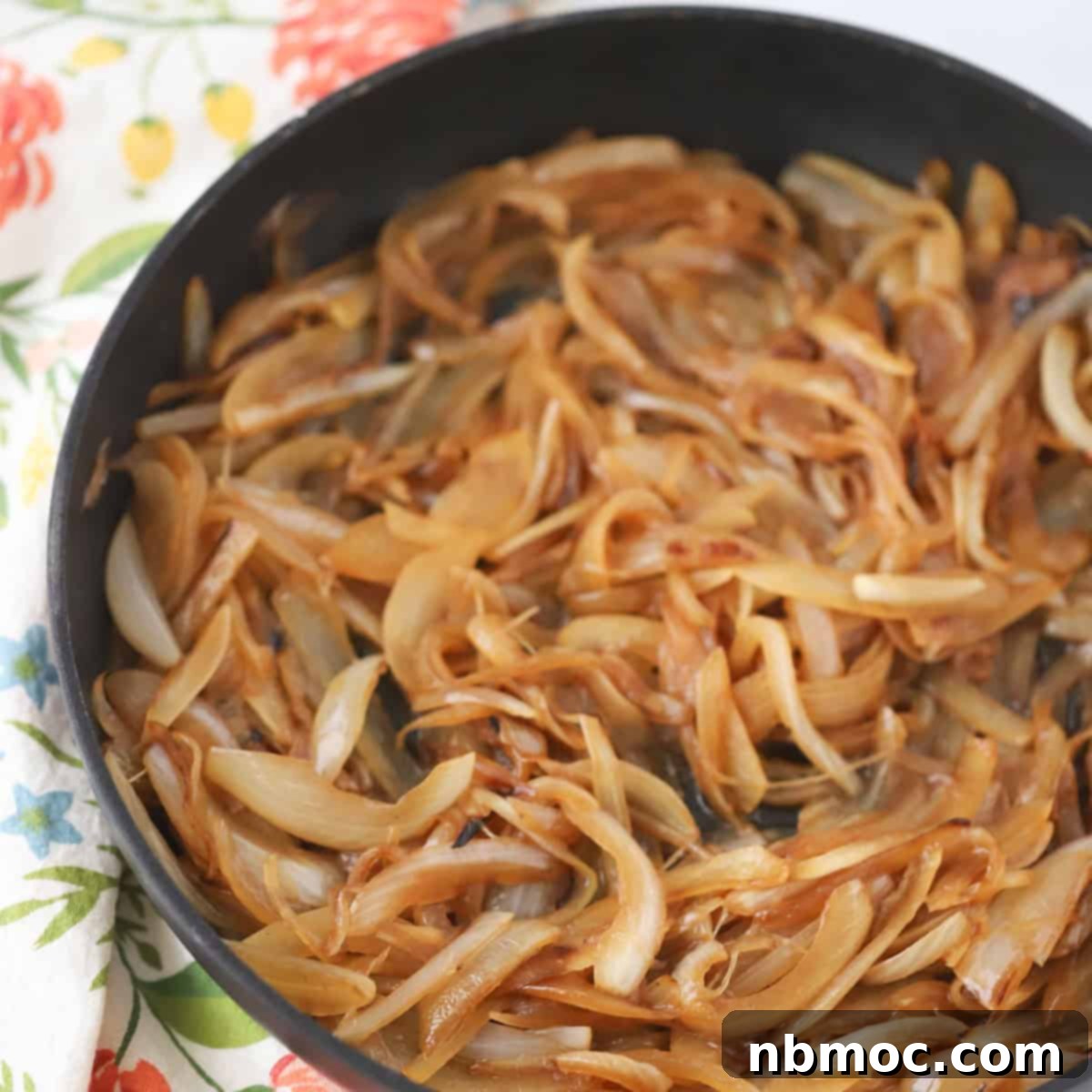
Transform your everyday meals with the rich, savory, and sweet goodness of **caramelized onions**. Often perceived as a time-consuming gourmet endeavor, our streamlined method brings these irresistible golden strands to your table in **just 30 minutes**. Forget hours of slow cooking; this recipe delivers deep flavor and a perfectly tender texture with remarkable speed, making it an essential condiment you’ll want to keep on hand.
Whether you’re elevating a simple burger, enhancing a grilled cheese sandwich, or adding a gourmet touch to pizzas and appetizers, these quick caramelized onions are incredibly versatile. They add a layer of complexity and sweetness that can turn ordinary dishes into extraordinary culinary experiences. Prepare to discover how easy it is to create this flavorful staple.
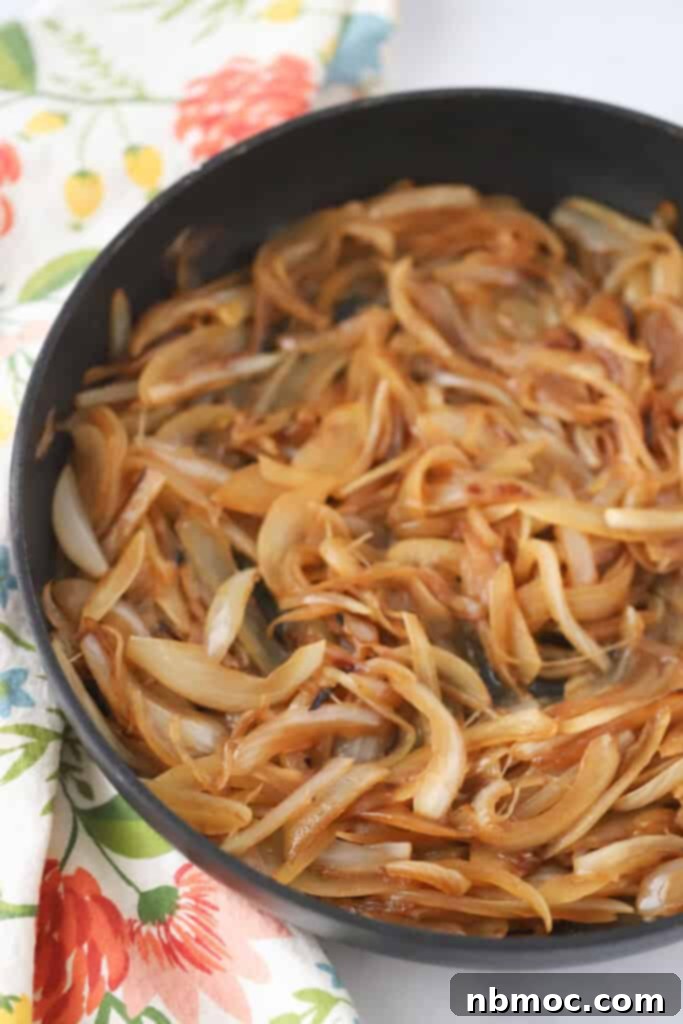
Mastering Quick Caramelized Onions: A 30-Minute Revelation
Many home cooks shy away from making caramelized onions, intimidated by the perceived need for hours of slow, patient cooking and the ever-present fear of burning. While traditional methods can indeed take 45 minutes to an hour or even more, we’ve refined the process to achieve that signature deep, sweet, and savory flavor in a fraction of the time. This isn’t a shortcut that sacrifices quality; it’s a smart technique that utilizes proper heat management and precise timing to coax out the onions’ natural sugars efficiently.
With just three core ingredients – onions, olive oil, and salt – this recipe proves that simplicity can lead to profound flavor. In approximately 30 minutes, you’ll transform pungent raw onions into a gloriously golden, melt-in-your-mouth condiment that enhances everything from hearty burgers and gourmet sandwiches to comforting soups, vibrant dips, and elegant crostini. Prepare to be amazed by how easy and quick it is to create this highly coveted kitchen staple.
The Science Behind the Sweetness: Understanding Caramelization
At its core, caramelizing onions is a culinary marvel that transforms a humble vegetable into something incredibly complex and delicious. This process hinges on two key chemical reactions: **caramelization** and the **Maillard reaction**. Onions are naturally rich in sugars, and when exposed to sustained, gentle heat, these sugars break down and rearrange themselves, creating hundreds of new flavor compounds that are distinctly nutty, buttery, and deeply sweet. This is true caramelization, occurring at temperatures above 300°F (150°C).
Simultaneously, the Maillard reaction takes place. This reaction involves amino acids and reducing sugars, producing a vast array of compounds responsible for the savory “umami” notes and the rich, golden-brown color we associate with caramelized onions. Unlike caramelization, the Maillard reaction can occur at lower temperatures, making it a crucial part of our “quick” method where we maintain medium-low heat to ensure both reactions develop optimally without burning. The slow breakdown of the onions’ cell walls also releases their moisture, concentrating their flavors and tenderizing them to a silky consistency. This careful balance of heat and time is what yields an entirely different flavor profile compared to raw, grilled, or simply sautéed onions – a profile that is irresistibly rich, deeply sweet, and profoundly delicious.
Beyond the Burger: Creative Ways to Use Caramelized Onions
Caramelized onions are far more versatile than just a burger topping. Their sweet and savory depth can elevate countless dishes, adding a touch of gourmet sophistication without extra effort. Here are some of our favorite ways to incorporate this flavorful condiment into your cooking:
- **Elevate Dips and Hummus:** Stir a generous spoonful into your favorite creamy dip, spinach artichoke dip, or homemade hummus for an instant burst of rich, savory flavor. They add a layer of complexity that will have everyone asking for the recipe.
- **Gourmet Breakfast Dishes:** Fold them into fluffy scrambled eggs, a savory omelet, or a quiche for a surprisingly sophisticated breakfast or brunch. They pair beautifully with cheese and herbs.
- **Ultimate Grilled Cheese & Quesadillas:** Transform an ordinary grilled cheese sandwich or a simple quesadilla into a gourmet experience. The sweetness of the onions perfectly complements sharp cheddar or gooey mozzarella.
- **Hearty Soups and Stews:** French onion soup is the classic example, but caramelized onions also add incredible depth to beef stew, vegetable soup, lentil soup, or even a simple chicken noodle soup. They are a secret ingredient for rich broths.
- **Pasta Dishes and Pizza Toppings:** Toss them with pasta, a little olive oil, and Parmesan cheese for a quick, flavorful meal. They also make an exquisite pizza topping, especially when paired with goat cheese, mushrooms, or balsamic glaze.
- **Savory Crostini & Appetizers:** Spread them on toasted baguette slices with a dollop of goat cheese or ricotta for an elegant appetizer. They’re also fantastic on top of mini phyllo tarts or flatbreads.
- **Steak & Meat Accompaniment:** Serve them alongside grilled steak, roasted chicken, or pork chops. Their sweetness beautifully balances rich meats.
- **Mashed Potatoes & Sides:** Stir them into mashed potatoes for a flavorful twist, or add them to roasted vegetables like Brussels sprouts or green beans.
Essential Ingredients for Perfect Caramelized Onions
- Onions: For the best flavor and texture in this quick method, **yellow onions** and **white onions** are highly recommended. Their higher sugar content and milder flavor, once cooked, yield a superior sweetness and richness. While red onions can also be caramelized, they tend to have a sharper flavor and might take slightly longer to achieve the desired softness and deep sweetness. The key to even cooking, regardless of onion type, is to slice them uniformly thin. This ensures they cook down at the same rate, preventing some pieces from burning while others are still raw. A mandoline slicer can achieve perfect thinness and consistency, but a sharp chef’s knife works just as well with a steady hand.
- Olive Oil: We prefer **olive oil** for this quick caramelization process due to its relatively high smoke point. This characteristic makes it less prone to burning compared to butter, especially when cooking at a slightly higher temperature (medium-low) to speed up the process. Olive oil also imparts a lovely, subtle fruitiness that complements the onions. If you adore the rich, nutty flavor of butter, you can certainly use a combination of half olive oil and half butter. This hybrid approach gives you the best of both worlds: the high smoke point of olive oil to prevent scorching and the delicious depth of butter.
- Salt: A fundamental flavor enhancer, **salt** plays a crucial dual role in caramelizing onions. Firstly, it seasons the onions, bringing out their natural taste. Secondly, and perhaps more importantly for the cooking process, salt helps to draw moisture out of the onions. This initial release of water allows the onions to soften more quickly and then dry out slightly, which is essential for the browning and caramelization reactions to occur effectively. Be generous with your initial seasoning, as much of the salt flavor will become concentrated as the onions cook down.
Step-by-Step: Crafting Quick Caramelized Onions to Perfection
Achieving perfectly caramelized onions in just 30 minutes is simpler than you might think. Follow these detailed steps for a flawless batch every time:
- Prepare Your Onions: Begin by peeling your chosen onions (yellow or white are ideal). The next crucial step is slicing: aim for thin, even slices, roughly 1/8 to 1/4 inch thick. Uniformity is paramount as it ensures all onion pieces cook at the same rate. You can slice them against the grain for a faster breakdown and softer texture, or with the grain for longer, more distinct strands. If using a mandoline, exercise caution and use a hand guard.
- Heat the Pan and Oil: Select a large, heavy-bottomed pan, such as a Dutch oven or a cast-iron skillet. These pans excel at retaining and distributing heat evenly, which is vital for preventing hot spots and scorching. Place the pan over **medium heat** and add the olive oil. Allow the oil to heat until it shimmers, indicating it’s ready to cook. Avoid overheating to the point of smoking.
- Initial Sauté and Seasoning: Add all of your thinly sliced onions to the hot oil. Sprinkle generously with salt. Stir immediately to ensure all the onion slices are thoroughly coated in the oil and salt. This step helps initiate the moisture release.
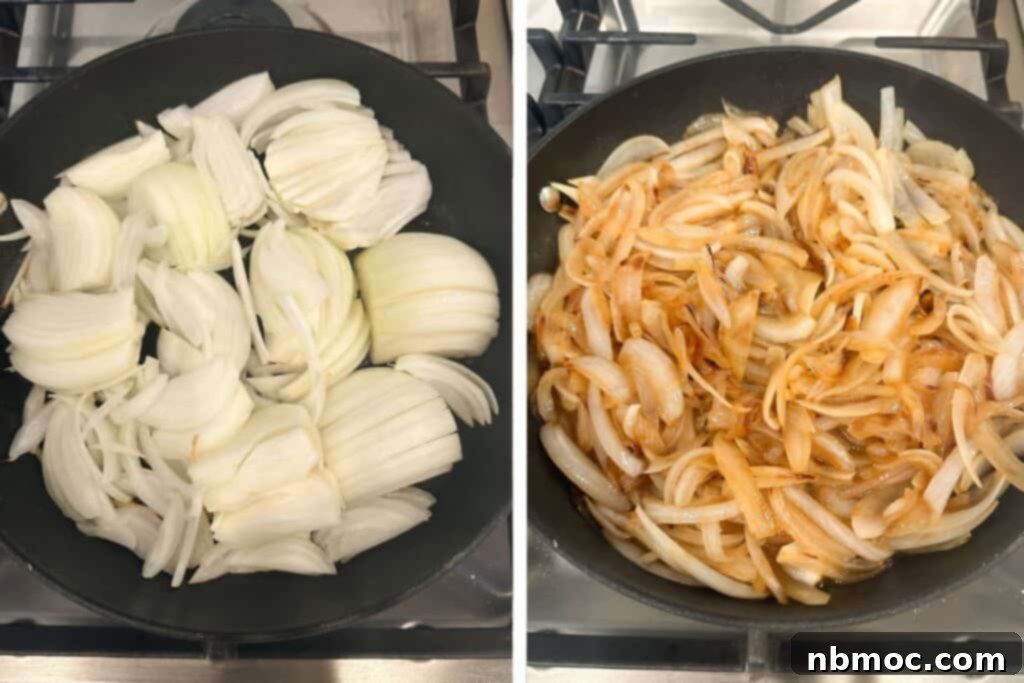
- Slow Cook to Golden Perfection: Once coated, **reduce the heat to medium-low**. This is the sweet spot for quick caramelization – high enough to promote browning but low enough to prevent burning. Cook the onions, stirring occasionally to ensure even browning and to prevent sticking. The process will go through several stages:
- **Stage 1 (5-10 minutes):** The onions will become translucent and soften considerably as their water content evaporates.
- **Stage 2 (10-20 minutes):** They will start to turn a light golden color as the sugars begin to caramelize and the Maillard reaction takes hold. Continue stirring every few minutes.
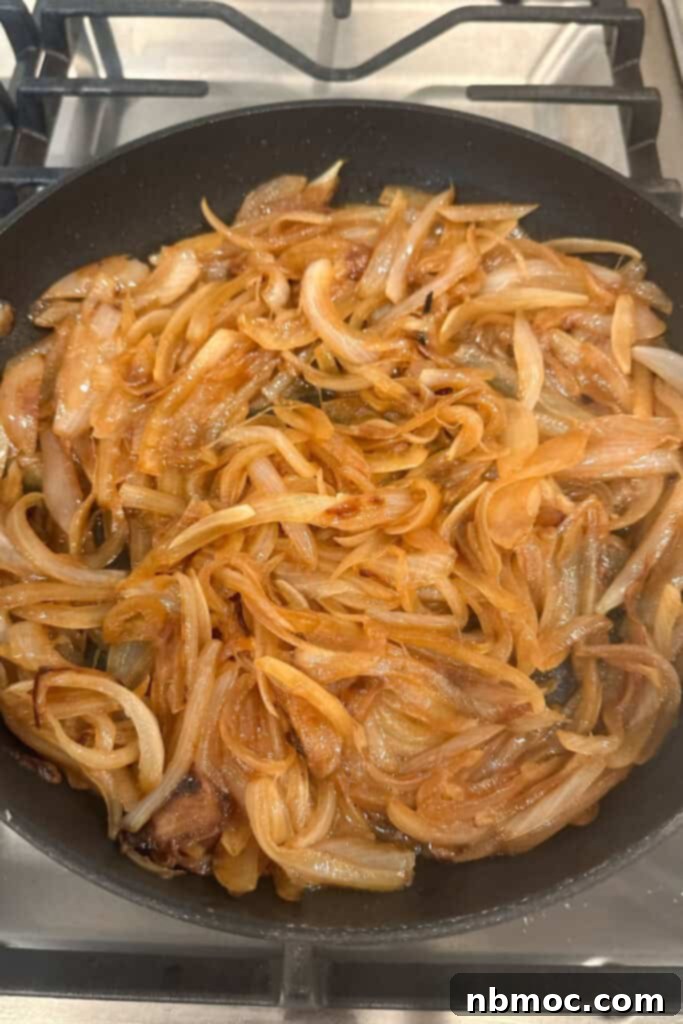
- **Stage 3 (20-30 minutes):** The onions will deepen into a rich, golden-brown hue, becoming incredibly tender and fragrant. They should be soft and sweet, with no raw bite. If at any point they start to stick excessively or brown too quickly, add a tablespoon or two of water or vegetable broth to deglaze the pan. This helps loosen any browned bits from the bottom, incorporating their flavor back into the onions, and slightly lowers the pan temperature.
- Serve and Enjoy: Once the onions have reached that deep, rich, golden color and are beautifully tender, remove the pan from the heat. Allow them to cool slightly before serving. They are now ready to be enjoyed on burgers, sandwiches, pizzas, crostini, or any dish that craves their unique sweet and savory flavor.
Frequently Asked Questions About Caramelized Onions
What kind of onions are best for caramelizing?
While almost any onion variety can be caramelized, **yellow onions** and **white onions** are generally preferred for their ideal balance of sugar content and flavor. Yellow onions offer a classic sweet and savory profile, becoming deeply rich and mellow when cooked. White onions are slightly milder and also caramelize beautifully. Red onions, while visually striking, tend to have a sharper, more pungent flavor and can sometimes take a little longer to achieve the same level of sweetness and tenderness as yellow or white varieties. Regardless of your choice, ensure they are sliced thinly and uniformly for even cooking.
How long does it really take to make caramelized onions?
Traditional methods for perfectly caramelized onions can indeed take 45 minutes to an hour or even longer over very low heat. However, this specific “quick” recipe is designed to deliver delicious results in just **20-30 minutes**. The exact time can vary depending on several factors: the amount of onions you’re cooking, the heat intensity of your stovetop, and the size and type of pan you use. A larger pan with more surface area allows for quicker moisture evaporation, speeding up the process. Maintaining a consistent medium-low heat is crucial for achieving that deep golden-brown color without burning.
Should I use oil or butter for caramelizing?
Both oil and butter contribute flavor and prevent sticking, but they behave differently under heat. **Olive oil** is recommended for this quick caramelized onions recipe because it has a higher smoke point than butter, making it less likely to burn at the slightly higher heat needed to speed up the process. This helps achieve that beautiful golden color without scorching. If you prefer the rich, nutty flavor of butter, you can use a combination of **half butter and half olive oil**. The olive oil will help stabilize the butter and prevent it from burning too quickly, allowing you to enjoy the best of both worlds – rich flavor and controlled browning.
Can I add sugar to speed up caramelization?
While onions contain natural sugars that caramelize on their own, a tiny pinch of granulated sugar (e.g., 1/2 teaspoon per large onion) can indeed help accelerate the browning process and enhance the sweetness. However, be cautious not to add too much, as it can make the onions overly sweet and prone to burning. For this 30-minute recipe, we rely more on consistent medium-low heat and stirring to achieve natural caramelization without the need for added sugar.
What if my onions are sticking or burning?
If your onions start to stick excessively to the bottom of the pan or appear to be browning too quickly, your heat might be too high. Immediately reduce the heat to low. To rescue them, add a tablespoon or two of water, vegetable broth, or even a splash of wine to the pan. This process, called “deglazing,” helps lift the browned bits (fond) from the bottom, incorporating their flavor back into the onions, while also adding moisture to prevent further sticking and temporarily lowering the pan’s temperature. Scrape the bottom gently with a wooden spoon, stir, and continue cooking at a lower heat.
Can you freeze caramelized onions?
Yes, caramelized onions freeze beautifully! This makes them an excellent candidate for meal prepping. Once your onions are cooked and have cooled completely, transfer them to freezer bags or any other airtight, freezer-safe container. For convenience, you can portion them into smaller amounts (e.g., 1/2 cup servings) before freezing. They can be stored in the freezer for up to **2 months**. Thaw them in the refrigerator overnight or gently reheat from frozen in a pan with a splash of water or broth. Freezing ensures you always have a stash of this flavorful condiment ready to use.
Storing Your Delicious Caramelized Onions
- Refrigerator: Once cooled completely, transfer your caramelized onions to an airtight container. They will keep fresh in the refrigerator for up to **5 days**. This makes them perfect for prepping at the beginning of the week to enjoy on various meals.
- Freezer: For longer storage, cooled caramelized onions can be frozen. Place them in freezer-safe bags or containers, pressing out as much air as possible to prevent freezer burn. They will maintain their quality in the freezer for up to **2 months**. Thaw in the refrigerator or reheat gently from frozen.
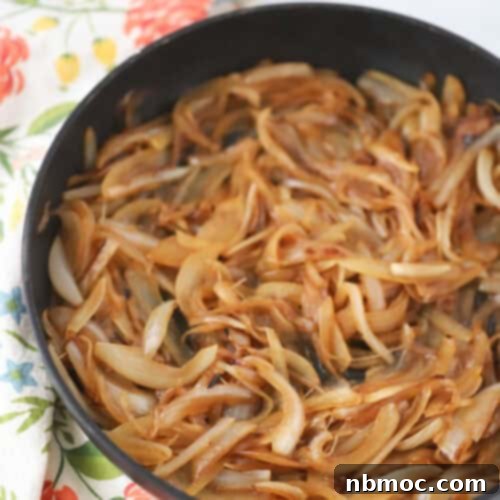
Quick & Easy Caramelized Onions Recipe
Author: The Carefree Kitchen
This quick caramelized onions recipe makes it easy to have a stash on hand at any time. They’re rich, flavorful, and perfect for serving on burgers, sandwiches, pizzas, or as toppings for appetizers, all in about 30 minutes!
Prep Time: 5 mins
Cook Time: 20 mins
Total Time: 25 mins
Yields: 6 servings
Ingredients
- 2 tablespoons olive oil
- 5 cups onions, white or yellow, thinly sliced
- 1/2 teaspoon salt
Instructions
- Heat a large Dutch oven or cast iron pan over medium heat. Add the olive oil and heat until shimmering.
- Add the sliced onions and salt to the pan. Stir well to coat all onions in the oil. Reduce heat to medium-low.
- Cook, stirring occasionally, until the onions turn a deep, rich, golden hue and are very tender. This should take about 20-30 minutes.
- If the onions begin to stick to the bottom of the pot, add a couple of tablespoons of water to deglaze the pan and scrape up any browned bits.
- Remove from heat and allow to cool slightly before serving on sandwiches, burgers, pizza, or with appetizers. Enjoy!
Notes
Storing instructions: Store cooled caramelized onions in an airtight container in the fridge for up to 5 days, or in the freezer for up to 2 months.
Nutrition (estimated per serving)
Calories: 116kcal | Carbohydrates: 13g | Protein: 1g | Fat: 7g | Saturated Fat: 1g | Sodium: 1420mg | Potassium: 223mg | Fiber: 2g | Sugar: 6g | Vitamin A: 85IU | Vitamin C: 9.3mg | Calcium: 58mg | Iron: 1.3mg
Disclaimer: Nutritional values were calculated using a third-party tool and are provided as an estimation only.
Course: Condiments, Meal Prep
Cuisine: Italian
Sharing this recipe with a link is both encouraged and appreciated. Copying/pasting and/or screenshots of full recipes to any social media is strictly prohibited. Content and photographs are copyright protected.
Did you make this?
We’d love to hear from you! Don’t forget to leave a rating below and make sure to follow us on Pinterest, Instagram, and Tiktok for more delightful recipes and kitchen tips!
Delicious Recipes Featuring Caramelized Onions
Once you’ve mastered these quick caramelized onions, you’ll find endless opportunities to incorporate their exquisite flavor into your cooking. Here are some fantastic recipes where they truly shine:
- Hearty Vegetable Beef Soup: A spoonful of caramelized onions adds incredible depth to the broth.
- Gourmet Ranch Roasted Potatoes: Toss hot roasted potatoes with caramelized onions for a savory side dish.
- Creamy Loaded Baked Potato Soup: Swirl them into this comforting soup for an extra layer of flavor.
- Homemade French Bread Pizza: A sophisticated topping option, especially with other gourmet ingredients.
- Irresistible Cheeseburger Sliders: The perfect sweet and savory condiment for miniature burgers.
- Classic Grilled Hamburgers: Elevate your everyday burger with a generous dollop of caramelized onions.
- Perfectly Baked Potatoes: A fantastic topping with sour cream and chives.
- Discover more Condiment Recipes for every occasion.
- Explore other Flavorful Veggie Side Dishes to complement your meals.
This quick and easy recipe for caramelized onions is a game-changer in the kitchen. In just 30 minutes, you can create a sweet, rich, and deeply flavorful condiment that enhances countless dishes, proving that gourmet flavors don’t always require hours of dedicated time.